Born from the photocopier
Xerography, invented by Chester Carlson in the 1930s, made copies by charging a surface, exposing it to light and dusting it with powder. In 1969 Gary Starkweather at Xerox replaced the lens with a computer-controlled laser, and the laser printer was born. Office models became widespread in the 1980s.
Drawing with light
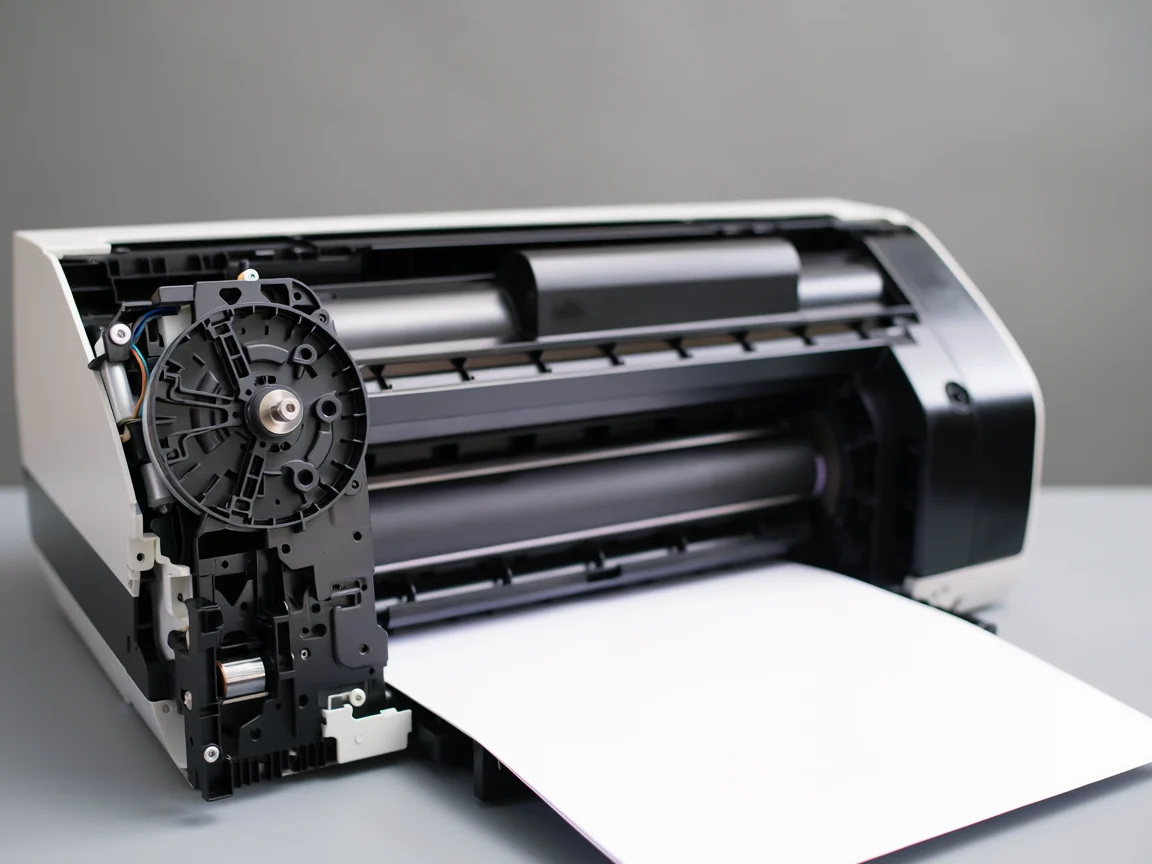
Inside, a photoconductive drum receives a uniform electrical charge. A laser, steered by a spinning mirror, sweeps across it line by line. Wherever the beam hits, the charge leaks away, leaving an invisible image of the page made of charged and uncharged areas.
Toner and paper
Toner is a fine powder of plastic and pigment. It is charged so that it jumps onto the drum only where the laser has drawn. The paper then receives an opposite charge that pulls the toner off the drum. A pair of heated rollers called the fuser melts the plastic into the paper.
Why offices love them
Laser printers produce crisp text quickly and cheaply per page, and toner does not dry out like ink. Colour models use four toners—cyan, magenta, yellow and black—built up in successive passes. The drawbacks are size, power use and the fine particles released during printing, which is why good ventilation is sensible.
Sources & further reading
Simplified explanation; designs vary between manufacturers. Photograph: original AI-generated illustration (Adobe Firefly). Reference organisations do not endorse this website.