A cloud at ground level
Fog is simply cloud that touches the ground. Air always holds some invisible water vapour, and the cooler air becomes, the less vapour it can hold. When it cools to its dew point, the excess condenses on tiny particles of salt, dust or pollution, forming droplets so small they float. Dense fog can cut visibility to a few tens of metres. It is different from the dusty haze that often hangs over the Gulf: haze is made of dry particles and does not clear in the same way. Fog needs moisture plus cooling, and UAE winters supply both in unusual abundance.
Radiation fog on still nights
The most common type is radiation fog. After sunset the ground radiates heat into space, and under clear skies, with no cloud blanket to send warmth back, it cools quickly. Sand and gravel lose heat faster than many surfaces. The air in contact with the ground cools too, and if winds are light it stays put rather than mixing with warmer air above. Winter nights in the UAE are longer than summer ones, giving more hours of cooling, and the humidity is often high. By the early hours a shallow layer reaches its dew point, and fog spreads across low ground and highways.
Sea air drifting inland
The Gulf supplies much of the moisture. During the day the land warms faster than the sea, drawing a sea breeze onshore that carries humid air inland. When that moist air moves over ground that is cooling after dark, it can be chilled into advection fog, fog formed by moving air passing over a colder surface. In practice UAE fog events often combine the two processes, which is why they tend to be thickest near the coast and across the flat land between Abu Dhabi and Dubai. Fog is most frequent from autumn to early spring, especially in the hours around dawn.
Why it lifts by mid-morning
Fog is usually short-lived. Once the sun rises, it warms the ground and the air above it. Warmer air can hold more vapour, so the droplets evaporate, first at the edges and from the top down. The fog may lift into a low layer of cloud before breaking up. By mid-morning most fog has gone, although on days with weak sunshine or very moist air it can linger longer. The same clear, calm conditions that create fog often return the next night, so the UAE National Centre of Meteorology commonly warns of fog several mornings in a row. Inland, away from the sea, fog is generally less frequent.
The cost on roads and runways
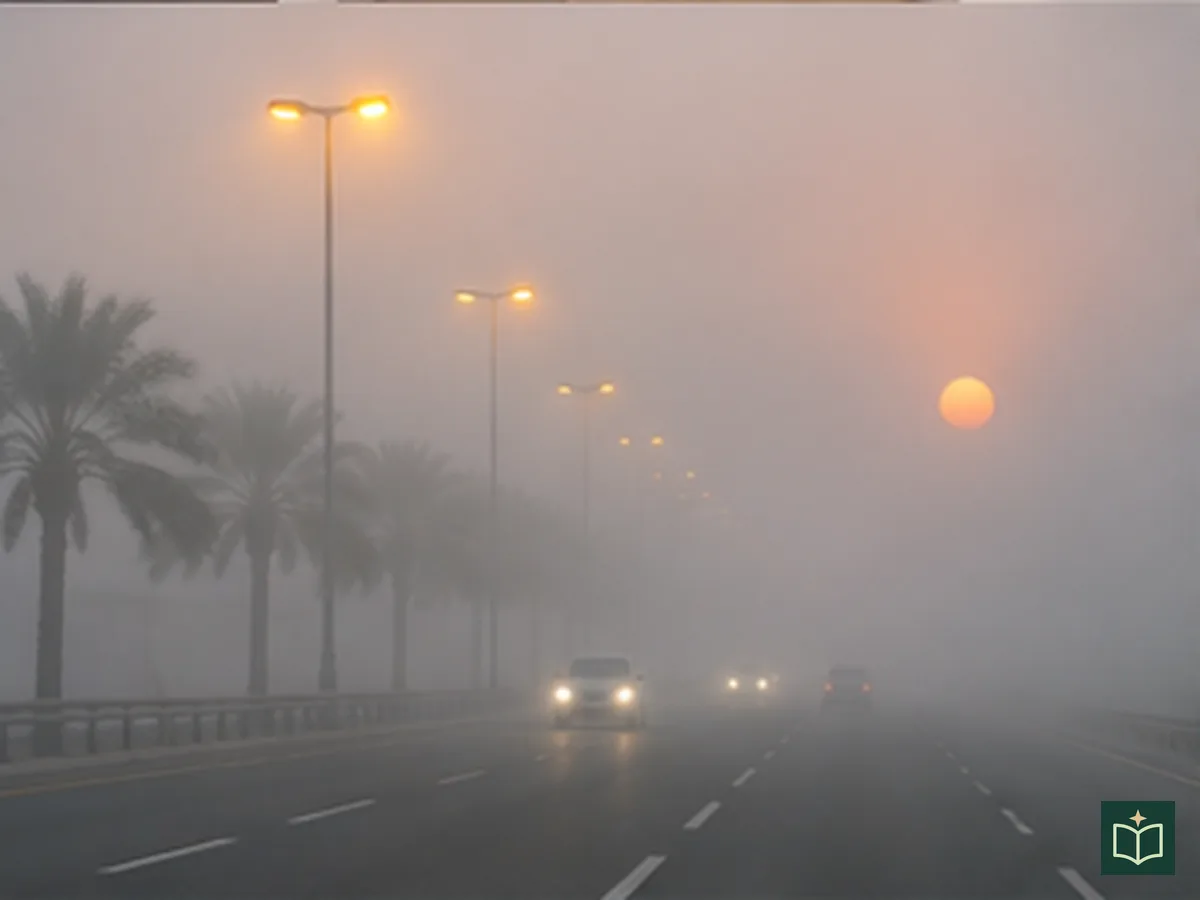
Dense fog is one of the most dangerous weather hazards in the UAE, a country otherwise known for clear skies. Sudden walls of fog on fast highways have caused multi-vehicle collisions. Police advise drivers to slow down, keep a long distance and use low-beam headlights, and they warn against switching on hazard lights while moving, which can confuse drivers behind. Abu Dhabi uses electronic signs that lower speed limits on some roads during fog. Airports switch to low-visibility procedures that space aircraft further apart, and the thickest episodes can delay or divert flights at major hubs. Even a short delay at a busy hub can ripple through connecting flights.
A useful nuisance
Fog also brings water to a dry land. Droplets settle on plants, rocks and vehicles as dew, and some desert plants and insects make use of that moisture. Researchers in several arid regions have tested mesh nets that harvest drinking water from fog, though output depends heavily on location. For forecasters, fog remains hard to predict precisely, because a difference of a single degree or a slight breeze can decide whether it forms at all. Satellite images help track its spread before dawn, while weather stations measure the falling temperature and rising humidity that signal another foggy morning ahead. Clear skies, damp air and still winds remain the recipe to watch for.
Sources & further reading
Figures are rounded and widely published; check the linked organisations for the latest editions. These organisations do not endorse this website.