Sand is defined by size
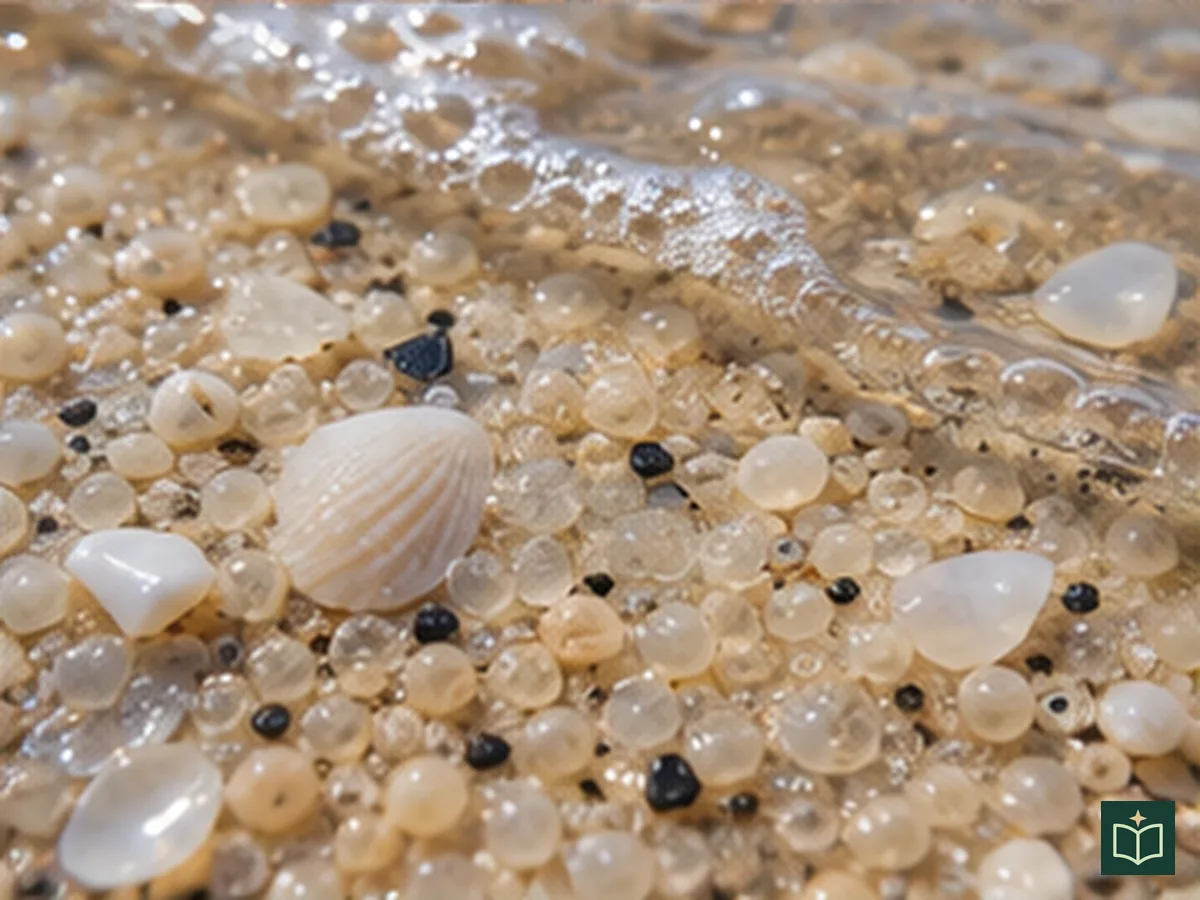
To a geologist, sand means grains between about 0.06 and 2 millimetres across. Finer particles are silt and clay; coarser ones are gravel. The definition says nothing about material, which is why beaches vary so much. Sand on a given shore comes from whatever is breaking down nearby or being delivered by rivers and currents. Over long journeys, softer minerals wear away or dissolve, while tough ones survive. That filtering explains why so many of the world's beaches, from the Atlantic coast of Europe to Australia, are made mostly of quartz, a hard mineral that is common in granite and sandstone.
Golden quartz
Quartz sand begins inland. Granite and other rocks weather on mountainsides, rivers carry the fragments downstream and waves spread them along the coast. Pure quartz is clear or white; a thin coating of iron oxide gives many beaches their golden or tan colour. Grains that have travelled a long way, or been recycled through older sandstones, become rounded and well sorted, all of a similar size. Sand on a beach near its source tends to be angular and mixed, often including dark specks of heavier minerals such as magnetite, which sometimes collect in black streaks after storms when lighter grains are washed away.
White coral and pink shells
In warm, clear tropical seas, much sand is biological. Reef organisms build skeletons of calcium carbonate, and when they die waves break them up. Parrotfish add to the supply by biting coral and algae and excreting fine white grains. The bright beaches of the Maldives and much of the Caribbean are largely the remains of living things. Pink sand, found on some beaches in Bermuda and the Bahamas, comes partly from the red shells of tiny single-celled organisms called foraminifera that live on reefs, mixed with white coral fragments. Such sand is softer than quartz and can dissolve slowly in acidic conditions.
Black lava and green crystals
Volcanic islands make their own sand. When hot lava meets the sea it can shatter into glassy fragments, and waves grind basalt cliffs into dark grains. Black sand beaches such as Punaluu in Hawaii and Reynisfjara in Iceland are made this way, and they can heat up strongly in the sun. A few beaches are green, coloured by olivine crystals weathered from volcanic rock, as at Papakolea in Hawaii. Volcanic sand can be young and short-lived: if the supply of new lava stops, waves may carry the grains offshore faster than they are replaced, and the beach can shrink. Collecting such sand is often discouraged or banned.
Gulf beaches
Most beaches along the UAE's Gulf coast are made of carbonate grains rather than quartz. Broken shells, fragments of coral and the skeletons of small marine creatures make up much of the sand. The warm, shallow and salty water also produces ooids, tiny rounded grains that grow in concentric layers as calcium carbonate precipitates around a speck of shell or sand while waves roll it back and forth. The Abu Dhabi coast is a classic area for studying them. Desert sand blown to the shore adds quartz, so a single Gulf beach can mix grains from the sea and from the dunes.
Why the source matters
Knowing where sand comes from matters for coasts. If a dam traps river sediment, or a reef is damaged, a beach can lose its supply and begin to erode. Many cities, including in the Gulf, pump sand from the sea floor to replenish beaches and build new land. Sand is also one of the most heavily extracted materials in the world for construction, and its source decides its use. Desert sand, rounded and polished by wind, is generally considered poorly suited to concrete, because its smooth grains do not interlock well, so builders in sandy countries often still import or dredge suitable sand.
Sources & further reading
Figures are rounded and widely published; check the linked organisations for the latest editions. These organisations do not endorse this website.