The largest ship afloat
RMS Titanic was built in Belfast by Harland and Wolff for the White Star Line, a British company, and was the largest moving object people had yet made: about 269 metres long and over 46,000 gross tons. It was designed for comfort on the busy North Atlantic route between Europe and New York, carrying wealthy travellers in first class and emigrants in third. On 10 April 1912 it left Southampton on its maiden voyage, calling at Cherbourg in France and Queenstown, now Cobh, in Ireland. The press widely described the ship as practically unsinkable, a reputation based on its system of watertight compartments rather than on any claim the builders made formally.
The night of the collision
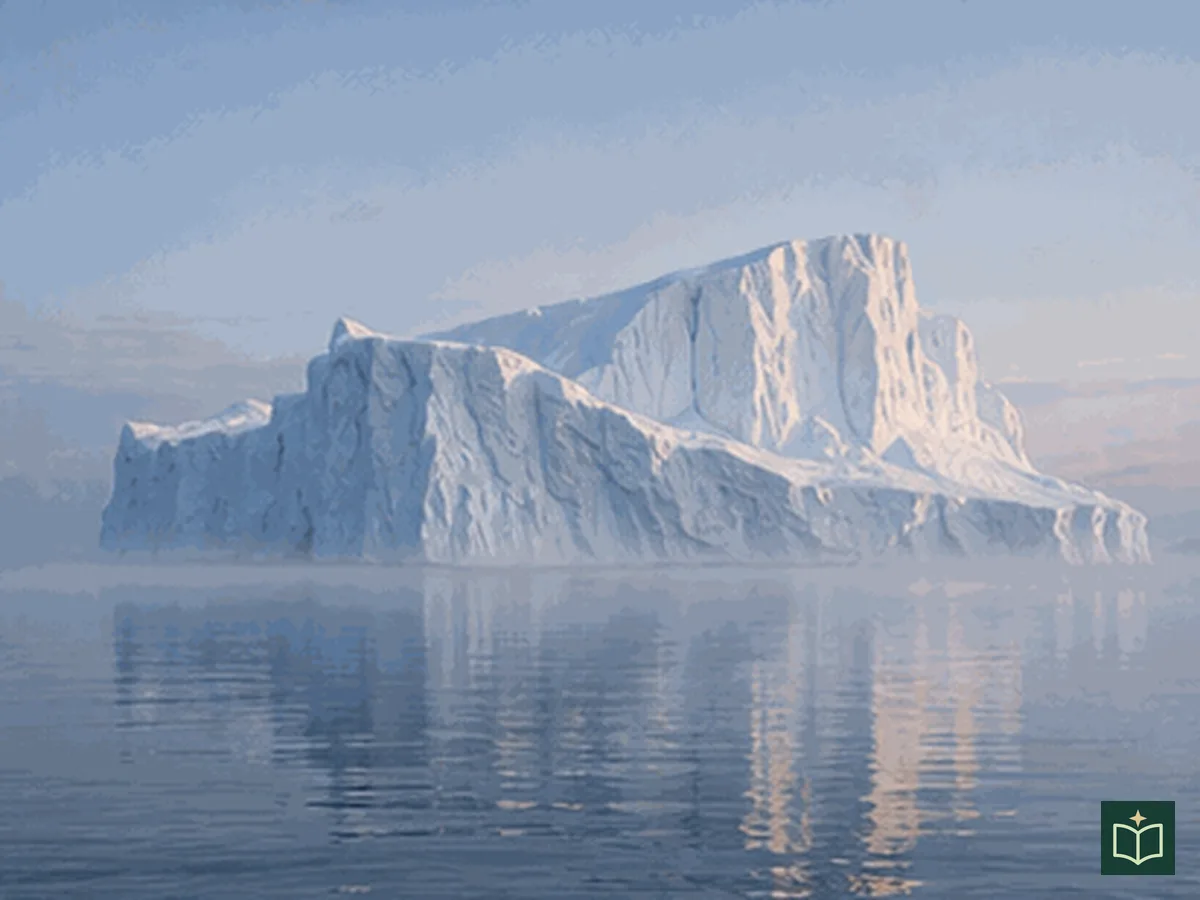
On 14 April the ship received several radio warnings of ice ahead. It continued at about 22 knots, close to its top speed, which was normal practice for liners at the time. The night was clear, calm and moonless, so there were no waves breaking at the base of icebergs to make them visible. At 11.40 pm lookouts spotted an iceberg directly ahead. The officer on watch ordered a turn and the ship avoided a head-on collision, but the ice scraped along the starboard side below the waterline. There was no single long gash; instead the impact buckled plates and popped rivets, opening a series of narrow gaps along roughly 90 metres.
Why it sank so fast
Titanic had sixteen main watertight compartments separated by bulkheads. It could stay afloat with any two flooded, or even the first four. The collision opened five or six. As the bow sank lower, water rose above the tops of the bulkheads, which did not reach the uppermost decks, and spilled into the next compartment, like water filling an ice-cube tray tilted at one end. The ship's designer, Thomas Andrews, reportedly told the captain it would sink within hours. The final plunge came at 2.20 am on 15 April, two hours and forty minutes after the collision. The hull broke in two as the stern rose, and both parts fell about 3,800 metres to the seabed.
The lifeboat arithmetic
The ship carried twenty lifeboats with room for about 1,178 people. With roughly 2,224 people aboard, that covered only about 53 per cent, leaving space for none of the other 1,046 even if every boat had been full. Yet this was legal. British Board of Trade rules dated from the 1890s and based lifeboat numbers on a ship's tonnage, not on the people it carried, and the largest category covered vessels far smaller than Titanic. Many boats were lowered partly empty early on, as passengers doubted the danger and crews lacked drills. Survival rates varied sharply by class and sex: most women and children in first class were saved, while most men in third class died.
Rescue and inquiries
Titanic's wireless operators sent distress calls, including the newer SOS signal. The Cunard liner Carpathia, about 93 kilometres away, raced north through the ice and arrived around 4 am, picking up roughly 710 survivors from the lifeboats. A nearer ship, the Californian, had stopped for the night because of ice; its radio operator had gone to bed, and its officers did not act on rockets they saw. Inquiries in the United States and Britain examined speed, warnings, the lifeboats and the Californian's conduct. Later research has added debates over the quality of some iron rivets, but no single cause explains the loss. It was a chain of ordinary decisions in an unusual situation.
How the rules changed
The disaster led directly to the first International Convention for the Safety of Life at Sea, known as SOLAS, agreed in London in 1914. It required lifeboat space for everyone on board, regular lifeboat drills and continuous radio watches on passenger ships. The International Ice Patrol was set up to track icebergs in the North Atlantic shipping lanes, a role still carried out today by the US Coast Guard. SOLAS has been revised many times and remains the core treaty for ship safety, now overseen by the International Maritime Organization. Every cruise ship leaving Dubai or any other port follows rules that trace their origin to the night of 14 April 1912.
Sources & further reading
Figures are rounded and widely published; check the linked organisations for the latest editions. These organisations do not endorse this website.