A Europe of two blocs
By 1914 Europe's great powers were divided into two loose groupings. Germany, Austria-Hungary and, on paper, Italy formed the Triple Alliance. France and Russia had a military alliance, and Britain had looser understandings with both, known together as the Triple Entente. These arrangements were meant to deter attack, but they also meant a quarrel involving one power could pull in others. Rivalries were intense: Germany and Britain had competed in a naval arms race, France resented losing Alsace-Lorraine to Germany in 1871, and Austria-Hungary and Russia competed for influence in the Balkans, where the Ottoman Empire's retreat had left new, ambitious states such as Serbia.
The shots in Sarajevo
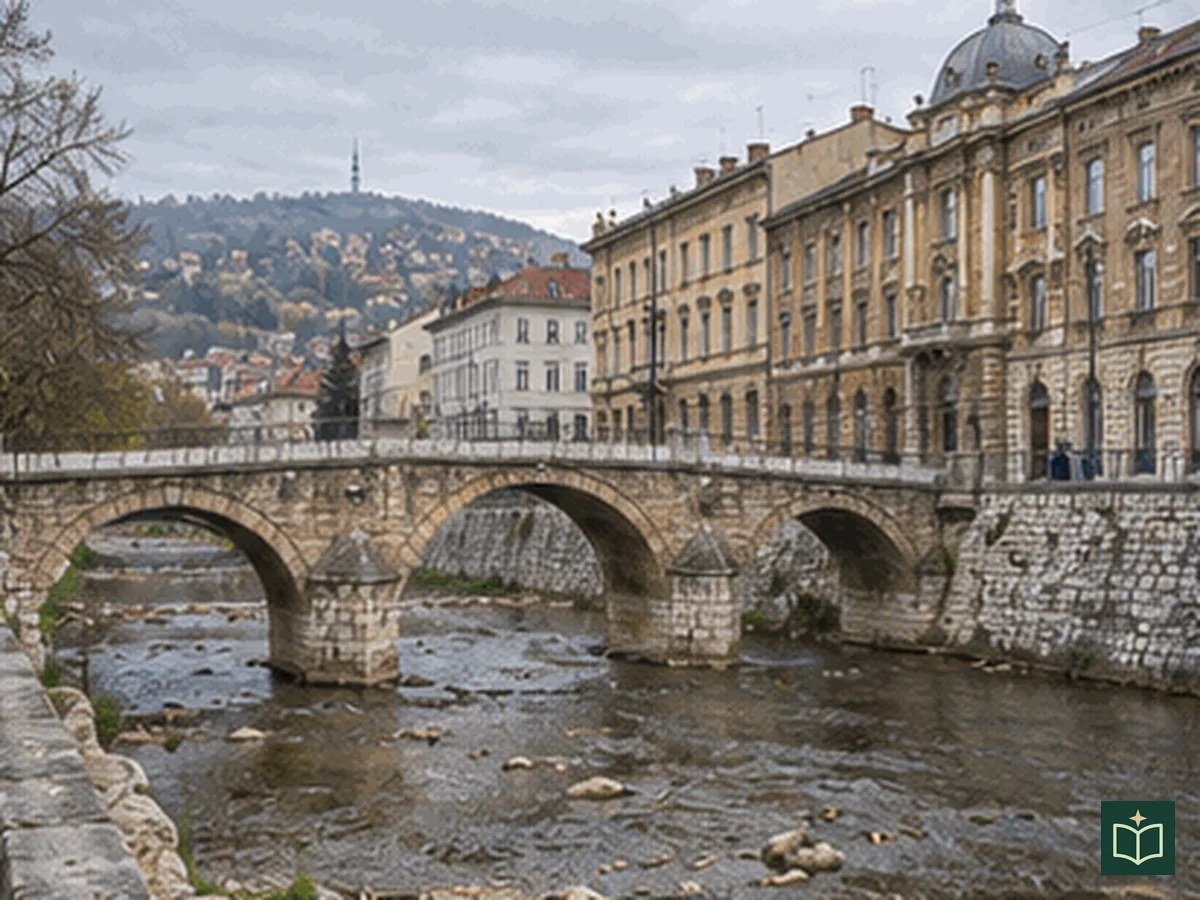
On 28 June 1914 Archduke Franz Ferdinand, heir to the Austro-Hungarian throne, visited Sarajevo, capital of Bosnia, which Austria-Hungary had annexed in 1908. A group of young Bosnian Serb conspirators, armed with help from a secret Serbian nationalist network, lined the route. A bomb thrown at his car missed its target. Later that morning the car took a wrong turn and stopped, and Gavrilo Princip, aged 19, shot the archduke and his wife, Sophie, at close range. Both died. Vienna saw the killing as an attack sponsored from Serbia and an opportunity to crush a dangerous neighbour. Whether the Serbian government itself knew of the plot remains debated by historians.
The blank cheque and the ultimatum
Austria-Hungary first sought German support. In early July, Germany's leaders promised to back whatever action Vienna took, a commitment later called the 'blank cheque'. They hoped for a quick, local war before Russia could intervene. On 23 July Austria-Hungary delivered an ultimatum to Serbia with ten demands and a 48-hour deadline. Some demands, such as allowing Austro-Hungarian officials to take part in investigations on Serbian soil, were designed to be hard to accept. Serbia's reply accepted most points but not all, and on 28 July, exactly one month after the assassination, Austria-Hungary declared war on Serbia and began shelling Belgrade.
Mobilisation becomes war
Mobilisation meant calling up reserves and moving millions of men by railway according to detailed timetables. Russia, which saw itself as Serbia's protector, ordered general mobilisation on 30 July. German military leaders believed they had to act fast to avoid fighting France and Russia at the same time. Their Schlieffen Plan called for a rapid attack on France through neutral Belgium, then a turn east against Russia. So when Russia mobilised, Germany declared war on Russia on 1 August and on France on 3 August. Once the timetables started, diplomats found it very hard to slow them down. Political choices were narrowed by military plans drawn up years earlier.
Belgium and Britain
Britain's commitments to France and Russia were not formal alliances, and the British cabinet was divided. The decisive issue became Belgium. Under the Treaty of London of 1839, Britain, along with Prussia and other powers, had guaranteed Belgian neutrality. When German troops crossed into Belgium on 4 August, Britain sent an ultimatum demanding they withdraw. It expired at 11 pm London time, and Britain was at war. Its empire, including India, Canada, Australia and others, was included automatically. Later in 1914 the Ottoman Empire joined Germany, spreading the fighting to the Middle East and the Gulf, where British Indian forces landed at Basra that November.
Who was to blame?
Historians have argued about responsibility for over a century. The Treaty of Versailles of 1919 placed the blame on Germany and its allies. In the 1960s the German historian Fritz Fischer argued that Germany's leaders had sought war deliberately to become the dominant European power. Others have stressed shared responsibility: Austria-Hungary's determination to punish Serbia, Russia's early mobilisation, French encouragement of Russia and British ambiguity. A widely read recent view describes the leaders as 'sleepwalkers', each making risky moves without grasping the full consequences. Most historians agree on one point: the outcome was not inevitable, and different choices in July 1914 could have kept the war local.
Sources & further reading
Figures are rounded and widely published; check the linked organisations for the latest editions. These organisations do not endorse this website.