A familiar question
Every child who has swallowed a mouthful of seawater has wondered why it tastes so different from river or tap water. On average, each litre of seawater contains about 35 grams of dissolved salts. If all of the ocean’s salt could be extracted and spread over the land, it would form a layer many tens of metres thick. Most of it is sodium chloride, the same compound as table salt, but seawater also contains magnesium, sulphate, calcium, potassium and many other dissolved substances in smaller amounts. Remarkably, the proportions of the main ingredients are almost the same throughout the world’s oceans, even where total saltiness differs.
From rock to river
The story begins on land. Rainwater absorbs a little carbon dioxide from the air, making it slightly acidic. As it soaks through soil and rock, it slowly dissolves minerals, releasing ions such as calcium, sodium, potassium and magnesium. Streams and rivers carry these dissolved substances to the sea. River water does contain salts, but at low concentrations, so it tastes fresh. The key difference is what happens next. Rivers keep flowing, constantly flushing their water onwards. The ocean, by contrast, is a destination. Water leaves the sea mainly through evaporation, and evaporation removes almost pure water, leaving the dissolved salts behind to accumulate.
Help from the sea floor
Not all the ocean’s salt comes from rivers. Hydrothermal vents along mid-ocean ridges, where tectonic plates pull apart, circulate seawater through hot volcanic rock. This exchanges chemicals between rock and water, adding some elements and removing others. Undersea volcanic eruptions also release gases, including chlorine-bearing compounds, which contributed much of the chloride in seawater over Earth’s history. Rivers supply most of the sodium, while volcanic and hydrothermal activity has supplied much of the chloride. Over hundreds of millions of years, the ocean has reached a rough balance. Salts arrive, but some are also removed, buried in sediments, taken up by living things or trapped in thick layers of evaporite rock.
Why the Gulf is extra salty
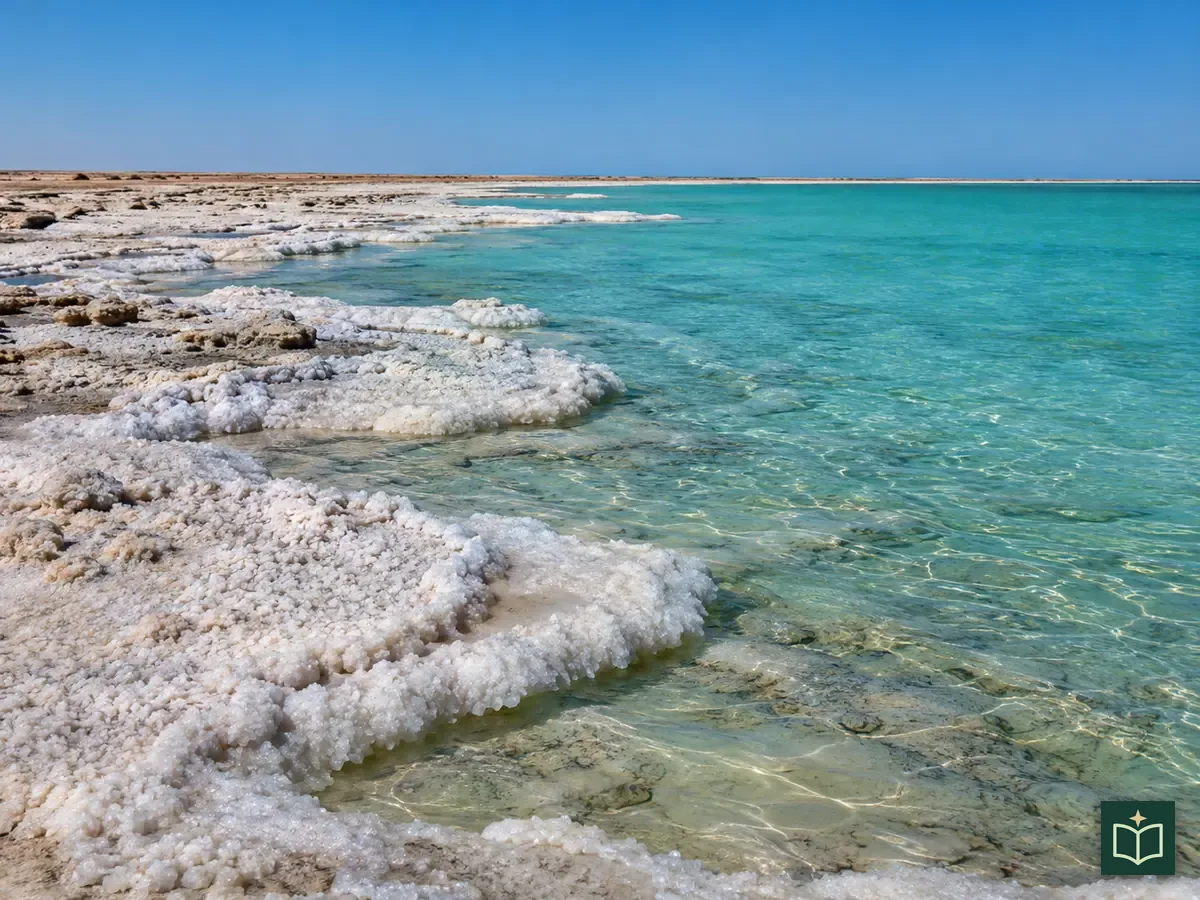
Salinity varies from place to place. Where evaporation is high and fresh water inflow is low, the sea becomes saltier. The Arabian Gulf is a striking example. It is shallow, hot and partly enclosed, connected to the open ocean only through the Strait of Hormuz, and few rivers flow into it apart from the Shatt al-Arab. Its salinity typically ranges from about 38 to over 40 grams per litre, and higher in some shallow coastal lagoons. The Red Sea is similarly salty. In contrast, the Baltic Sea, fed by many rivers in a cool climate, is far less salty. The Dead Sea, a landlocked lake, is around ten times saltier than the ocean.
Misconceptions about sea salt
One common idea is that the ocean is getting steadily saltier. Over human timescales, average ocean salinity is broadly stable, because inputs and removals are roughly in balance, though regional surface salinity does shift with changes in rainfall and evaporation. Scientists track these changes as indicators of a changing water cycle. Another misconception is that seawater is only sodium chloride; it contains most natural elements, some in tiny traces. Finally, drinking seawater does not quench thirst. Its salt concentration is higher than that of human body fluids, so the kidneys need more water to remove the salt than the seawater provides, leading to dehydration.
Why salinity matters
Saltiness shapes how the ocean works. Salty water is denser than fresh water, and together with temperature, salinity drives a global pattern of deep currents that redistributes heat around the planet. The dense, salty water that flows out of the Gulf through the Strait of Hormuz sinks into the Arabian Sea. Salinity also affects marine life, which must cope with or adapt to local conditions; Gulf corals tolerate some of the saltiest and hottest waters of any reefs. For the region’s cities, it has direct practical consequences, because desalination plants must remove these salts to produce drinking water, then manage the concentrated brine they return to the sea.
Sources & further reading
Figures are rounded and widely published; check the linked organisations for the latest editions. These organisations do not endorse this website.