We are living in an ice age
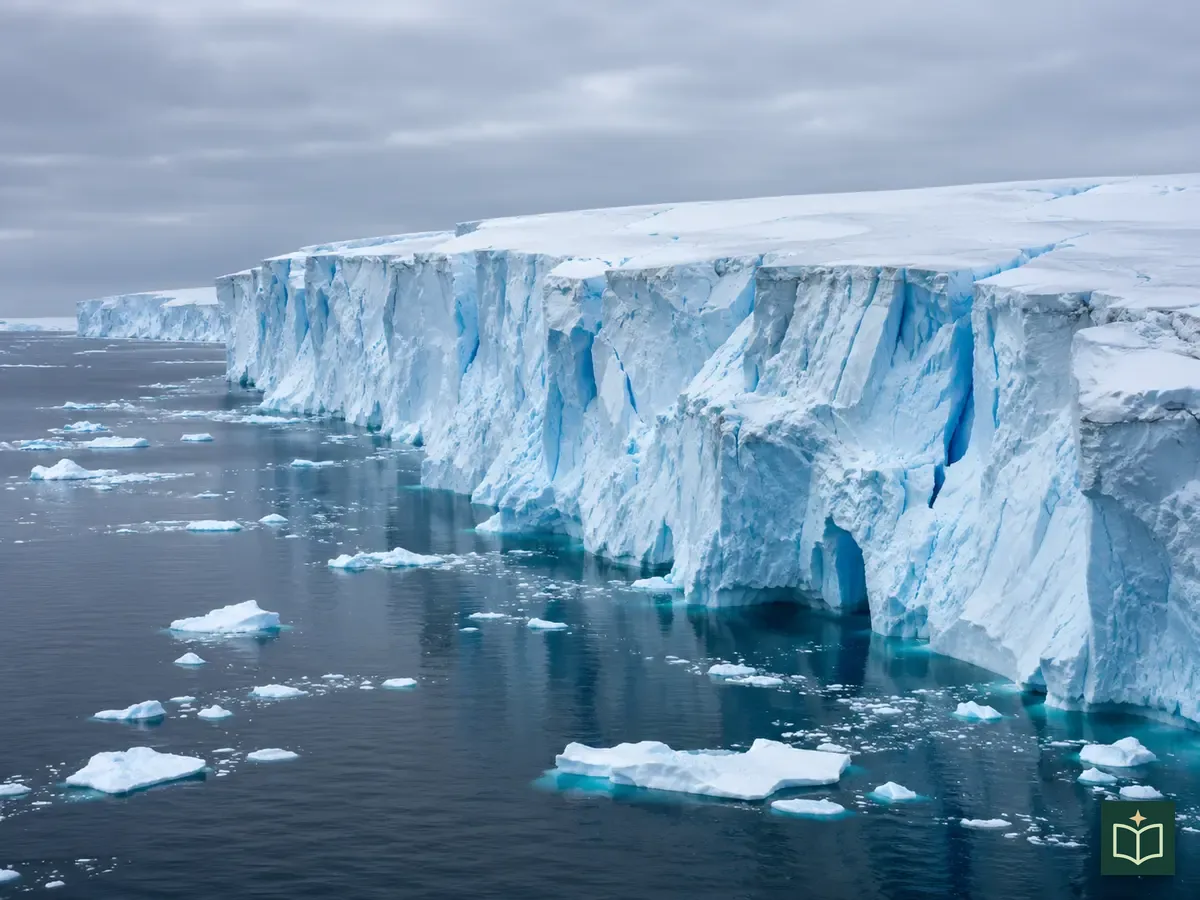
In geological terms, an ice age is any period when large ice sheets exist on Earth. By that definition, we are still in one, because Greenland and Antarctica remain covered by ice. The current ice age began around 2.6 million years ago. Within it, the climate has swung between cold glacial periods, when ice sheets spread across North America and northern Europe, and warmer interglacials like the present. The current interglacial, the Holocene, began about 11,700 years ago, a period that coincides with the development of agriculture and cities. When people talk about ‘the ice age’, they usually mean the most recent glacial period, which peaked about 20,000 years ago.
Milankovitch’s cycles
In the early 20th century, the Serbian scientist Milutin Milankovitch calculated how changes in Earth’s orbit alter the sunlight reaching different latitudes and seasons. Three cycles matter. The shape of Earth’s orbit varies from more circular to slightly more elliptical over about 100,000 years. The tilt of Earth’s axis shifts between about 22.1 and 24.5 degrees over 41,000 years; greater tilt means more extreme seasons. And the axis slowly wobbles like a spinning top, changing which season occurs when Earth is closest to the Sun, on a cycle of around 23,000 years. These cycles barely change total yearly sunlight but significantly alter summer sunshine at high northern latitudes.
Why small changes have big effects
The key to building ice sheets is not cold winters but cool summers. If northern summers are mild enough that winter snow does not melt completely, snow accumulates year after year and compresses into ice. Feedbacks then amplify the change. Ice and snow reflect sunlight, cooling the planet further. Colder oceans absorb more carbon dioxide, and ice cores from Antarctica show that atmospheric carbon dioxide fell to about 180 parts per million during glacial periods, compared with about 280 in pre-industrial interglacials. Lower carbon dioxide reduces the greenhouse effect. Together, these feedbacks turn a modest orbital nudge into a global shift of several degrees in average temperature.
The evidence
Milankovitch’s ideas were not widely accepted until the 1970s, when scientists analysed sediment cores from the deep ocean floor. The chemistry of tiny shells in those cores, particularly the ratio of oxygen isotopes, records changes in ice volume and temperature. The cycles they revealed matched the predicted orbital rhythms. A landmark 1976 study by James Hays, John Imbrie and Nicholas Shackleton provided strong confirmation. Ice cores from Antarctica, extending back about 800,000 years, record temperature and trapped bubbles of ancient air. They show glacial cycles roughly every 100,000 years over that period, though exactly why that cycle dominates remains a subject of active research.
When the Gulf was a valley
The last glacial period reshaped the Gulf region dramatically. With sea level about 120 metres lower around 20,000 years ago, the Arabian Gulf, which averages only around 35 metres deep, was almost entirely dry land. The Tigris and Euphrates likely continued as a river flowing through a broad valley towards the Strait of Hormuz. As the ice sheets melted, sea level rose and the Gulf flooded, reaching roughly its modern shoreline several thousand years ago. Some archaeologists suggest that the drowned basin may once have supported human populations, though the evidence lies underwater and remains limited. Arabia’s climate also alternated between arid and wetter phases.
Ice ages and today’s warming
Orbital cycles operate over tens of thousands of years. Calculations suggest that, without human influence, the next glacial period would not be expected for a very long time, likely tens of thousands of years. Present-day warming is happening far faster than orbital changes could cause, and it is driven by greenhouse gases released by human activity, as assessed by the Intergovernmental Panel on Climate Change. A common misconception is that natural cycles explain current warming; in fact, orbital forcing is changing extremely slowly at present. Studying past ice ages remains valuable, because it shows how sensitive Earth’s climate is to changes in sunlight, ice and carbon dioxide.
Sources & further reading
Figures are rounded and widely published; check the linked organisations for the latest editions. These organisations do not endorse this website.