Full bars, no data
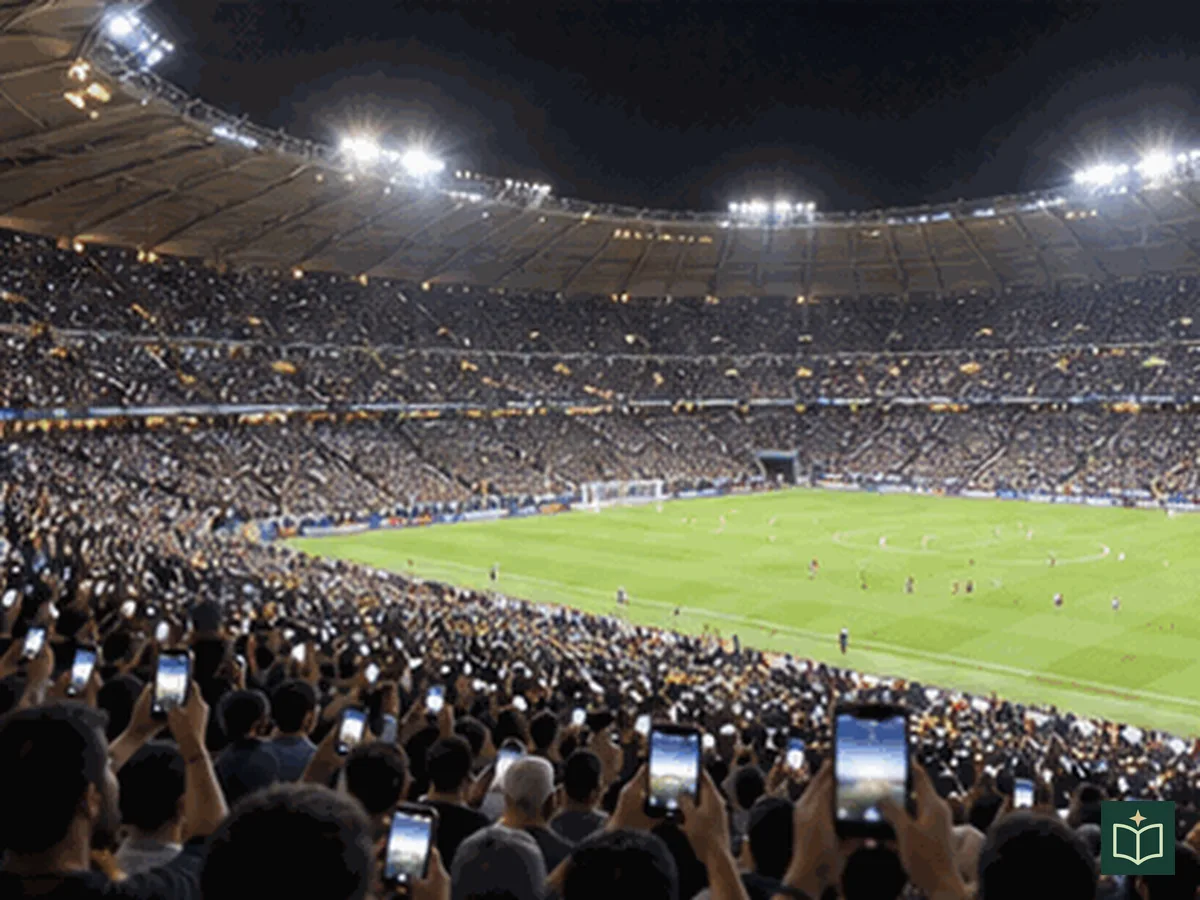
At a sold-out match or a New Year’s Eve fireworks show, many people notice the same puzzle: the phone shows strong signal, yet messages hang and videos refuse to upload. The bars measure how strongly your phone hears the nearest mast, not how busy that mast is. A mobile network is divided into cells, each served by an antenna covering a sector of ground. Everyone inside a cell shares its radio resources, much as cars share the lanes of a road. On an ordinary day, a few hundred people may use a cell. When tens of thousands gather in one place, the road is suddenly jammed, however good the surface.
The arithmetic of sharing
A cell’s capacity depends on how much spectrum it uses and how efficiently it encodes data. Suppose a busy sector can deliver about 300 megabits per second in total, a plausible figure for a well-equipped 4G or 5G site. Shared among 2,000 active users, that leaves each roughly 150 kilobits per second, too little for smooth video and sluggish even for photos. Real crowds are larger and less tidy. Phones farther from the antenna use slower, more robust coding, eating more of the shared capacity for the same data. Interference from neighbouring cells, all transmitting at once, reduces efficiency further, and bodies packed together absorb radio signals.
The upload problem
Crowds also reverse normal traffic patterns. Networks are usually built for people downloading far more than they upload, and phones transmit with much less power than masts. At a concert or a goal, thousands of people simultaneously send photos and live video, overwhelming the weaker upload direction. Behind the scenes, every phone also sends signalling messages to register, check for data and stay connected, and a sudden surge can overload the systems handling them even before any data flows. Apps refreshing in the background add to the load. This is why a simple text message might still get through while a video upload stalls, and why calls sometimes fail to connect.
Building temporary capacity
Operators prepare for major events months ahead. The main solution is more cells, each covering a smaller area, so capacity is reused many times across the venue. Trucks carrying mobile masts, known in the industry as cells on wheels, are parked near stadiums and festival grounds. Inside large venues, distributed antenna systems place hundreds of small antennas under seats, in ceilings and along concourses, each serving only a few hundred people. Operators also switch on extra spectrum bands, tune antennas to point inward, and steer phones towards stadium Wi-Fi. Engineers monitor traffic live during the event and can adjust settings minute by minute as crowds move.
Gulf experience
The Gulf has become expert at connecting enormous crowds. For the Hajj, Saudi operators build out dense networks around Mecca, Mina and Arafat, where about two million pilgrims gather over a few days, many sharing photos and video calls with family. Qatar’s stadiums for the 2022 FIFA World Cup, including the 89,000-seat Lusail Stadium, were designed with in-venue antenna systems from the start. Dubai’s Expo 2020 site and its New Year celebrations around the Burj Khalifa have required similar planning. These events show that crowd connectivity is solvable, but it requires investment, months of engineering and close coordination between venue owners, operators and authorities.
What helps on the day
Individual users have limited control, but a few choices help. Text-based messages need far less capacity than photos or video, and many apps will queue uploads to send automatically once the crowd disperses. Switching to the venue’s official Wi-Fi network, if available, can relieve pressure on mobile cells. Downloading tickets, maps and boarding passes before arrival avoids depending on the network at the gate. Emergency calls receive priority on most networks. Newer technologies, from 5G’s higher frequency bands to satellite links, add capacity, but physics stays the same: a fixed amount of spectrum shared by more people means a smaller share for each.
Sources & further reading
- GSMA · Mobile network technology ↗
- International Telecommunication Union · Mobile network capacity and spectrum ↗
- Britannica · Cellular telephone ↗
Figures are rounded and widely published; check the linked organisations for the latest editions. These organisations do not endorse this website.