A defence in waiting
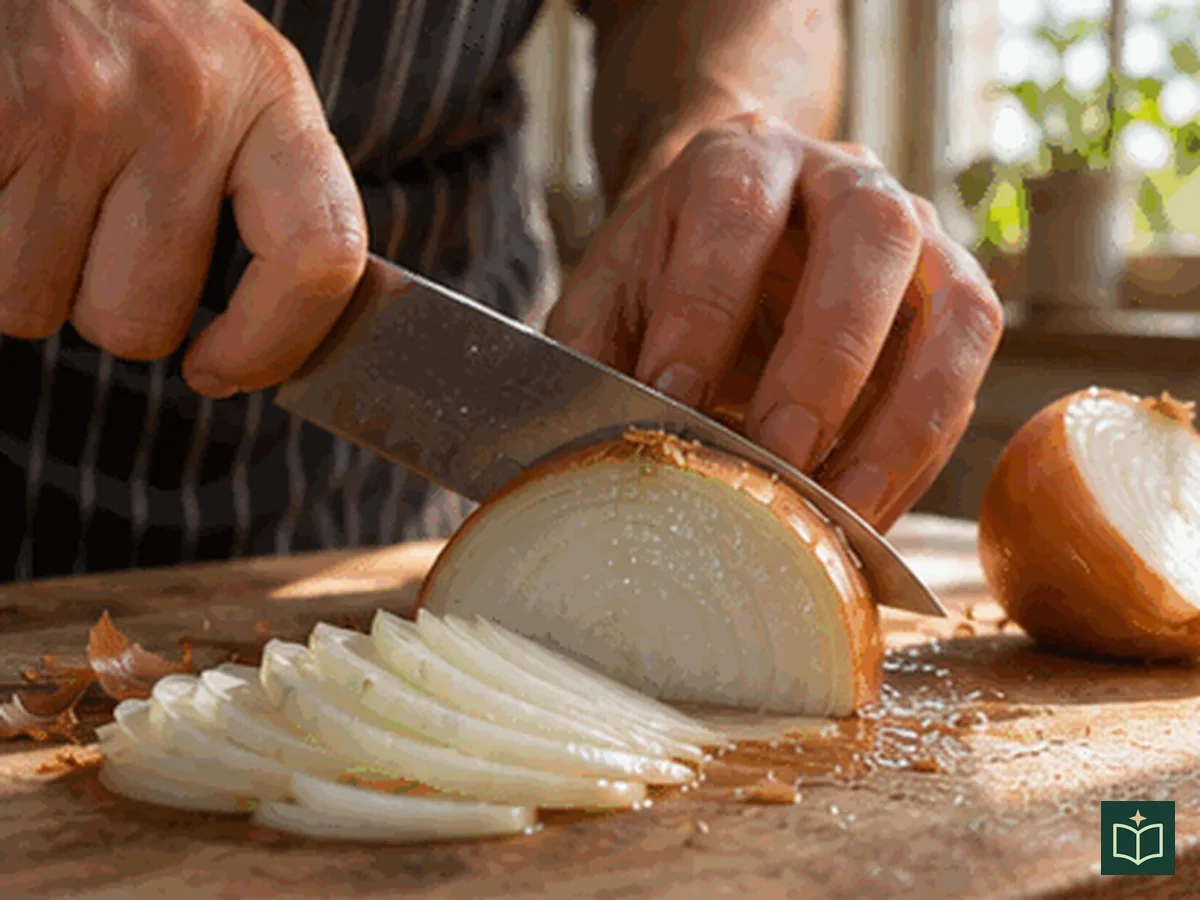
An intact onion barely smells. Its sharpness is held in reserve, as a defence against animals that bite into it. Onions, like garlic and leeks, take up sulphur from the soil and store it in compounds called sulphoxides, kept in the main body of each cell. An enzyme called alliinase is kept separately, in the cell's storage compartment. As long as the cells stay whole, the two never meet. When a knife or a tooth breaks the cell walls, they mix, and a rapid series of reactions begins. Within seconds the onion is producing the pungent compounds that give it flavour and the gas that makes eyes stream.
The chain of reactions
Alliinase splits the sulphoxides into reactive sulphur-containing acids. In garlic, these combine to form allicin, which gives crushed garlic its smell but does not cause tears. Onions add an extra step. In 2002, researchers in Japan reported that onions contain a second enzyme, lachrymatory factor synthase, which converts one of those acids into a gas called syn-propanethial-S-oxide. This lightweight molecule evaporates easily and drifts up from the chopping board towards your face. Its production peaks within about half a minute of cutting and then declines. The discovery explained why onions make people cry while garlic, which lacks the enzyme, generally does not, even though the two plants are close relatives.
Why the eyes water
The surface of the eye is covered by a thin film of fluid and packed with sensitive nerve endings belonging to the trigeminal nerve, the same nerve that responds to the sting of chilli and mustard. When the onion gas reaches the eye, it activates sensors on these nerves that detect irritating chemicals. The brain registers a burning sensation and triggers the tear glands to produce more fluid, an attempt to dilute and wash the irritant away. The gas may also react with water on the eye's surface to form mildly irritating products. The response is a reflex, which is why it starts within moments and cannot simply be willed away.
What actually helps
Because the gas comes from an enzyme reaction, anything that slows the reaction or limits the gas reaching the eyes will help. Chilling an onion for half an hour before cutting slows the enzymes and makes the gas less volatile. A very sharp knife slices cleanly through cells instead of crushing them, releasing fewer reactants. Cutting near an extractor fan or an open window carries the gas away, and keeping your face farther from the board helps. Many cooks leave the root end until last, as it is often said to be more pungent. Cutting under running water works but is awkward, and close-fitting goggles are effective, if unglamorous.
Cooking changes everything
Heat destroys the enzymes. That is why a pan of frying onions never makes anyone cry, and why cooked onions taste mild and sweet rather than sharp. As onions soften and brown, some of their sugars caramelise and react with other compounds, building rich flavours. Raw onions keep more of their pungent sulphur compounds, which some people find harsh and others prize in salads. Varieties differ too. Mild, sweet onions often grow in soils low in sulphur and contain fewer of the starting compounds. Plant breeders have developed low-tear onions by reducing the relevant enzyme activity, and these have appeared in shops in several countries in recent years.
Chemistry worth the tears
The same sulphur chemistry that irritates the eyes gives onions much of their value in the kitchen. Hundreds of sulphur compounds form when onions are cut and cooked, contributing to the savoury depth of stews, curries and sauces across the world, from Gulf machboos to European soups. Researchers are also interested in onion compounds for their possible health effects, although evidence in people is more limited than headlines sometimes suggest. The story of the onion's tears is a neat example of plant chemical defence. Many plants keep reactive ingredients separate and combine them only when attacked, turning a bite into an unpleasant surprise. Mustard and horseradish rely on a similar strategy.
Sources & further reading
Figures are rounded and widely published; check the linked organisations for the latest editions. These organisations do not endorse this website.