A familiar desert sight
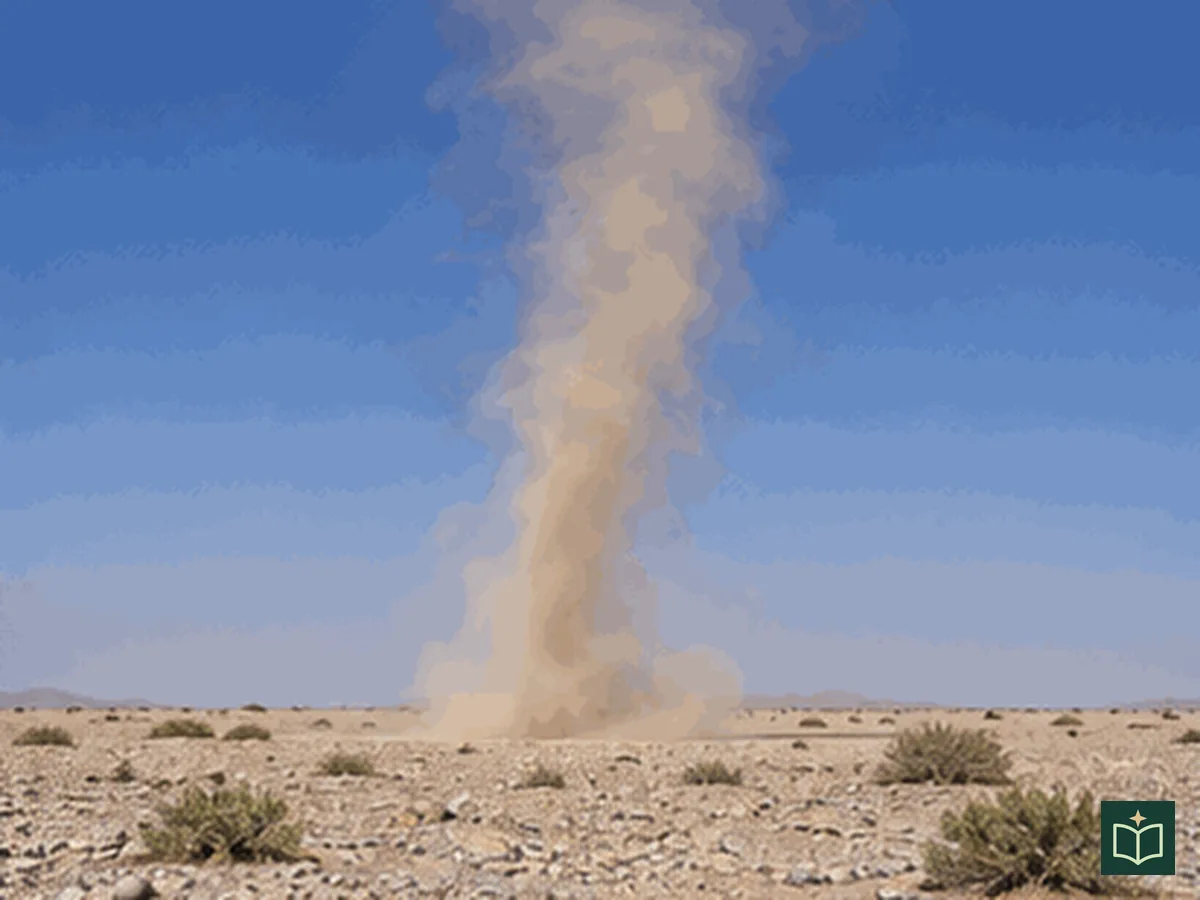
On a still, hot afternoon in the desert, a column of whirling dust can suddenly lift from the ground, wander across the sand for a minute or two and then vanish. This is a dust devil, known in Arabic as a zawba'a. Most are a few metres to a few tens of metres wide, though they may tower hundreds of metres high and occasionally more than a kilometre. Unlike most whirling winds, a dust devil does not need a storm. It forms under clear skies, often when the general wind is light. The energy comes straight from the ground, heated by intense sunshine, which is why deserts produce so many.
Heating from below
On a sunny day, bare sand or rock can become far hotter than the air above it, reaching 60 to 70°C at the surface in a Gulf summer. The layer of air just above the ground is heated strongly and becomes much warmer and lighter than the air a little higher up. This arrangement is unstable, like oil trapped beneath water. Eventually the hot air breaks through in a rising plume, often triggered by a small bump in the terrain, a change in surface or a passing gust. As the plume rises, air near the ground rushes in from all sides to replace it, and this inflow is what can turn a plume into a whirl.
How the spin is concentrated
The inflowing air almost always has some slight rotation, from gentle wind shear near the ground, the edge of an obstacle or eddies left by earlier plumes. As this air is drawn into the narrow column, it obeys the conservation of angular momentum, the principle that makes a spinning skater turn faster when pulling in their arms. If air circling at a radius of 10 metres is drawn in to 2 metres, its speed at the edge rises about fivefold, and it completes each turn about 25 times faster. The rising plume stretches the column vertically, tightening it further. Dust devils can spin either way, because Earth's rotation is far too weak to choose.
Not a small tornado
Dust devils and tornadoes look similar but are different phenomena. A tornado grows downward from a thunderstorm, usually a powerful rotating storm called a supercell, and draws on the enormous energy of that storm's updraft. Its winds can exceed 300 km/h and it can destroy buildings. A dust devil grows upward from heated ground in fair weather and is fed only by the warmth of the surface. Most have winds well below 70 km/h and last a few minutes. They can still be hazardous: strong ones have toppled tents, damaged light structures and caused accidents, and they pose a risk to small aircraft and paragliders taking off or landing.
When and where they form
Dust devils are most common from late morning to mid-afternoon in late spring and summer, when the sun is high and the ground hottest. They prefer flat, dry, open terrain such as desert plains, dry lake beds, ploughed fields and even car parks. Across the UAE's inland deserts, they are a routine summer sight. Their lifespan is short because they eventually cut themselves off from their supply of hot surface air, or drift over cooler ground that cannot sustain them. A day with a strong general wind tends to produce fewer, as the wind mixes the heated layer before plumes can organise. Calm, scorching conditions are ideal.
Dust devils on Mars
Dust devils are not unique to Earth. Mars, with its thin atmosphere and dusty surface, produces enormous ones, some several kilometres tall, and orbiting cameras have photographed the dark tracks they leave across the ground. NASA's Spirit and Opportunity rovers, which ran on solar power, benefited from passing whirlwinds that blew dust off their panels and restored power, extending their missions far beyond plans. On Earth, scientists study dust devils because, collectively, they lift a meaningful amount of fine dust into the atmosphere, affecting air quality and how sunlight is absorbed. A small swirl crossing the sand is a visible sign of the heat engine running beneath every desert day.
Sources & further reading
Figures are rounded and widely published; check the linked organisations for the latest editions. These organisations do not endorse this website.