Escaping drought
Desert plants have three broad strategies. Some, like the ghaf tree, send roots deep to reach groundwater. Others, like cacti and succulents, store water in their tissues. A third group, the desert annuals or ephemerals, takes a different approach: it avoids drought altogether by spending the dry months as seeds. A seed is a remarkably tough package, a dormant embryo with a food store, wrapped in a protective coat. It can survive heat and dryness that would kill a growing plant. For much of the year, and sometimes for several years, the only sign of these plants in the desert is a hidden store of seeds in the top layer of soil.
Measuring the rain
The challenge for a desert seed is deciding when to sprout. Germinate after a light shower and the seedling may die of thirst within days. So many desert seeds contain chemical inhibitors in their coats that must be washed out by a substantial amount of water before growth can begin. A brief drizzle wets the surface but leaves the inhibitors in place; a soaking rain rinses them away and also moistens the soil deeply enough to support a plant for weeks. Some seeds also respond to temperature, sprouting only in the cooler season, when evaporation is lower. In effect, the seed carries a rain gauge and a thermometer.
Hedging bets
Even a good rain is not a guarantee. A dry spell may follow, killing the seedlings before they can flower. Desert annuals spread their risk. In many species, only a fraction of the seeds germinate after any one rain, while the rest stay dormant for a future year. Biologists call this bet-hedging, the same logic as not putting all your savings in one place. Differences in coat thickness, seed position on the parent plant and depth in the soil all help to stagger germination. The result is a seed bank, a reserve of dormant seeds in the soil that can sustain a population through long sequences of poor years.
A whole life in weeks
Once triggered, desert annuals grow quickly. Seedlings put down roots, unfold leaves and photosynthesise at a furious pace while water lasts. Many flower within a few weeks, and the entire cycle from germination to new seed can take around six to eight weeks. Flowers are often bright and abundant, attracting insects that are themselves responding to the sudden flush of food. As the soil dries, the plants wither and die, but not before scattering thousands of seeds to restock the bank. In deserts across the world, from California to Chile's Atacama, a wet year can produce a so-called superbloom, carpeting normally barren ground with flowers.
Green after Arabian rains
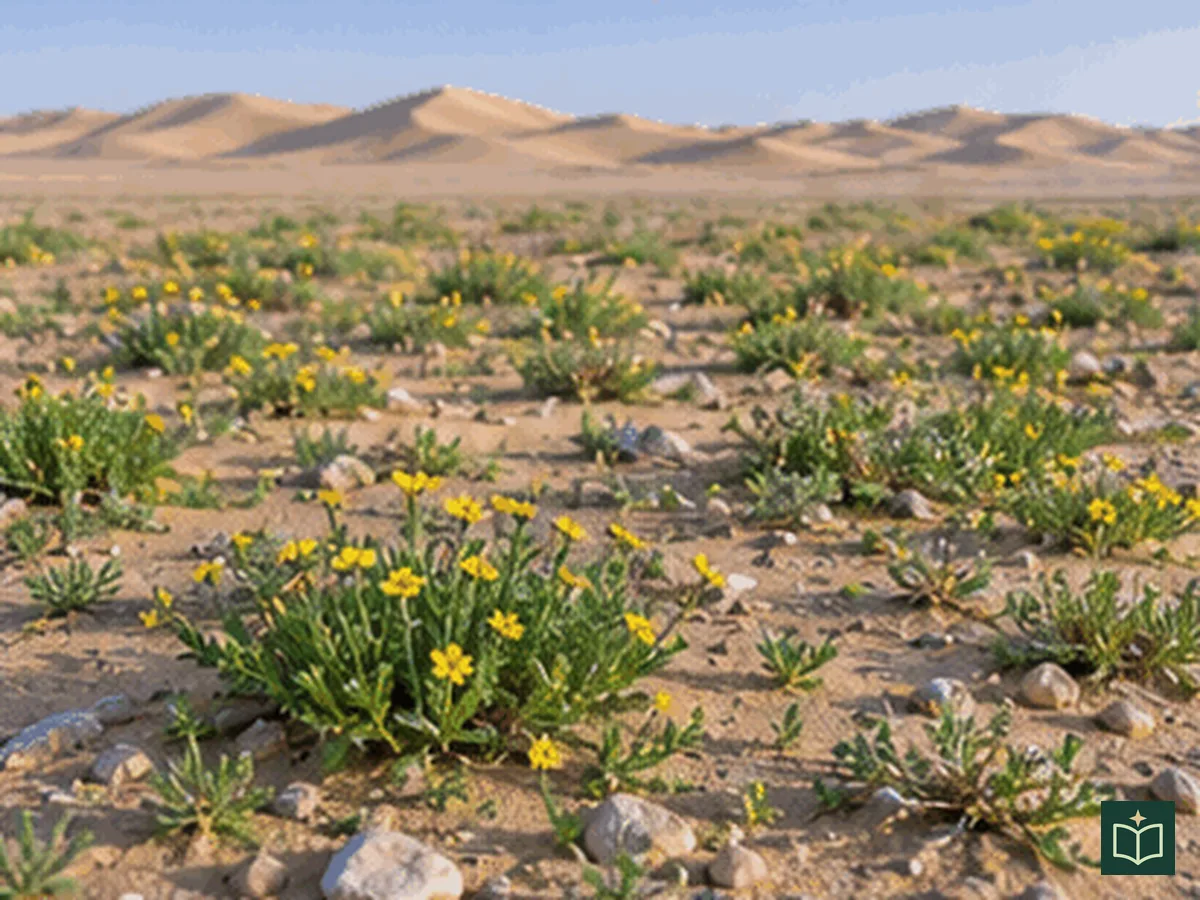
Rain in the Arabian Peninsula is rare and irregular, falling mostly in winter and spring and often in a few heavy downpours. After a good soaking, gravel plains, wadis and the gaps between dunes can turn green with surprising speed, as grasses and small annual herbs that had been invisible for months or years emerge together. Camels and gazelles graze on the brief flush, insects multiply and birds follow. Within weeks, the landscape fades back to brown, but the seed bank has been refreshed. Local herders have long known where and when to expect this growth, and traditional grazing patterns once moved with the rain.
Seeds that outlast centuries
How long a seed can wait varies widely, and desert seeds are among the champions. Many remain viable for years or decades in dry soil, where low moisture slows the chemical decay of the embryo. The most famous example of longevity comes from a different kind of desert plant. A date palm seed recovered from the ancient fortress of Masada, by the Dead Sea, and radiocarbon-dated to about 2,000 years old, was successfully germinated in 2005. Seed banks such as the Millennium Seed Bank in the United Kingdom store seeds of dryland plants under cold, dry conditions, imitating the desert's own strategy to safeguard plant diversity for the future.
Sources & further reading
Figures are rounded and widely published; check the linked organisations for the latest editions. These organisations do not endorse this website.