Born grey
A flamingo chick is not pink. It hatches covered in soft grey or white down, with a straight beak and pale legs. Its first juvenile feathers are greyish brown. Colour arrives slowly as the young bird feeds for itself and moults into new plumage, and full adult colour can take around three years or more to appear. That alone tells us the pink is not built into the bird's genes in the way a robin's red breast is. Instead, flamingos take their colour from what they eat. The pigments responsible are carotenoids, the same family of compounds that makes carrots orange, tomatoes red and egg yolks yellow.
A pigment chain
Carotenoids are made by plants, algae and some microbes, not by animals. In the salty lagoons and mudflats where flamingos feed, microscopic algae and bacteria produce red and orange carotenoids, partly to protect themselves from intense sunlight. Brine shrimp, insect larvae and other small creatures graze on these microbes and accumulate the pigments in their bodies. Flamingos eat both the microbes and the small animals. Enzymes in the bird's liver convert the pigments into forms such as canthaxanthin and related compounds, which are carried in the blood and deposited in growing feathers, skin, legs and beak. A flamingo's shade of pink is, in effect, a record of its diet.
Feeding upside down
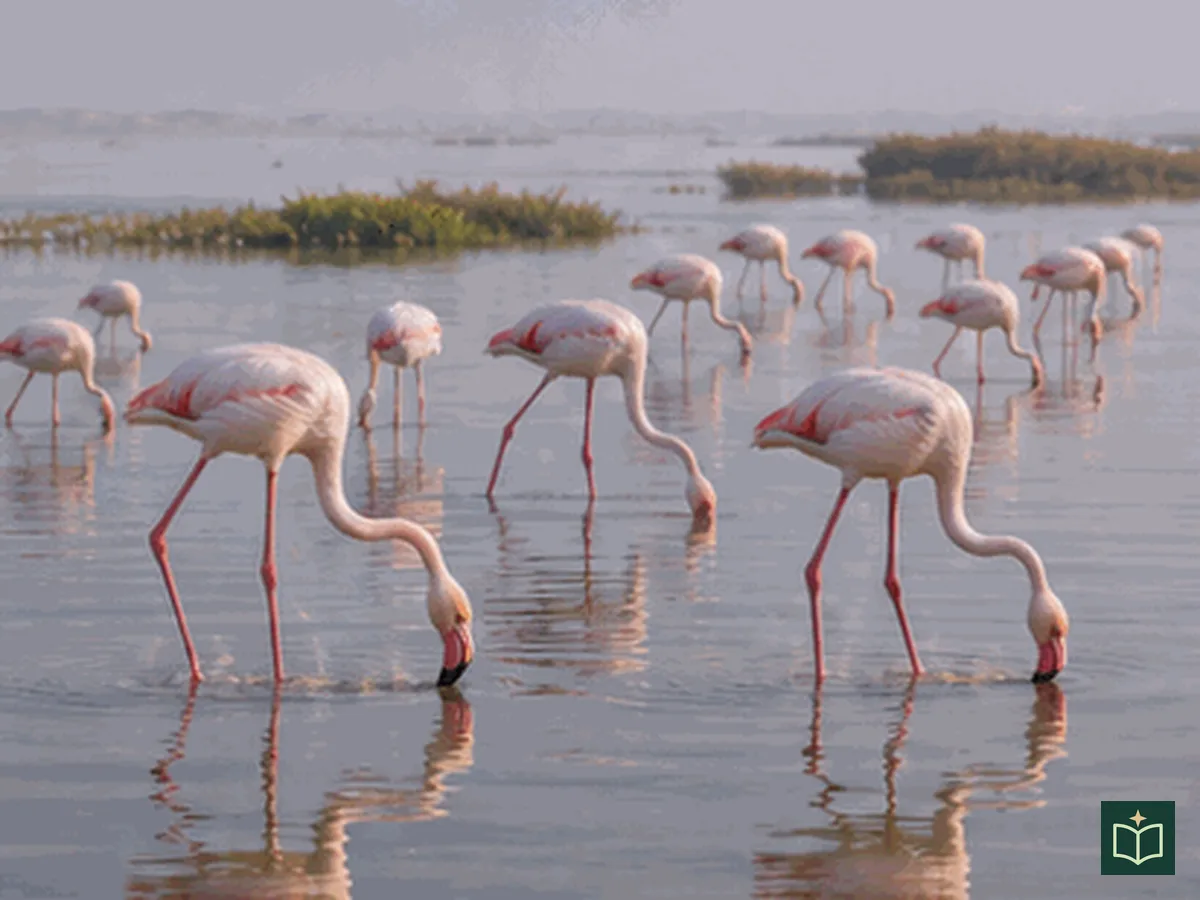
Flamingos eat in a way unlike almost any other bird. A flamingo lowers its head between its legs so that its sharply bent beak is upside down in the water. It then pumps water and mud through the beak with its thick tongue. Comb-like plates along the edges of the beak, called lamellae, act as a sieve, trapping algae, shrimp and seeds while expelling the water and silt. Birds often stamp or shuffle their feet to stir food from the mud. This filter-feeding style, shared with baleen whales, lets flamingos exploit very salty waters where few competitors can survive but tiny, pigment-rich organisms thrive.
Colour as a signal
A flamingo's colour does more than reflect diet. Brighter birds are generally healthier and better fed, and pink plumage plays a role in courtship, when flocks perform synchronised marching and head-flagging displays. Studies of greater flamingos have found that birds rub pigment-rich oil from a gland near the tail onto their feathers, intensifying their colour during the breeding season, a behaviour researchers have compared to applying make-up. Parenthood costs colour. Both parents feed their chick a nutritious fluid produced in the upper digestive tract, known as crop milk, which is rich in carotenoids. Adults rearing young can fade noticeably as pigment passes from their bodies to the chick.
Flamingos in the UAE
The greater flamingo is a familiar sight in the UAE's coastal lagoons and protected wetlands, especially in the cooler months when migrants arrive from breeding grounds farther north. The Ras Al Khor Wildlife Sanctuary at the head of Dubai Creek hosts large flocks within sight of the city's towers, viewed from bird hides. In Abu Dhabi, the Al Wathba Wetland Reserve has become one of the few places in the Arabian Peninsula where greater flamingos have bred successfully, with nesting recorded there since the late 1990s. Flamingos are also seen around coastal mudflats elsewhere in the Gulf, where shallow, salty water supports the tiny organisms they need.
When the food runs pale
Because the colour depends on diet, flamingos kept in captivity can fade to a dull white if their food lacks carotenoids. Zoos and wildlife parks now add pigments, such as canthaxanthin or natural sources like shrimp and certain algae, to their feed to maintain the birds' colour. The pinkness of wild flocks can also hint at the condition of their wetlands: changes in salinity, water levels or pollution affect the algae and invertebrates at the base of the food chain. Protecting the colour therefore means protecting the shallow, saline habitats that supply it. For a flamingo, being pink is a sign that its lagoon is working.
Sources & further reading
Figures are rounded and widely published; check the linked organisations for the latest editions. These organisations do not endorse this website.