A layout from the 1870s
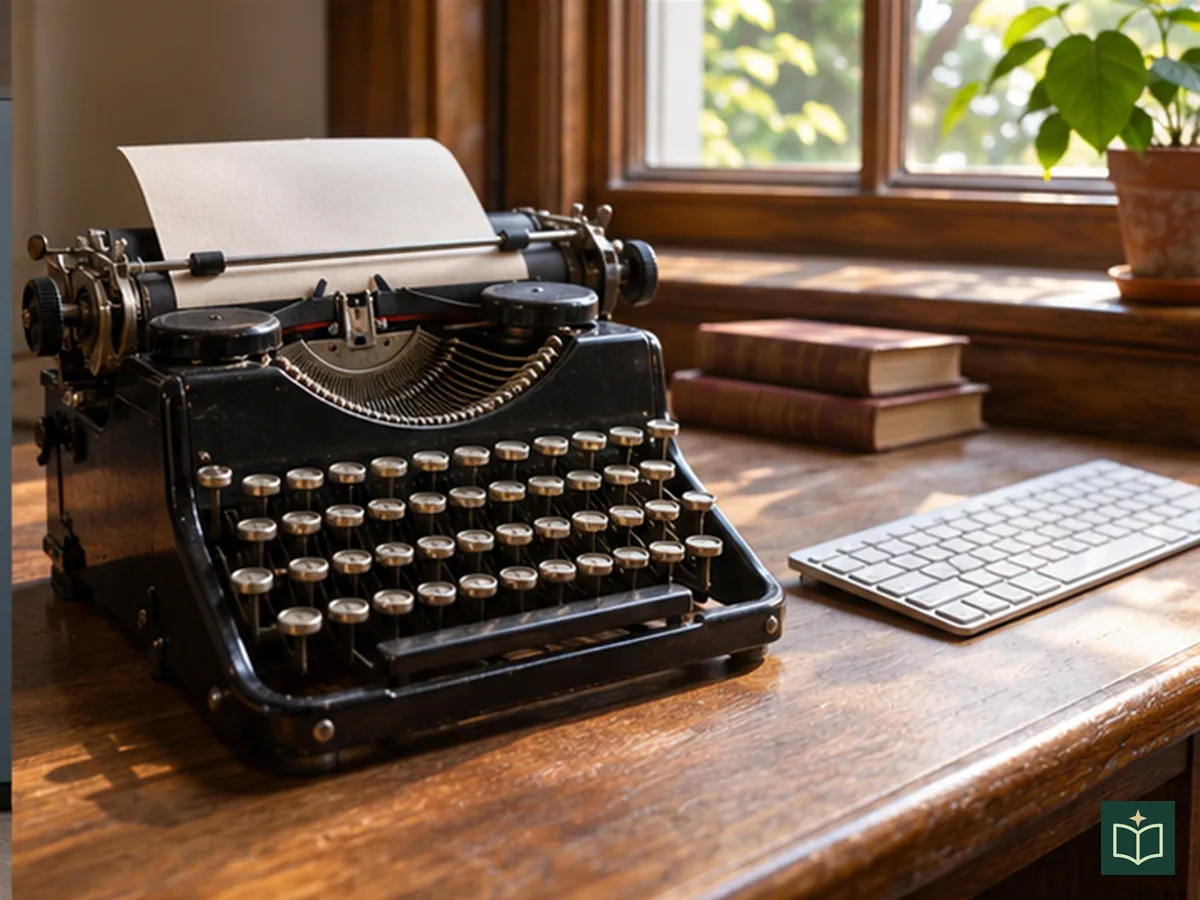
Look at almost any computer keyboard or phone screen in the English-speaking world and the top row of letters begins Q, W, E, R, T, Y. The arrangement dates from the typewriter developed in Milwaukee, in the United States, by the printer and politician Christopher Latham Sholes and his collaborators from the late 1860s. Their early models arranged keys roughly alphabetically, in two rows, like a piano. Over several years of trial and redesign, the layout shifted into something close to today’s form. The Sholes and Glidden typewriter, manufactured by E. Remington and Sons, went on sale in 1874 with a near-QWERTY layout.
The jamming story
The most popular explanation is that QWERTY was designed to slow typists down so the machine would not jam. That is not quite right. Early typewriters had type bars arranged in a circle, which swung up to strike the paper. If two neighbouring bars were struck in quick succession, they could collide and stick. Separating some common letter pairs reduced this problem, so mechanics probably did influence the design. But the aim was to let typists work faster without jams, not to slow them down. And the evidence that the layout was optimised for this purpose is mixed: some frequent English pairs, such as E and R, sit side by side.
The telegraph theory
Research by two Japanese scholars, Koichi and Motoko Yasuoka, published in 2011, suggested another influence. Many early typewriter buyers were telegraph operators transcribing Morse code messages at speed. In American Morse, some letters were easily confused, and operators needed to reach related letters quickly as a message unfolded. The researchers argued that feedback from these users helped push certain keys into their final positions. Like the jamming story, this theory explains some features but not all. The honest conclusion is that QWERTY emerged from years of tinkering, mechanical constraints, commercial decisions and early users’ requests, rather than a single clever design principle applied from the start.
Challengers that failed
Many alternatives have been proposed. The best known is the Dvorak Simplified Keyboard, patented in 1936 by the American educational psychologist August Dvorak and his brother-in-law William Dealey. It places the most common English letters on the middle row, under the fingers at rest, and alternates between hands. Its supporters reported large speed gains, but later reviews found that many of the studies were small or conducted by Dvorak himself, and that the advantage for trained typists is modest. Other countries use their own variants, such as AZERTY in France and Belgium and QWERTZ in Germany, adjusted for local letters and accents, but these are close relatives of QWERTY.
Why it stuck
Economists use QWERTY as a famous example of path dependence: once a standard is widely adopted, it can persist even if alternatives are arguably better. By the early 20th century, typing schools taught QWERTY, offices bought QWERTY machines and employers hired QWERTY typists. A typist trained on another layout would struggle to find work, and a manufacturer selling another layout would struggle to find customers. Each choice reinforced the others. Computers inherited the arrangement from typewriters, and touchscreen phones inherited it from computers, even though jamming type bars no longer exist. Switching layouts today means relearning years of muscle memory, a cost few people are willing to pay.
Keyboards in other scripts
Not every keyboard is QWERTY. Arabic keyboards follow their own layout, developed for Arabic typewriters, with letters placed according to their frequency and the needs of a joined, right-to-left script; in the Gulf, keys often carry both Arabic and Latin letters so one keyboard can type both. Chinese and Japanese users usually type sounds or shapes on a Latin keyboard and choose characters from suggestions. On phones, prediction and swipe typing have changed how people enter text, and voice input is growing. Yet even on glass screens with no moving parts at all, the 150-year-old arrangement remains the default, a living trace of nineteenth-century engineering in the device in your pocket.
Sources & further reading
Figures are rounded and widely published; check the linked organisations for the latest editions. These organisations do not endorse this website.