Counting with two symbols
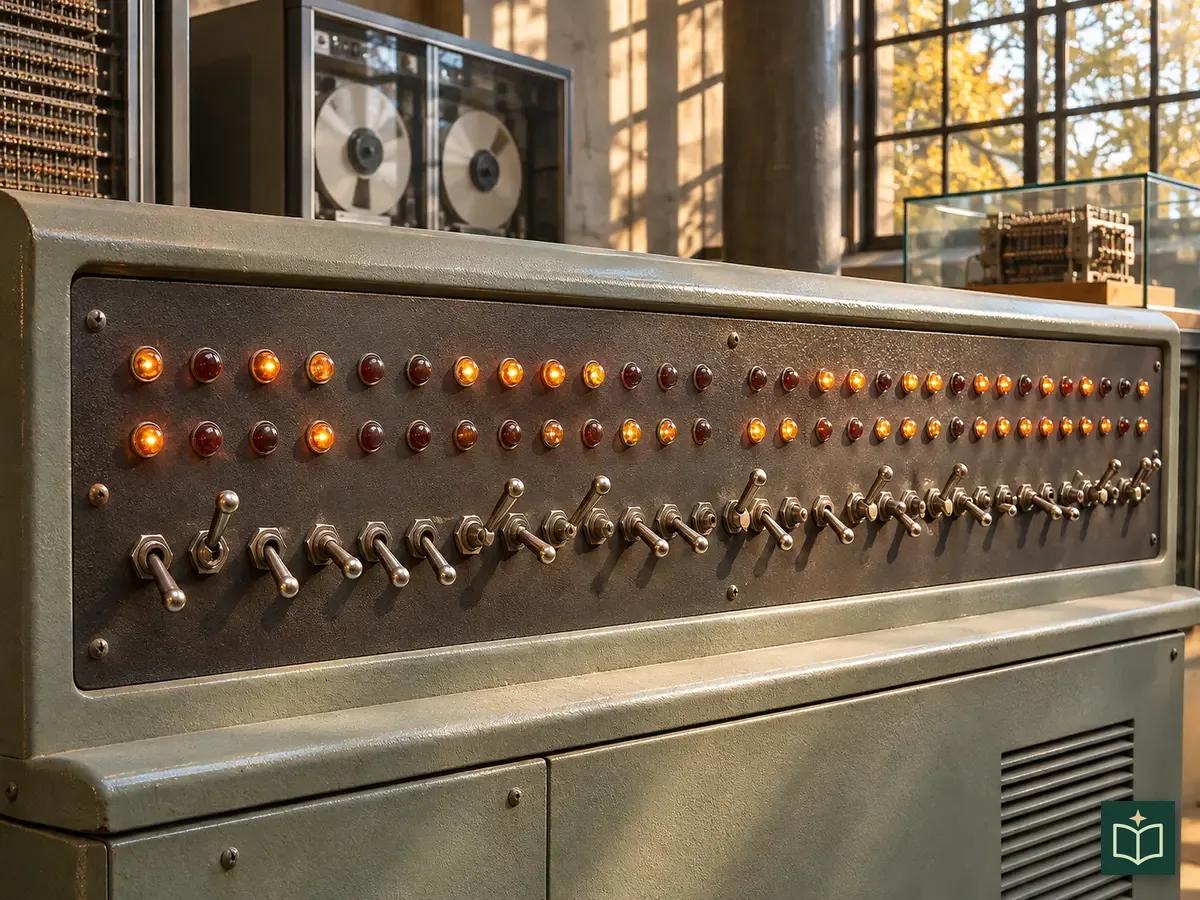
We count in base ten, probably because we have ten fingers: each column is worth ten times the one to its right. Binary works the same way with base two. The columns are worth 1, 2, 4, 8, 16 and so on, doubling each time, and each column holds either 0 or 1. So the binary number 1011 means one eight, no fours, one two and one one, which is eleven. Any whole number can be written this way; it simply takes more digits. The mathematician Gottfried Wilhelm Leibniz described binary arithmetic in detail around 1700, long before any electronic machine existed.
Why not use ten digits?
Early computing pioneers experimented with decimal machines, but binary won for practical reasons. An electronic switch is either conducting or not, and a voltage is easiest to read when the only question is 'high or low?'. Distinguishing ten different voltage levels would demand far more precision, and small amounts of electrical noise could turn a 6 into a 7. With only two states, the gap between them can be wide, so errors are rare. In 1937 Claude Shannon showed that the true-or-false logic of George Boole could be built from electrical switching circuits, linking binary numbers and logic into one engineering toolkit.
Bits, bytes and beyond
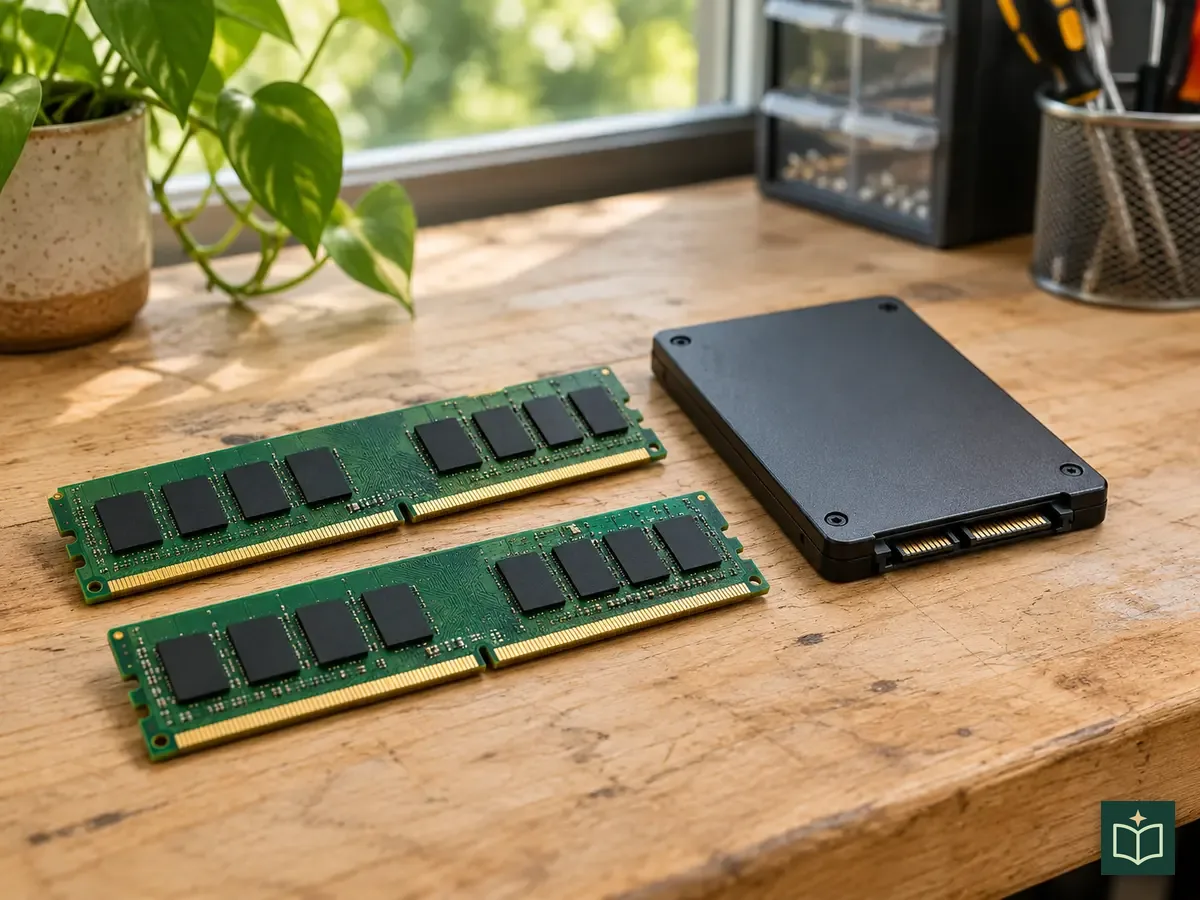
A single binary digit is a bit. Eight bits make a byte, which can take 256 different patterns. A kilobyte is roughly a thousand bytes, a megabyte a million, a gigabyte a billion and a terabyte a trillion. There is a long-standing wrinkle here: some systems count in powers of two, so a 'kilobyte' may mean 1,024 bytes. Standards bodies introduced terms such as kibibyte and gibibyte to separate the two, but everyday usage remains mixed, which is one reason a new drive often seems to hold slightly less than the label suggests when a computer reports its capacity. Both conventions are correct.
Turning patterns into text
Letters are stored using agreed tables. The early ASCII standard, from the 1960s, assigned numbers to English letters, digits and punctuation, so capital A is 65. That served English well and other languages poorly. Unicode, developed from the late 1980s, now gives a unique number to well over a hundred thousand characters, covering Arabic, Chinese, Devanagari, mathematical symbols and emoji. A common encoding called UTF-8 stores ordinary English letters in one byte and other scripts in two to four bytes. When a message turns into strings of strange symbols, the usual cause is that the sender and receiver disagreed about which encoding was in use.
Pictures and sound as numbers
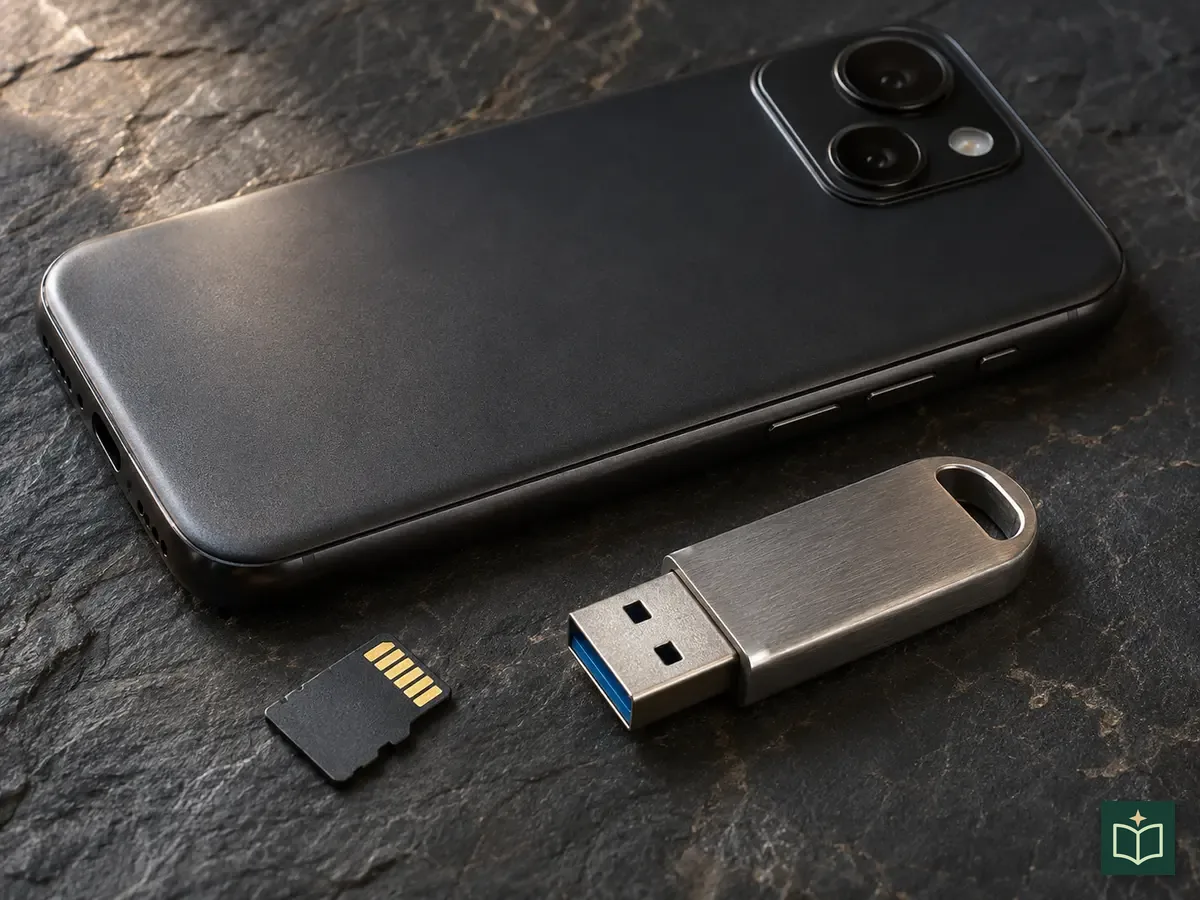
An image is a grid of pixels, and each pixel is stored as numbers for its red, green and blue intensity, commonly one byte per colour, giving more than 16 million possible colours. Sound is captured by measuring the height of the audio wave thousands of times a second; music on a compact disc uses 44,100 measurements per second for each stereo channel, each recorded as a 16-bit number. A photo of 12 million pixels therefore starts as roughly 36 million bytes before compression. Video simply adds many such images every second, which is why it fills storage and consumes mobile data so quickly.
Common misconceptions
Binary is sometimes described as a secret machine language that only experts understand, but it is simply a way of writing numbers. Programmers rarely work with raw ones and zeros; they use higher-level languages, and tools translate those into binary instructions. Another misconception is that more bits always mean better quality. Extra bits allow finer detail, but a badly recorded photo stays poor however it is stored. Quantum computers are sometimes said to abandon binary; in fact their qubits are still measured as 0 or 1, though they behave differently before measurement. The two-symbol foundation looks set to remain. It is simply too useful.
Sources & further reading
Figures are rounded and widely published; check the linked organisations for the latest editions. These organisations do not endorse this website.