The brain is a misleading metaphor
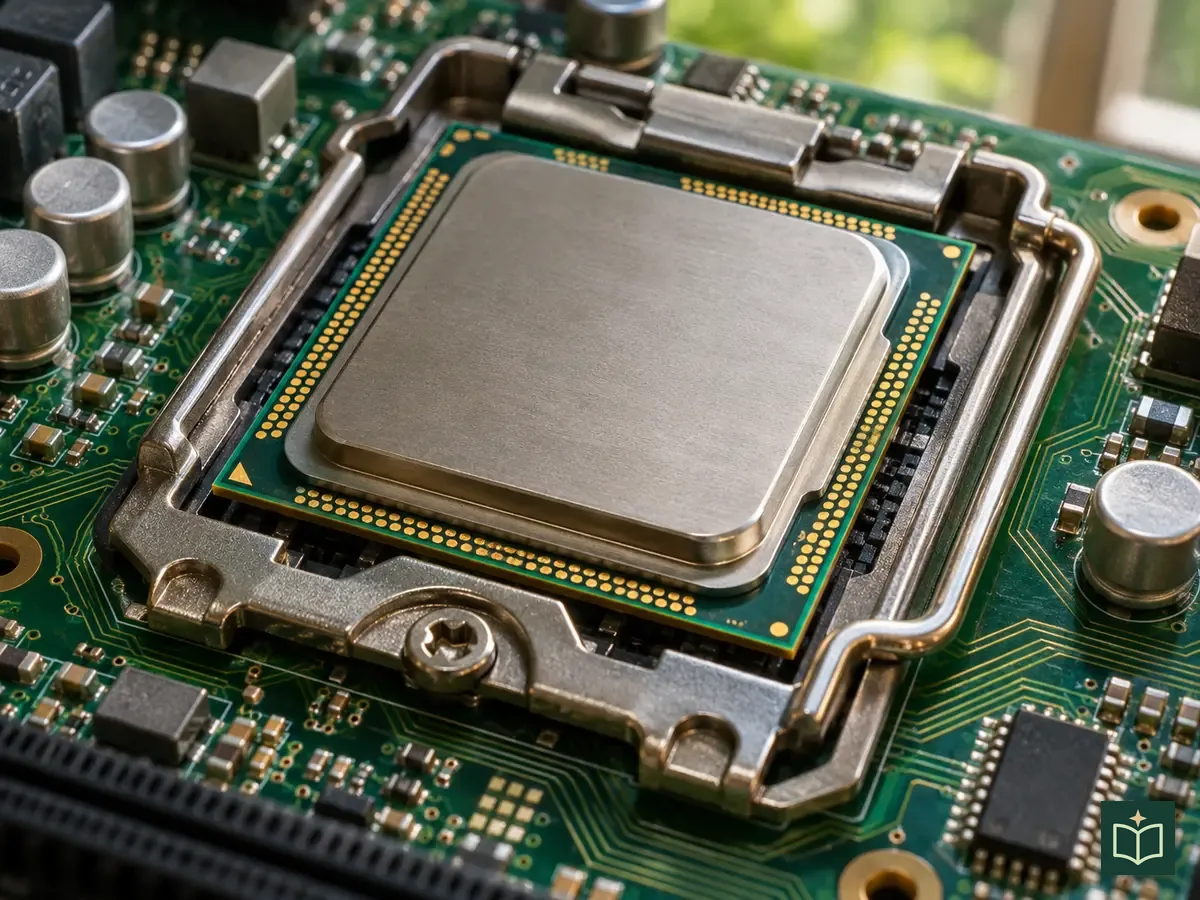
The central processing unit is often called the brain of a computer, but it does not think. It is a slab of silicon carrying billions of transistors, wired into circuits that can add numbers, compare them, move them around and choose which instruction to run next. Everything else, from playing a song to checking a bank balance, is built from combinations of those few abilities. The skill lies not in any single operation, which is trivial, but in the sheer number of them performed every second and in the layers of software that translate human goals into that tiny vocabulary of steps.
The fetch-decode-execute cycle
A program sits in memory as a sequence of numbered instructions. A register called the program counter records which one comes next. The processor fetches that instruction, decodes it to determine the operation, perhaps 'add these two numbers' or 'jump to instruction 400 if the result is zero', and then executes it using its arithmetic logic unit. The result is stored, the counter moves on, and the loop begins again. A small number of fast storage slots inside the chip, the registers, hold the values currently being worked on, because fetching data from main memory is comparatively slow. Millions of these loops pass in the blink of an eye.
The clock keeps time
Every step is synchronised by an oscillating clock signal. A processor running at 3 gigahertz receives three billion ticks each second, and simple instructions may complete within one or a few ticks. Raising clock speed was the main route to faster computers for decades, but by the mid-2000s chips were running into heat limits: faster switching burns more power, and that energy must leave the chip as heat. Designers therefore shifted towards doing more work per tick and towards putting several complete processors, called cores, side by side on one piece of silicon. Clock speed alone is now a poor guide to performance.
Tricks for going faster
Modern processors overlap work in a pipeline, so one instruction is being fetched while another is decoded and a third executed, like a car assembly line. They also guess. When a program reaches a fork, a branch predictor bets on which path will be taken and starts work early; if the guess is wrong, the speculative work is discarded. Out-of-order execution lets the chip run later instructions whose data is ready while earlier ones wait. Small, very fast caches keep recently used data close at hand. These techniques explain why two chips at the same clock speed can perform very differently.
Many cores, many jobs
A phone or laptop today typically contains several cores, and some designs mix large high-performance cores with smaller efficient ones. The operating system hands different tasks to different cores, so a video can play while a file downloads. But more cores help only when work can be split. Some tasks, such as rendering many video frames, divide neatly; others depend on each step finishing before the next can begin and gain little. This is why specialised chips exist alongside the CPU, such as graphics processors for highly parallel arithmetic and neural processing units for the matrix maths used in artificial intelligence.
Why it matters
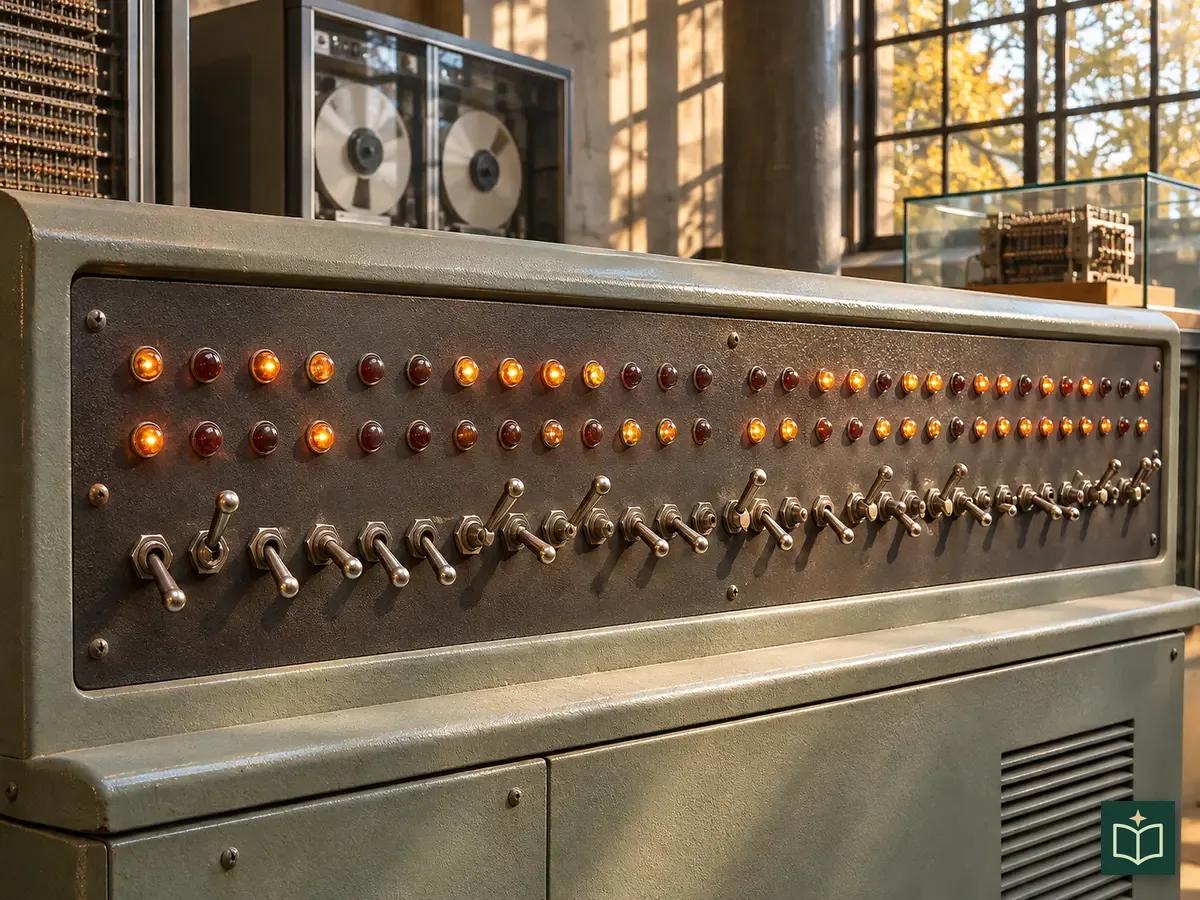
Understanding the processor helps explain many everyday experiences: why a device slows when it overheats, why a new phone feels quicker even at a similar clock speed, and why battery life depends on how hard the chip is working. It also clarifies headlines about national chip strategies and data-centre investment, because processors are the foundation of every digital service. The next gains are expected to come less from raw speed and more from specialisation, better packaging of several chips together and smarter software that uses the hardware efficiently. The basic loop, however, has barely changed since the earliest stored-program computers of the 1940s.
Sources & further reading
Figures are rounded and widely published; check the linked organisations for the latest editions. These organisations do not endorse this website.