Back to where it came from
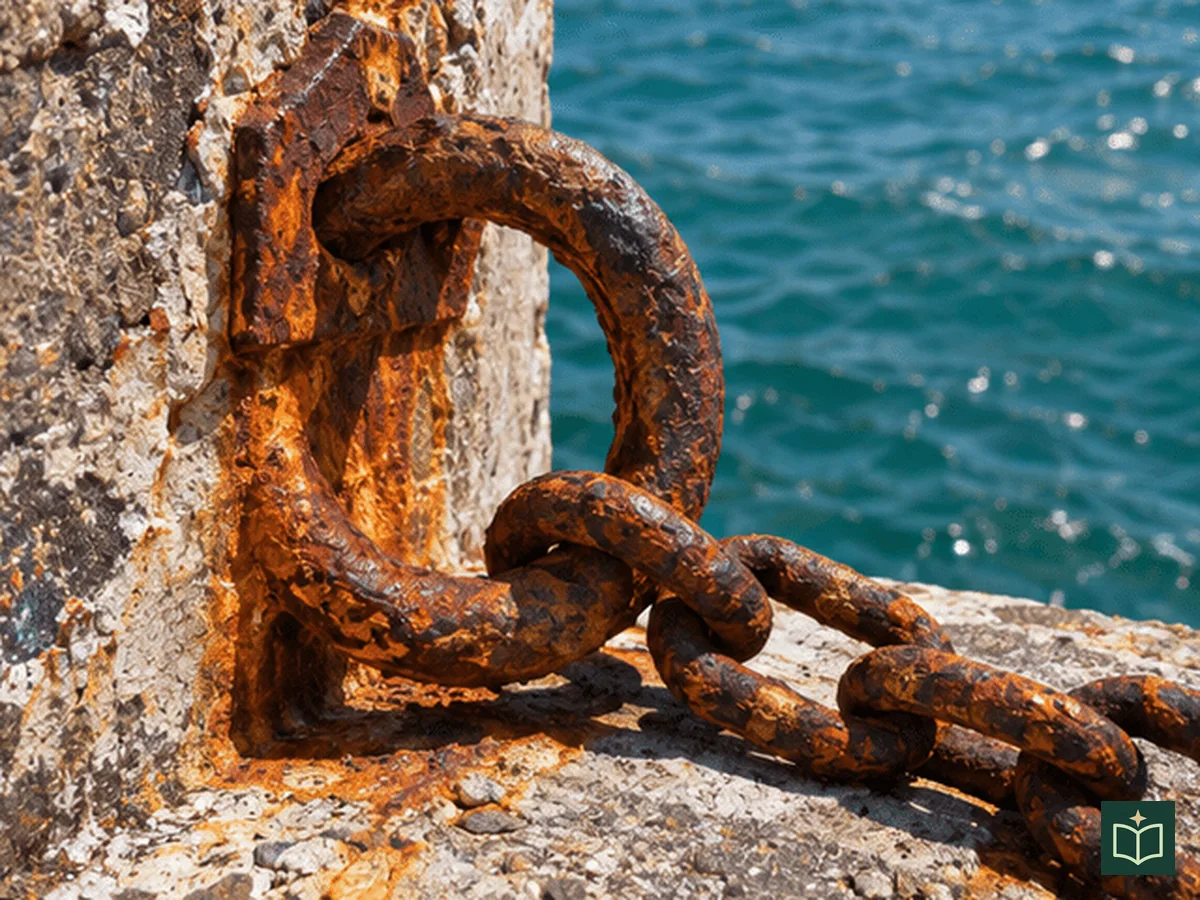
Iron is almost never found as a pure metal in nature. It occurs in ores such as haematite, a form of iron oxide, and producing steel means stripping away the oxygen in a blast furnace using a great deal of energy. Rusting is that process running in reverse. Left exposed to air and water, iron slowly recombines with oxygen to form hydrated iron oxide, the reddish-brown substance we call rust. The metal is, in effect, returning to a lower-energy state close to the ore it came from. Unlike the thin oxide layers on some metals, rust is flaky and porous, so it does not protect the iron beneath.
A tiny battery on the surface
Rusting is an electrochemical reaction, much like a small battery. Both oxygen and water are needed; iron in dry air or in oxygen-free water barely rusts. Where a water film covers the metal, one area acts as an anode, where iron atoms dissolve as ions and release electrons. Those electrons travel through the metal to another area, the cathode, where oxygen dissolved in the water takes them up and forms hydroxide ions. The iron ions and hydroxide meet in the water and, after further reaction with oxygen, settle as rust. Because the two areas can be some distance apart, pitting can occur where rust itself is not visible.
Why salt speeds it up
Salt does not take part in the final product but makes the battery work better. Dissolved salt turns water into a far better conductor, so the electric circuit between anode and cathode runs more easily. Chloride ions also break down any protective films that form on the metal. Heat speeds up chemical reactions, and humidity keeps surfaces damp for longer. The coasts of the Gulf combine all of these: hot weather, high humidity for much of the year and air carrying fine salt spray from the sea. That is why balconies, railings, air-conditioning units and cars near the shore in cities such as Dubai and Doha can corrode quickly without protection.
When rust breaks concrete
Rust also does damage by swelling. It occupies several times the volume of the iron it replaces, so when steel reinforcing bars inside concrete corrode, the growing rust pushes outward and cracks the concrete around it, a problem engineers call spalling. Concrete normally protects steel because it is strongly alkaline, which keeps a thin passive film on the bars, but chlorides from sea air, salty groundwater or contaminated sand can penetrate over time and break that protection. Corrosion of reinforcement has been a major durability concern for buildings, bridges and marine structures in the Gulf, leading to stricter standards for concrete cover, materials and coatings.
How metal is protected
Several defences slow rust. Paint and plastic coatings act as barriers keeping water and oxygen away, though any scratch exposes the metal. Galvanising coats steel in zinc, which corrodes in preference to iron; even if scratched, the zinc sacrifices itself and protects the steel nearby. Ships and pipelines use the same idea with blocks of zinc, magnesium or aluminium attached as sacrificial anodes, or with a small electric current that suppresses corrosion. Stainless steel contains at least about 10.5 per cent chromium, which forms an invisible, self-repairing chromium oxide layer. Even so, cheaper grades of stainless steel can still stain and pit in salty coastal air.
A costly, constant battle
Corrosion is expensive. A 2016 study by NACE International, now part of the Association for Materials Protection and Performance, estimated its global cost at about 2.5 trillion US dollars a year, or roughly 9 trillion dirhams, around three to four per cent of world economic output, and suggested that better use of existing protection methods could save a substantial share. The costs come from repainting, replacing parts, failed pipelines, shortened lifespans of bridges and buildings, and safety risks. Rust cannot be stopped completely, because the chemistry favours it. What engineers can do is slow it enough that structures and machines reach the end of their useful lives first.
Sources & further reading
Figures are rounded and widely published; check the linked organisations for the latest editions. These organisations do not endorse this website.