A small molecule with big effects
Water is so familiar that it is easy to overlook how strange it is. Each molecule consists of one oxygen atom bonded to two hydrogen atoms in a bent shape, at an angle of about 104.5 degrees. Oxygen attracts electrons more strongly than hydrogen, so the oxygen side carries a slight negative charge and the hydrogen sides a slight positive one. This makes water a polar molecule. Neighbouring molecules attract each other through hydrogen bonds, weak links that form and break trillions of times a second. Compared with other molecules of similar size, water behaves unusually: it is a liquid at room temperature when, by simple comparison, it might be expected to be a gas.
Why ice floats
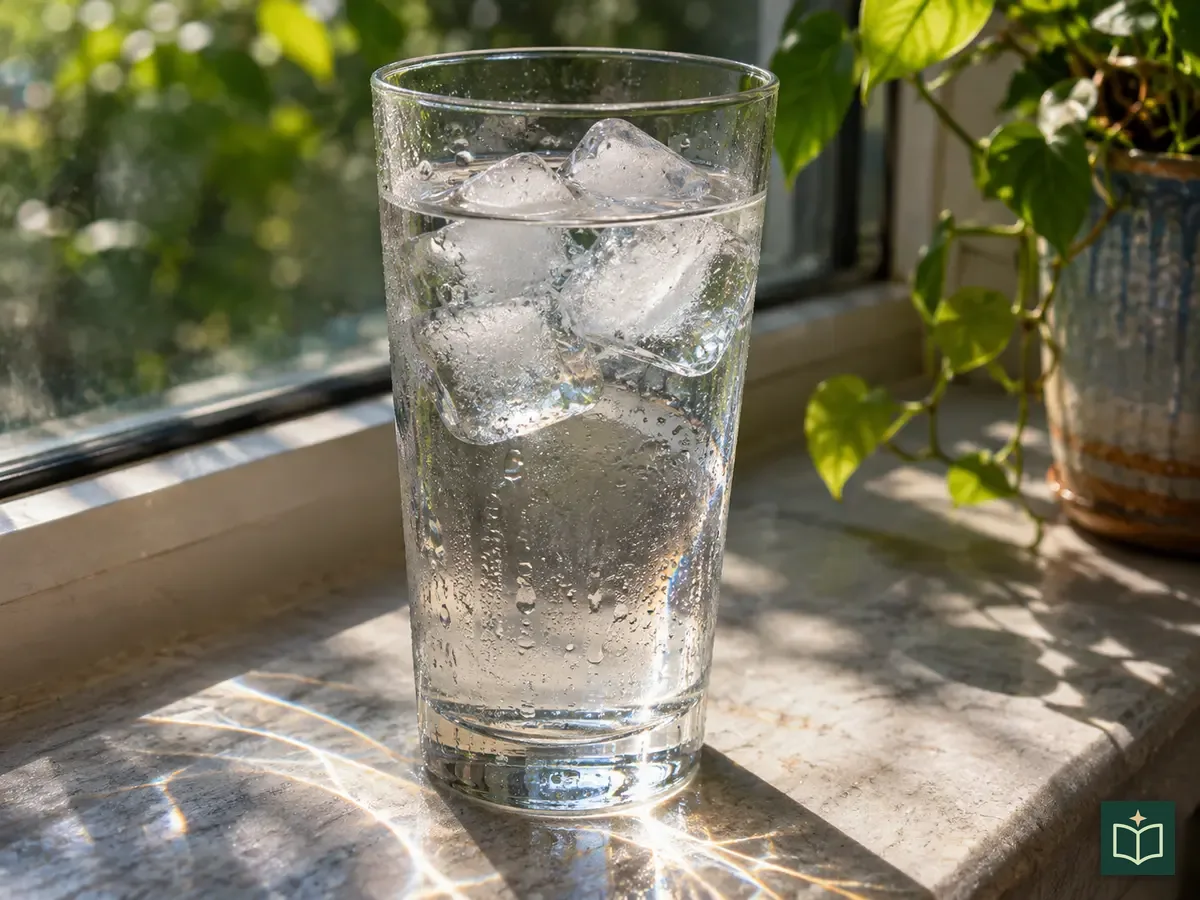
Most substances become denser as they solidify, so their solid form sinks in their liquid. Water is a striking exception. As it cools towards freezing, hydrogen bonds increasingly lock molecules into a hexagonal, open lattice. The result is that ice is about 9 per cent less dense than liquid water and floats. Liquid water is actually densest at about 4°C. In winter, lakes in cold regions freeze from the top down; the ice layer insulates the water beneath, which stays near 4°C, allowing fish and other life to survive. The same expansion can crack rocks when water freezes in their crevices, and burst pipes in cold climates.
A huge heat store
Water has a high specific heat capacity: it takes about 4.2 kilojoules to warm one kilogram by one degree Celsius, several times more than for many rocks or metals. Hydrogen bonds absorb energy before molecules can move faster. As a result, oceans warm and cool slowly, moderating coastal climates. It is one reason why coastal cities such as Dubai and Abu Dhabi rarely see the extreme overnight cooling of inland deserts. Evaporating water absorbs even more energy, which is why sweating cools us. Earth’s oceans have absorbed the vast majority of the extra heat trapped by greenhouse gases in recent decades, a direct consequence of this property.
The universal solvent
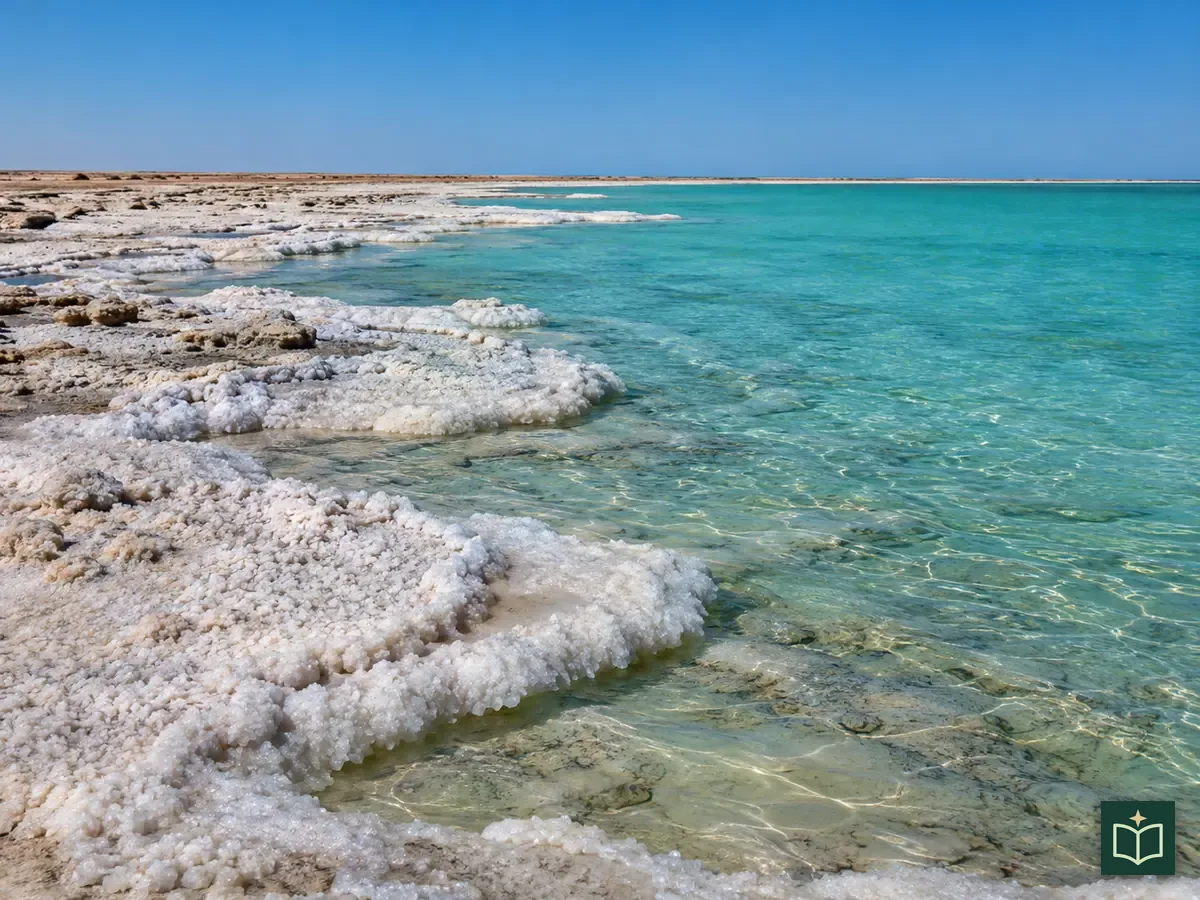
Water’s polarity also makes it an exceptional solvent. Its charged ends surround and separate ions such as sodium and chloride, which is why salt dissolves so easily. Many sugars, gases and other substances dissolve too. This allows water to carry nutrients through soil, plants and blood, and it is why rivers carry dissolved minerals to the sea. It also explains why pure water is rare in nature: it picks up whatever it touches. Substances such as oils, which have no significant charge separation, do not mix with water. That separation helps cells form membranes, because fatty molecules naturally arrange themselves into barriers when surrounded by water.
Surface tension and capillary rise
Hydrogen bonding gives water a high surface tension. Molecules at the surface are pulled inwards by their neighbours, creating a slightly elastic skin. This allows small insects such as pond skaters to walk on water, and lets a carefully placed needle float. Water also clings to many surfaces, such as glass and plant fibres. Combined with surface tension, that attraction lets water climb narrow tubes against gravity, a process called capillary action. It helps water move through soil and paper towels, and contributes to how water travels up through plants. Although transpiration from leaves provides most of the pull in tall trees, capillary effects play a supporting role.
Why it matters
Life as we know it depends on water’s quirks. Floating ice protects aquatic life, high heat capacity stabilises climate and body temperature, and its solvent power drives the chemistry of cells. Scientists searching for life elsewhere often ‘follow the water’, targeting worlds such as Mars and the icy moons Europa and Enceladus. On Earth, water’s properties also set practical challenges. Desalination, vital in the Gulf, requires energy to separate salt that water dissolves so readily. Cooling power stations and buildings relies on water’s ability to absorb heat. And a common myth, that hot water always freezes faster than cold, remains disputed; careful experiments give inconsistent results.
Sources & further reading
Figures are rounded and widely published; check the linked organisations for the latest editions. These organisations do not endorse this website.