Not all eggs in one basket
A country could, in principle, make almost all its electricity from one source, whichever looks cheapest. Very few do so by choice, because every source carries its own risks. Imported fuels can be disrupted by conflict or price spikes. Hydropower depends on rainfall. Solar fades at night and wind drops in calm spells. Nuclear plants can be taken offline together if a common technical fault is found. When most power comes from one source, a single problem can threaten the whole system. Combining sources whose risks are largely unrelated is a form of insurance, the same reasoning investors use when they spread savings across different assets.
Lessons from shocks
History supplies the examples. Brazil, heavily reliant on hydropower, faced electricity rationing in 2001 after a severe drought emptied reservoirs. After the Fukushima accident in 2011, Japan shut its nuclear fleet and had to import large volumes of liquefied natural gas at high prices. In 2022 Europe saw gas prices soar as Russian pipeline supplies fell, and in the same year many French nuclear reactors were offline for inspections and repairs, which tightened supply further. Countries with more varied systems generally absorbed these shocks more easily. Each episode prompted renewed interest in diversity, whether through more interconnections, more storage or a broader set of generating technologies.
Different jobs on the grid
A mix is not just about avoiding risk; sources also do different jobs. Nuclear and some coal and gas plants run steadily for long periods. Gas turbines and hydro can ramp up and down quickly to follow demand. Solar and wind produce cheap energy when the weather allows, but need partners to cover the gaps. Batteries shift energy over hours and respond in fractions of a second. Large spinning generators also supply inertia and voltage support that help keep the grid stable. A well-designed system matches these strengths so that demand is met cheaply in normal hours and reliably at peak, whatever the weather or season.
A worked example
Analysts sometimes measure diversity with a simple concentration index: square each source's share of generation and add the results. A grid running entirely on gas scores 1.0, the most concentrated possible. One with 60 per cent gas, 25 per cent nuclear and 15 per cent solar scores 0.36 + 0.0625 + 0.0225, or about 0.45. A system split 40, 25, 20 and 15 per cent across four sources scores about 0.29. Lower numbers mean less dependence on any one source. The index is crude, since it ignores how correlated the risks are and where fuels come from, but it shows how quickly diversity improves as a dominant source is diluted.
The UAE's changing mix
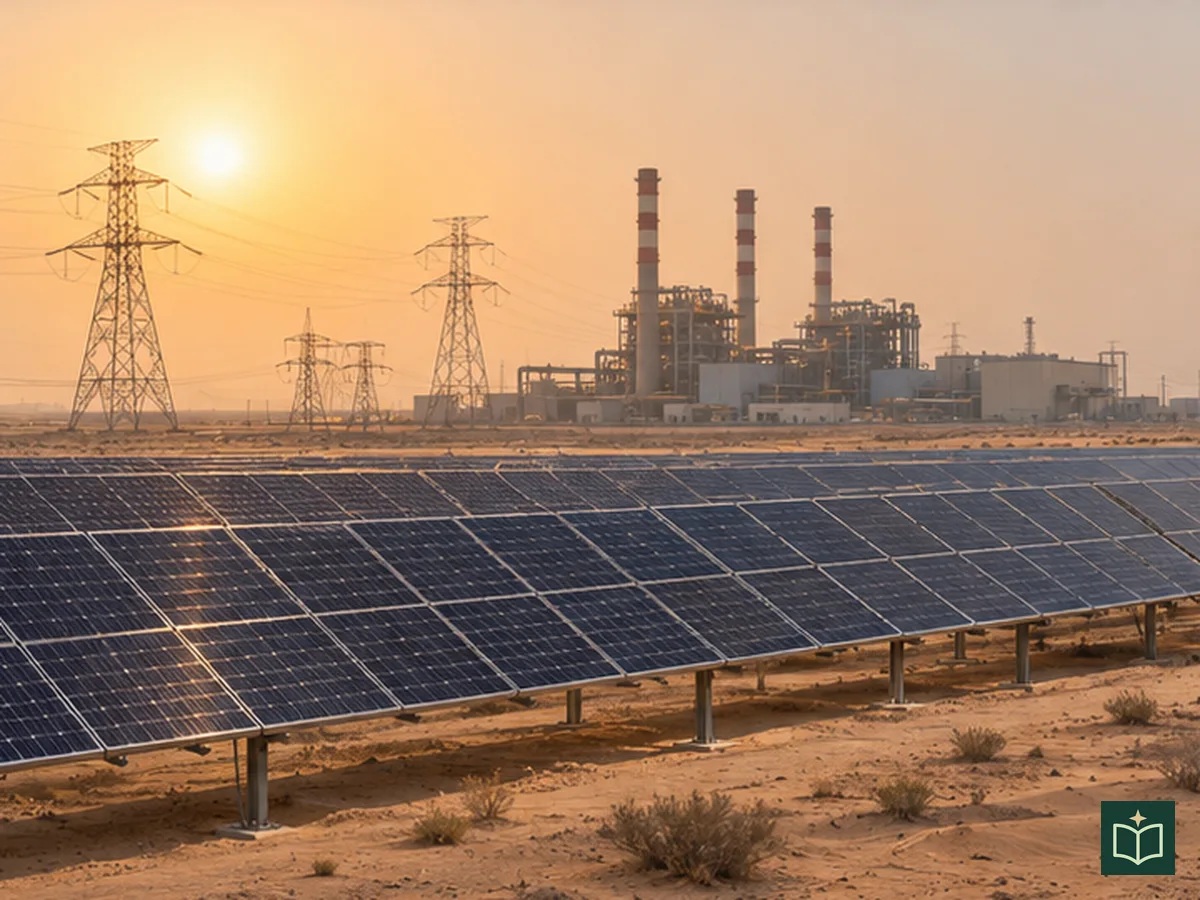
For decades, UAE electricity came almost entirely from natural gas, much of it burnt in plants that also produce desalinated water. Since the 2010s the mix has broadened significantly. The Barakah nuclear plant's four reactors now provide large amounts of steady low-carbon power. Vast solar parks, including Noor Abu Dhabi, Al Dhafra and the Mohammed bin Rashid Al Maktoum Solar Park in Dubai, supply cheap daytime electricity. Battery storage is being added to stretch solar into the evening, and the GCC grid interconnection links neighbouring systems. Gas remains essential for flexibility and peak summer demand. The result is a system less exposed to gas prices and better placed to meet rising demand.
The cost of diversity
Diversity is not free. Running several technologies means more types of skills, spare parts and supply chains, and some plants may sit idle for long periods as backup. A system optimised only for lowest cost in normal years might choose a narrower mix. Planners therefore weigh the expected cost of disruption against the cost of insurance, much as households weigh insurance premiums against potential losses. The right balance differs by country, depending on domestic resources, import routes, climate and interconnections. As solar and wind grow, the debate is shifting from which fuels to burn towards which combination of renewables, storage, firm power and flexible demand keeps supply secure at reasonable cost.
Sources & further reading
Figures are rounded and widely published; check the linked organisations for the latest editions. These organisations do not endorse this website.