The basic reaction
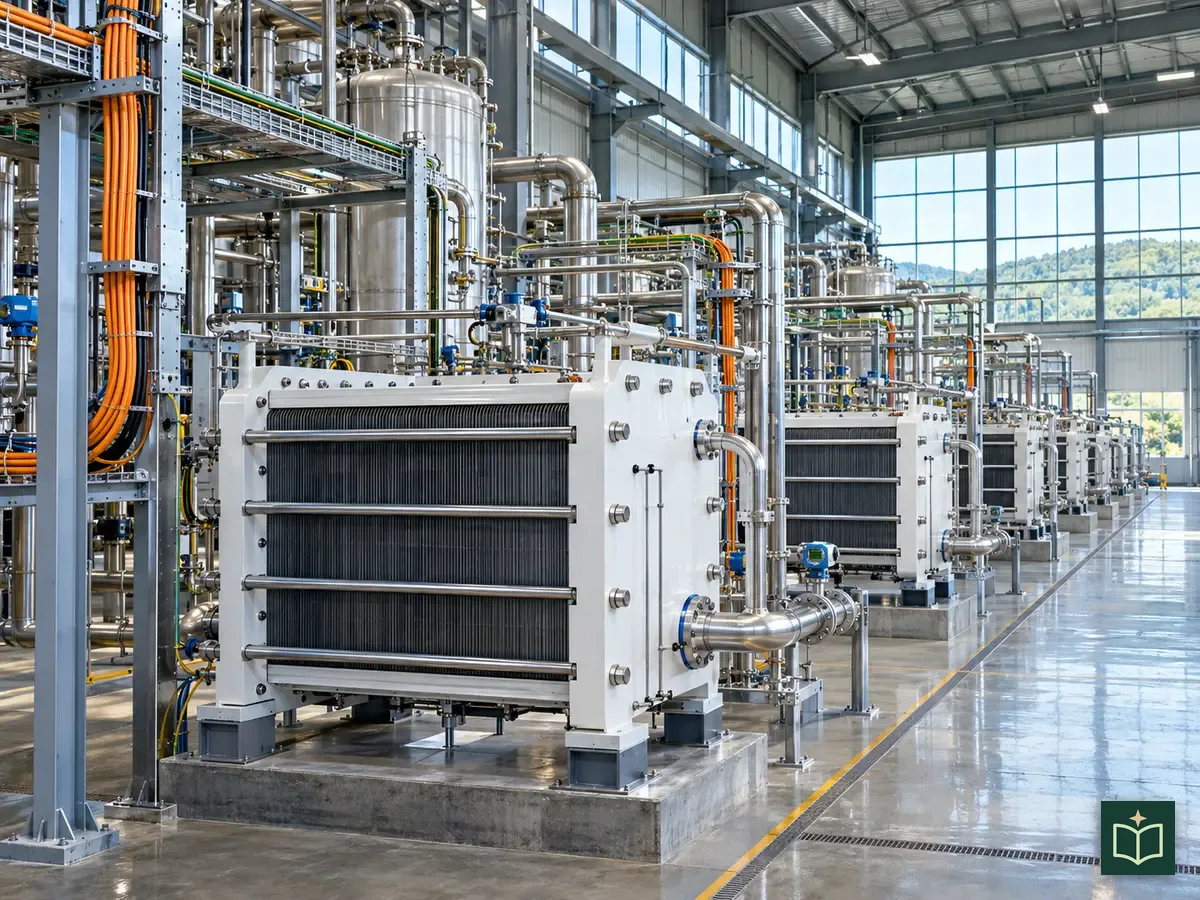
Water is two hydrogen atoms bonded to one oxygen atom, and those bonds hold energy that must be supplied to break them. In an electrolyser, two electrodes sit in water made conductive by an electrolyte or a special membrane. When a direct current flows, hydrogen gas forms at the negative electrode, the cathode, and oxygen gas forms at the positive electrode, the anode. The overall reaction is the reverse of burning hydrogen: two water molecules become two hydrogen molecules and one oxygen molecule. The oxygen is usually vented, although some projects look for buyers. The hydrogen carries part of the electrical energy in chemical form, ready to be released later in a fuel cell, a furnace or a chemical plant.
Three main technologies
Alkaline electrolysers are the oldest design, used industrially for about a century; they use a liquid potassium hydroxide solution and relatively cheap materials. Proton exchange membrane, or PEM, electrolysers use a solid polymer membrane, respond quickly to changes in power and are compact, but rely on scarce metals such as platinum and iridium. Solid oxide electrolysers run at several hundred degrees Celsius and can be more efficient, especially when waste heat is available, though they are less mature. Each design trades cost, durability and flexibility differently. A plant fed by variable solar or wind power values fast response, while one linked to a steady industrial heat source may favour high-temperature designs.
Why so much electricity
One kilogram of hydrogen holds about 33 kilowatt-hours of energy on a lower heating value basis. Today’s electrolysers typically need around 50 to 55 kilowatt-hours of electricity to make that kilogram, so roughly a third of the input is lost as heat. Compression, storage and conversion to other carriers lose more along the way. This matters for scale. Replacing the world’s existing hydrogen supply, almost all of it currently made from natural gas and coal, with electrolytic hydrogen would require electricity on the order of a large country’s entire annual consumption. That is why analysts focus on where hydrogen is truly needed rather than on making it for every possible use.
The colour labels
Hydrogen is colourless, but the industry uses colours as shorthand for production routes. ‘Green’ usually means electrolysis powered by renewable electricity. ‘Grey’ means hydrogen made from natural gas without capturing the carbon dioxide; ‘blue’ means the same route with carbon capture. ‘Pink’ is sometimes used for electrolysis powered by nuclear energy. The labels are informal and inconsistently applied, so regulators increasingly prefer a measured figure: kilograms of carbon dioxide emitted per kilogram of hydrogen across the supply chain. An electrolyser running on a coal-heavy grid can produce hydrogen with a larger footprint than grey hydrogen, which is why the electricity source, and its timing, matters so much.
Gulf ambitions
Gulf states combine abundant sunshine, open land and long experience in moving energy by sea, so several have announced hydrogen strategies. In Saudi Arabia, the NEOM Green Hydrogen project is designed to use solar and wind power to make hydrogen and convert it to ammonia for export. The UAE has published a national hydrogen strategy and pilot projects, including a solar-powered green hydrogen demonstration at the Mohammed bin Rashid Al Maktoum Solar Park in Dubai. Desalinated seawater supplies the purified water these plants need. The economics depend on electrolyser prices, financing costs and long-term buyers, so many announced projects worldwide remain at planning stage rather than in operation.
What to watch
Three numbers shape the future of electrolysis: the capital cost of electrolysers per kilowatt, their efficiency, and the price of the electricity they use. Running hours matter too: an electrolyser that only works when the sun shines spreads its fixed costs over fewer kilograms. Stack lifetime, the availability of iridium and the cost of storing hydrogen also matter. When reading announcements, it helps to separate capacity that is operating from capacity that has merely been proposed, and to ask whether the hydrogen has a committed buyer. A gigawatt on paper is not yet a gigawatt of electrolysers splitting water, and the gap between the two has been wide.
Sources & further reading
- IEA · Hydrogen ↗
- US Department of Energy · Hydrogen production: electrolysis ↗
- Britannica · Electrolysis ↗
Figures are rounded and widely published; check the linked organisations for the latest editions. These organisations do not endorse this website.