Not just waterlogged skin
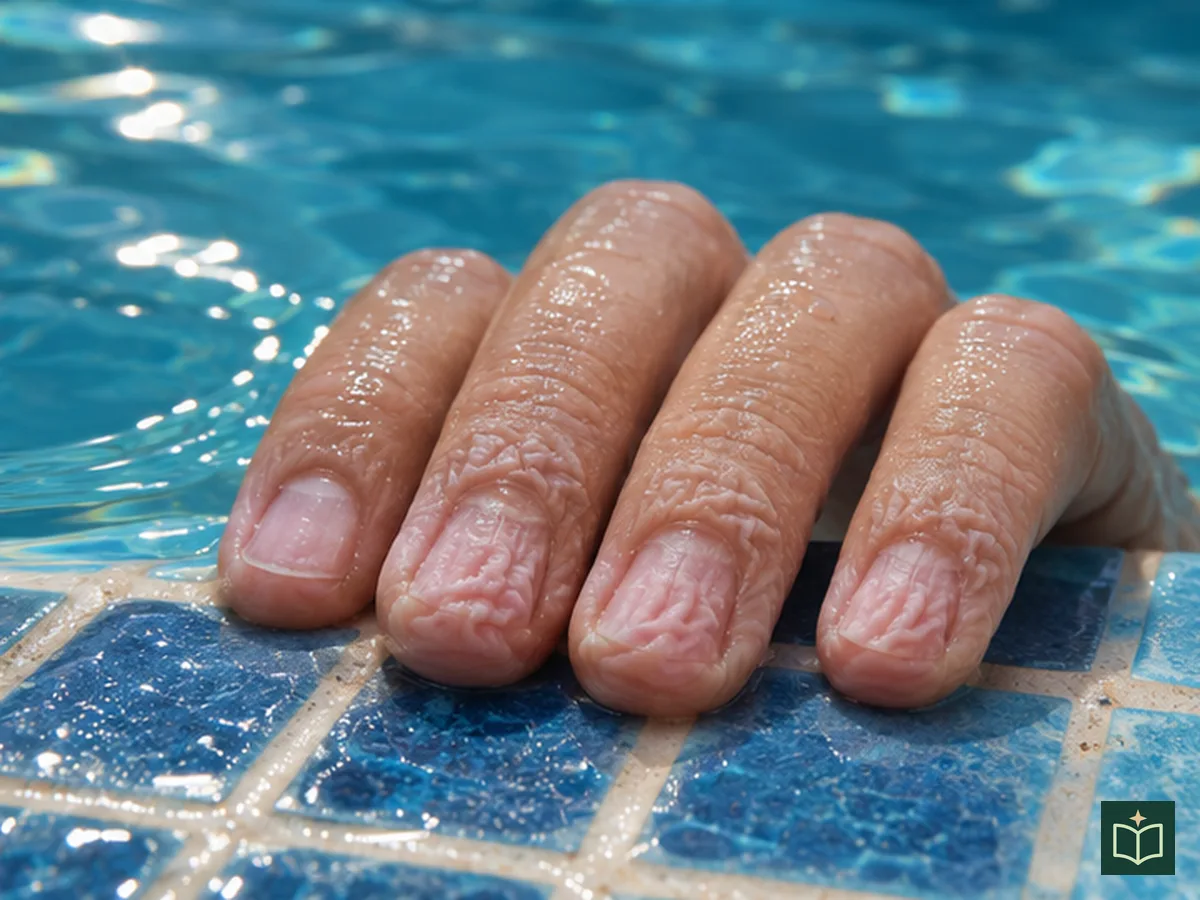
After a long bath or swim, the skin on fingertips and toes puckers into ridges and valleys. The obvious explanation is that the outer skin absorbs water and swells, buckling like wet paper. For many years that was the accepted view. But the outer layer of skin swells everywhere, yet only the fingers, toes, palms and soles wrinkle in this distinctive way. Even more telling, the pattern appears only on skin with a particular kind of nerve supply. Over the past century, researchers have shown that the wrinkles are not a passive side effect of soaking, but an active response controlled by the body's own nervous system.
The nerve clue
In 1935, doctors reported that patients whose finger nerves had been cut no longer developed wrinkles in water, while their healthy fingers did. Later studies confirmed the link, and wrinkling was even proposed as a simple bedside test of nerve function in the hands. The nerves involved belong to the sympathetic nervous system, the automatic network that also controls sweating, heart rate and blood vessel width. When fingertips have soaked for several minutes, these nerves trigger the tiny blood vessels beneath the skin to constrict. With less blood in it, the soft pulp of the fingertip shrinks slightly, and the skin above, anchored at points to deeper tissue, folds into wrinkles.
How water sends the signal
Exactly how water prompts the response is still being studied. Water appears to enter the skin largely through sweat ducts, which are densely packed on fingertips and palms. That influx changes the balance of salts around nerve endings in the skin, which may set off the sympathetic signal that narrows blood vessels. Wrinkles typically begin after about five minutes in warm water and become pronounced after twenty or thirty minutes. Once the hands are dry, blood flow returns and the wrinkles fade, usually within a similar time. The response tends to be quicker in warm water than in cold, and some research suggests it is quicker in fresh water than in very salty water.
The grip hypothesis
If the body actively produces wrinkles, they might have a purpose. In 2011 the American scientist Mark Changizi and colleagues pointed out that the wrinkle patterns resemble drainage channels, like tyre treads, that could channel water away from the fingertip and improve contact with wet surfaces. In 2013, researchers at Newcastle University in England tested the idea by asking volunteers to move wet marbles from one container to another. People with wrinkled fingers completed the task faster than those with smooth fingers, while dry objects showed no difference. This suggested wrinkles might help our ancestors grip wet rocks, branches or food in rain, streams or coastal pools.
An unsettled question
The grip theory is attractive but not settled. A later study by a different group, using a different task, found no measurable improvement in handling wet objects with wrinkled fingers, and debate continues over how large any advantage really is. Critics also ask why, if wrinkles help, fingers are not permanently wrinkled; supporters answer that wrinkles may slightly reduce touch sensitivity and make skin more vulnerable to snagging, so they are worth having only when hands are wet. Some other primates, including macaques, show similar wrinkling, which hints at an older evolutionary origin. Until more evidence accumulates, the function remains a plausible hypothesis rather than a proven fact.
What it tells us
Finger wrinkling is a small reminder of how much the body does without our awareness. A response that looks like simple physics turns out to involve nerves, blood vessels and finely tuned skin structure. It also has practical uses in medicine: because wrinkling depends on intact sympathetic nerves, its absence can hint at nerve damage, and researchers have studied it in conditions such as diabetes and Parkinson's disease, though it is not a standard diagnostic test. For swimmers, divers and anyone who spends long hours in water, the wrinkles are harmless and temporary. Unusual changes in skin or sensation, however, are worth discussing with a doctor.
Sources & further reading
Figures are rounded and widely published; check the linked organisations for the latest editions. These organisations do not endorse this website.