Heat that builds in minutes
Anyone who has opened a car door after a few hours in the summer sun knows the blast of hot air and the scorching steering wheel. The heating happens surprisingly fast. Studies in which researchers left cars parked in the sun with thermometers inside found that the cabin temperature can rise by around 20°C above the outside air within an hour, and roughly 80% of that rise happens in the first 30 minutes. Even on a mild day of 25°C, the inside of a closed car can exceed 45°C. In a Gulf summer, when outdoor temperatures reach the mid-40s, dashboards and dark seats can exceed 70°C.
Light goes in
The process starts with sunlight. Most of the Sun's energy arrives as visible light and near-infrared radiation, wavelengths that pass easily through car windows. Once inside, the light strikes the dashboard, seats, steering wheel and floor. Dark materials absorb most of it rather than reflecting it, turning the energy into heat. That is why a black leather seat becomes far hotter than a light fabric one, and why a dashboard directly under the steeply raked windscreen is often the hottest surface in the car. The angle of the sun matters too: a windscreen facing the midday sun admits far more energy than one parked facing away.
Heat cannot get out
Hot surfaces warm the air around them, and that is where the trap closes. In the open, warm air rises and is replaced by cooler air, carrying heat away. In a sealed car, the hot air has nowhere to go, so the temperature keeps climbing. Hot surfaces also radiate energy back, but as longer-wavelength infrared, which ordinary glass largely absorbs rather than letting through. The effect is similar to a greenhouse, and is often used to explain the greenhouse effect, though in a car or greenhouse the blocked flow of warm air is the larger factor. The glass then warms and radiates some heat back inside too.
A deadly risk for children
The rapid rise makes parked cars dangerous for children and pets. A young child's body heats up several times faster than an adult's, and a child left in a closed car can develop heatstroke within minutes. Every year, children around the world die after being left in vehicles, often by caregivers who forgot they were there. Leaving the windows slightly open makes little difference to the cabin temperature, studies have shown. Safety campaigns advise always checking the back seat before locking the car and never leaving children or animals inside, even briefly. If you see a child alone in a hot car, contacting emergency services immediately is the recommended action.
What actually helps
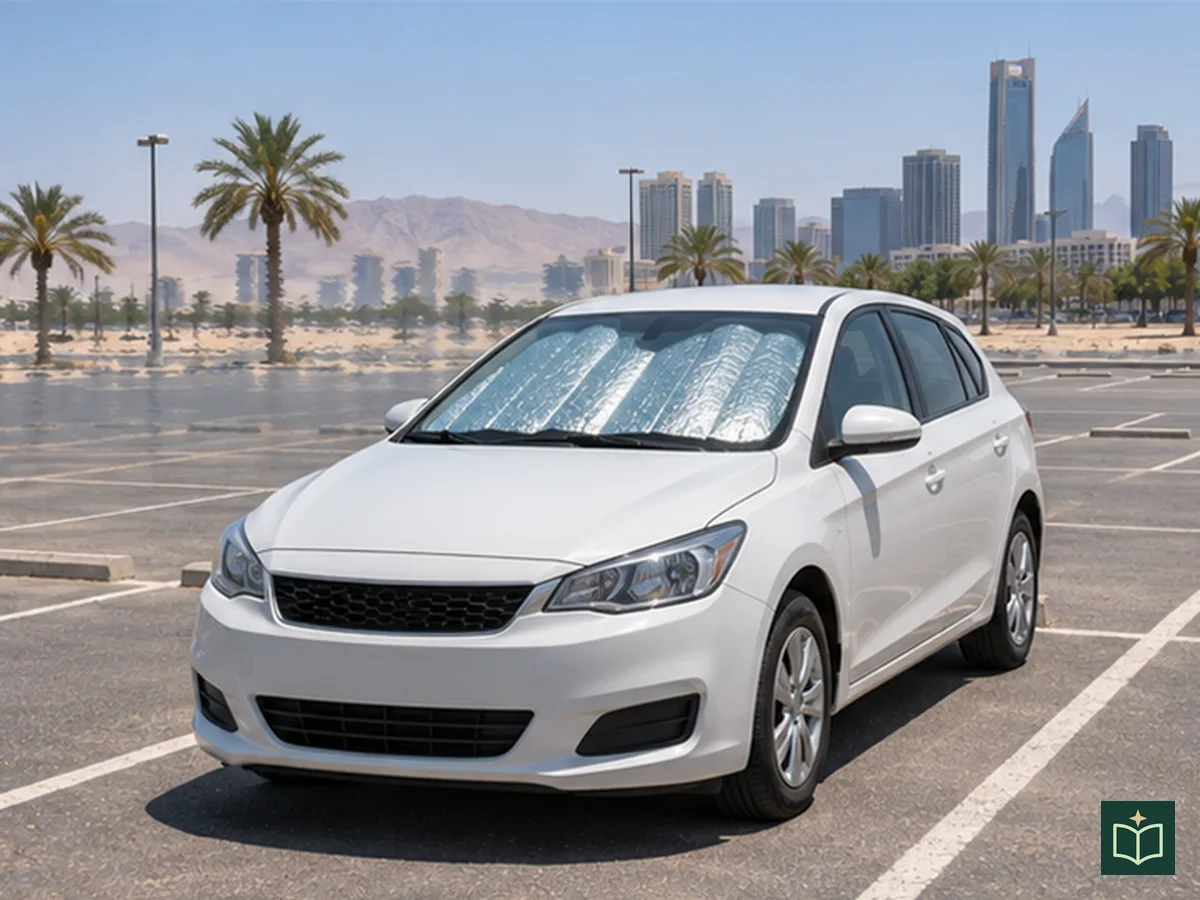
A reflective windscreen shade bounces much of the incoming light back out before it is absorbed, keeping the dashboard and steering wheel noticeably cooler, though the cabin air still heats up. Parking in shade or covered car parks makes the biggest difference. Window films that block infrared and ultraviolet reduce heat and protect interiors, and in the UAE, tinting is permitted within legal limits on visible light. Light-coloured cars and interiors absorb less energy. Before driving, opening the doors for a minute or running the air conditioning with windows open at first flushes out the hottest air. Some newer cars can run ventilation fans while parked, using solar or battery power.
Beyond comfort
Extreme heat in parked cars affects more than people. Phones, tablets and power banks can overheat, and lithium-ion batteries degrade faster at high temperatures, so manufacturers advise against leaving devices in hot cars. Aerosol cans, some medicines and plastic water bottles also do not belong in a sun-baked cabin. The plastic and vinyl in dashboards can crack and fade after years of repeated heating, and adhesives can fail. All of this follows from a simple principle: energy that comes in more easily than it can get out accumulates. The same principle, on a planetary scale and through different mechanisms, explains why gases in Earth's atmosphere keep the planet warm.
Sources & further reading
Figures are rounded and widely published; check the linked organisations for the latest editions. These organisations do not endorse this website.