A familiar illusion
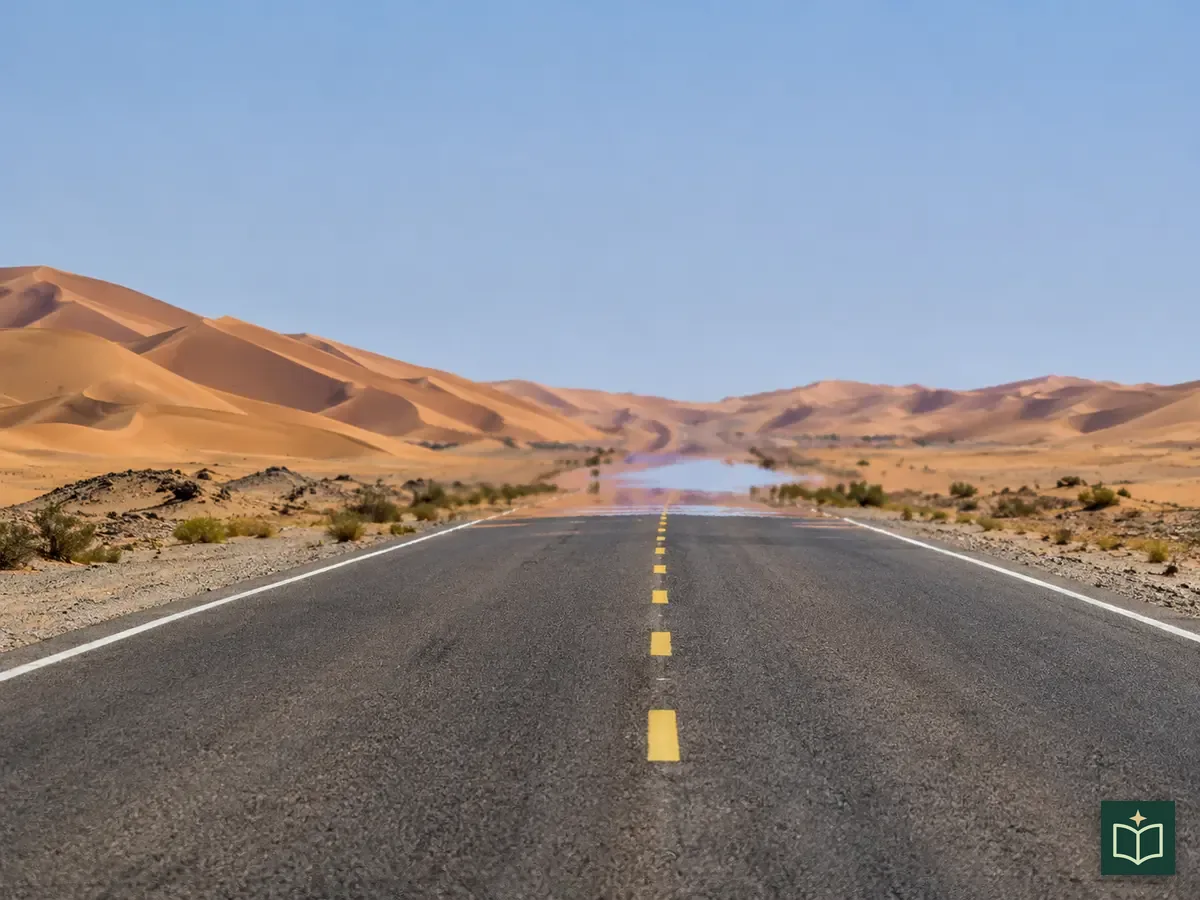
Anyone who has driven across the desert on a summer afternoon has seen it: a silvery sheet of apparent water lying across the road ahead, which retreats as you approach and never gets wet. Sometimes distant cars or dunes appear to stand in it, reflected upside down. Travellers have described such sights for millennia, and stories of thirsty caravans chasing phantom lakes are part of desert folklore. Yet a mirage is not a hallucination. It is a genuine optical phenomenon that a camera can record. The light really reaches your eyes; it simply took a curved path that your brain interprets as a straight one.
Why light bends
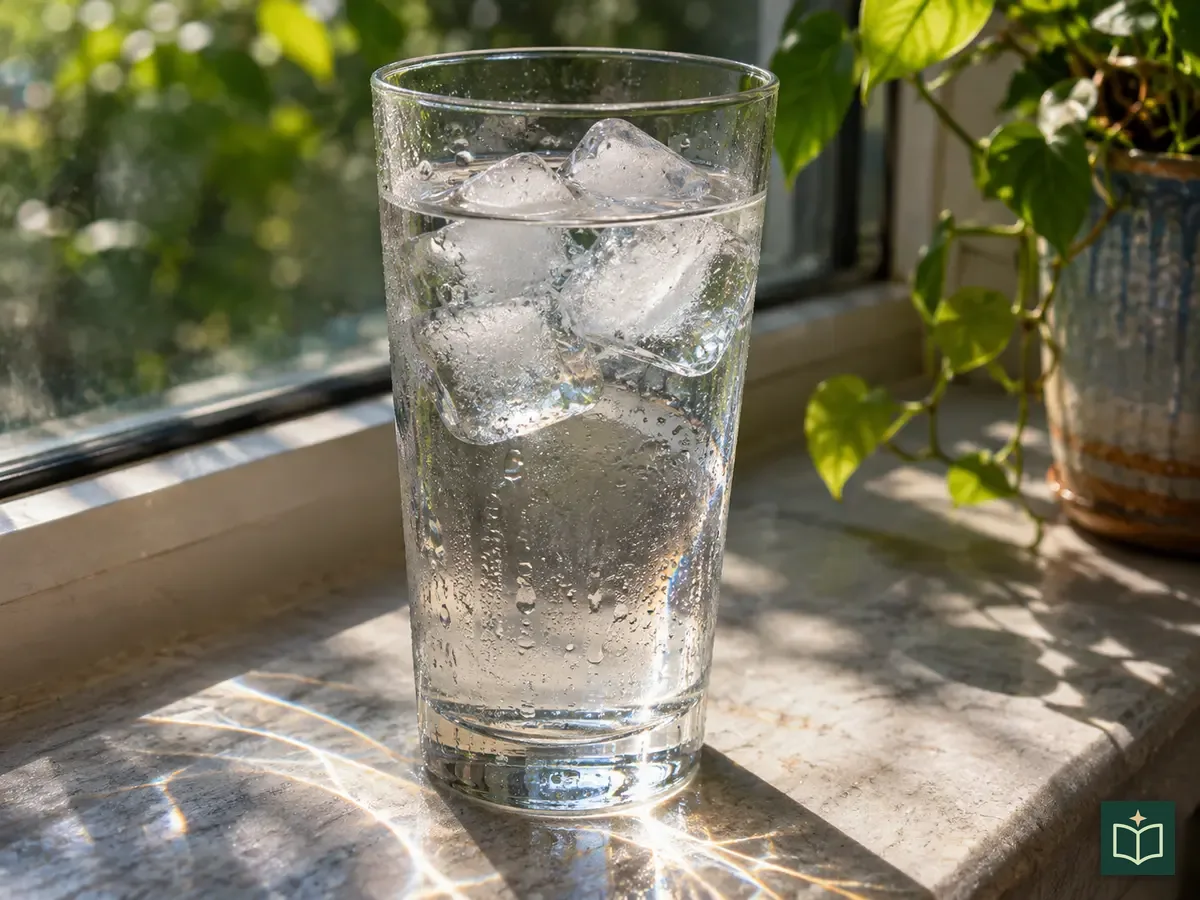
Light travels at slightly different speeds in air of different temperature and density. When light passes from one medium into another at an angle, it changes direction, a process called refraction. That is why a straw looks bent in a glass of water. In the atmosphere the change is gradual rather than sudden, so light follows a gentle curve instead of turning sharply. Hot air is less dense than cool air, and light travels very slightly faster through it. A ray passing through layers of air at different temperatures bends towards the cooler, denser air. In everyday conditions the effect is tiny, but strong temperature contrasts make it visible.
The road ‘pool’ explained
On a sunny day, dark asphalt and sand can become far hotter than the air, heating a thin layer just above the surface. That creates a steep temperature gradient: hot air at the bottom, cooler air above. Light from the sky heading down towards the road at a shallow angle bends upwards as it enters the hotter layer and curves back towards the observer’s eye. The brain assumes the light travelled in a straight line, so it appears to come from the ground. What looks like water is actually an image of the bright sky. Because the hot air shimmers with turbulence, the image wavers, enhancing the impression of rippling water.
Mirages above and below
This road effect is called an inferior mirage, because the image appears below the real object. The opposite, a superior mirage, forms when a layer of cold air lies beneath warmer air, commonly over cold seas or ice. Light then bends downwards, and distant ships, islands or coastlines can appear lifted above the horizon, sometimes stretched or stacked into towering shapes. A complex version of the superior mirage, known as Fata Morgana, can make ordinary coasts look like castles floating on the sea. Mirages can also appear over the Gulf’s coastal flats and sabkhas, where heated surfaces and calm air produce shimmering horizons.
History and misunderstandings
Scholars puzzled over mirages for centuries. Explanations based on refraction were developed in the 18th and 19th centuries, including during Napoleon’s expedition to Egypt, where French scientists studied desert mirages that frustrated the troops. A common misconception is that a mirage happens because the heat makes you see things, or that it is caused by actual moisture evaporating from the road. Neither is true. Another is that mirages occur only in deserts. In fact, they are frequent on motorways, airport runways and even long, flat car parks on hot days anywhere in the world. The key ingredient is a strong temperature difference near the surface, not a dry climate.
Why it matters
Mirages are more than curiosities. Atmospheric refraction affects surveying, navigation and astronomy; when the Sun appears to touch the horizon at sunset, it has already slipped slightly below it, because refraction lifts its image. Long-range observation across hot desert or water must allow for distorted images, and pilots and drivers can misjudge distances when heat haze affects visibility. Understanding refraction also explains other everyday sights, from twinkling stars to the green flash sometimes visible at sunset over the sea. And it offers a gentle lesson in perception: the brain makes reasonable assumptions about how light travels, and when those assumptions fail, we see things that are not where they seem.
Sources & further reading
Figures are rounded and widely published; check the linked organisations for the latest editions. These organisations do not endorse this website.