Two kinds of centre
In many countries the capital is also the largest and most important city: London, Paris, Tokyo, Cairo and Mexico City all combine government with economic dominance. Geographers call such a city primate when it is far larger than any other in the country. But a surprising number of countries separate the two roles. Sydney is far larger than Canberra, Istanbul than Ankara, New York than Washington, and Dubai than Abu Dhabi city. Other examples include Ottawa and Toronto, Bern and Zürich, Wellington and Auckland. In each case the capital was chosen for reasons that had more to do with politics, history and geography than with size.
The compromise capital
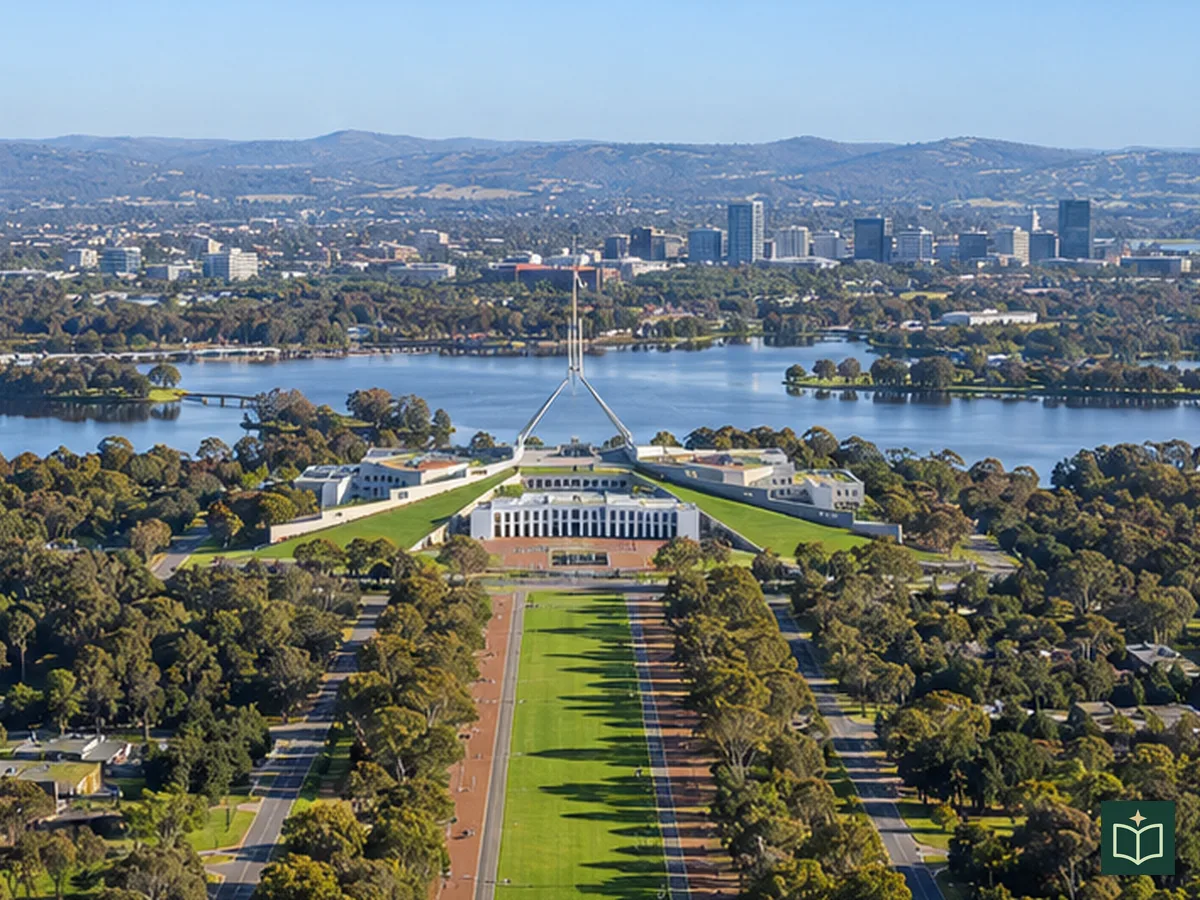
The most common reason is rivalry. When Australia’s colonies federated in 1901, neither Sydney nor Melbourne would accept the other as capital. The constitution required a new site in New South Wales at least 100 miles from Sydney. Canberra was chosen and named in 1913, while Parliament sat in Melbourne until 1927. Canada followed a similar logic in 1857, when Ottawa was selected over Toronto, Montreal, Kingston and Quebec City, partly because it lay between English- and French-speaking regions. In the United States, the Residence Act of 1790 placed the new capital on the Potomac, a compromise between northern and southern states that kept it away from New York and Philadelphia.
A break with the past
Sometimes a new capital signals a new state. After the Ottoman Empire collapsed, the founders of the Turkish Republic made Ankara the capital in 1923. Istanbul had been the imperial seat for centuries and was associated with the old order; it was also exposed by sea. Ankara, in the Anatolian interior, was more defensible and symbolised a nation built around its heartland. The city grew rapidly, but Istanbul remains Turkey’s largest city and commercial centre. Other countries have moved capitals inland to encourage development or unity, including Brazil, Nigeria and Pakistan, though those planned cities form a story of their own.
The UAE’s arrangement
The UAE has its own version. When the federation was formed in 1971, its provisional constitution named Abu Dhabi as the temporary capital. A plan existed for a new capital on the border between Abu Dhabi and Dubai, but it was never built, and in 1996 Abu Dhabi was confirmed as the permanent capital. Abu Dhabi is the largest emirate by area and hosts the federal government, while Dubai has become the largest city and a global hub for trade, aviation and tourism. The pattern is common in federations, where member states guard their influence and the political centre need not match the commercial one.
Does it matter?
Separating the capital from the largest city has advantages. It can spread jobs and investment beyond a single dominant metropolis, reduce congestion and give smaller regions a stake in national life. It can also keep government at a distance from the pressures of a giant commercial city. The costs include duplicated infrastructure, travel between centres and, in some cases, capitals that feel quieter or less lively than the nation’s real economic heart. Diplomats, journalists and lobbyists often split their time between the two. Over decades, though, many planned or compromise capitals grow into substantial cities, as Washington, Ottawa and Ankara all show.
Common misunderstandings
Visitors often assume a country’s best-known city must be its capital, which is why Sydney, Istanbul, Rio de Janeiro and Dubai are sometimes named wrongly in quizzes. Some countries also divide capital functions: South Africa has separate executive, legislative and judicial capitals in Pretoria, Cape Town and Bloemfontein, while its largest city, Johannesburg, holds none of them. The Netherlands’ constitutional capital is Amsterdam, but the government sits in The Hague. Population figures for capitals can also mislead, because a city proper may be small while its wider metropolitan area is much larger. The useful question is not which city is biggest, but why the seat of power was placed where it is.
Sources & further reading
Figures are rounded and widely published; check the linked organisations for the latest editions. These organisations do not endorse this website.