A river like a plait
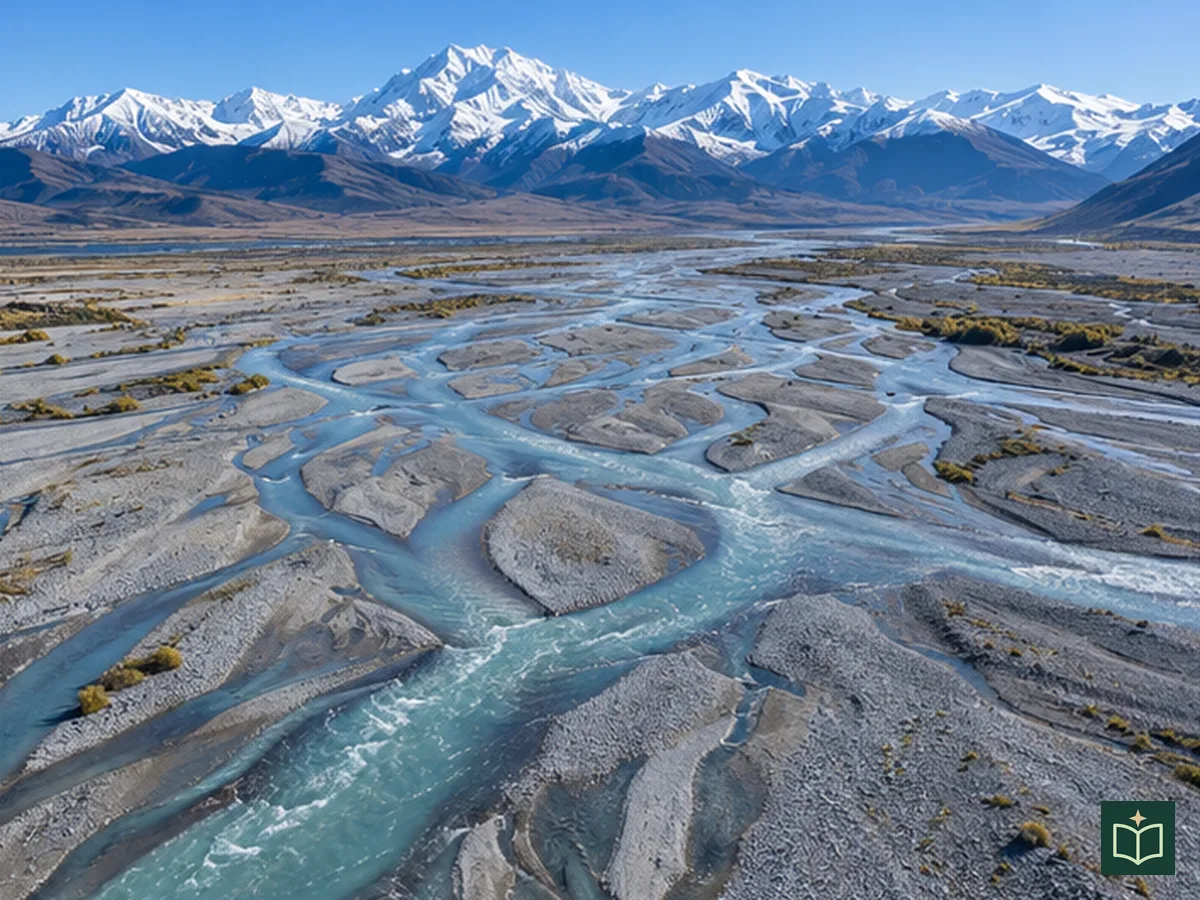
Most people picture a river as a single channel, either straight or meandering. A braided river looks different. Seen from above, it is a wide bed of gravel or sand crossed by many shallow channels that divide around islands and bars, then rejoin, like strands of a plait. The pattern can stretch across several kilometres, though at any moment only part of the bed carries water. After each flood, the arrangement changes completely. Braided rivers are common below glaciers, at the foot of young mountain ranges and in dry regions, where the conditions that create them come together most often.
The recipe
Geographers usually point to four ingredients. First, a large supply of coarse sediment, such as gravel from eroding mountains or glaciers. Second, highly variable flow, with floods that move huge amounts of material and calmer periods when it is dropped. Third, a fairly steep gradient, which gives floods the energy to move gravel. Fourth, easily eroded banks, often bare of vegetation, which let channels widen rather than deepen. When a flood falls, the river can no longer carry all its load. Gravel settles in the middle of the channel, forming bars. Water flows around them, cutting new channels, and the cycle repeats with the next flood.
Braided versus meandering
Meandering rivers tend to carry finer sediment, such as silt and clay, and to have steadier flows and stable, vegetated banks. That combination encourages a single deep channel that swings in loops across its floodplain. A braided river, by contrast, is wide and shallow, with many channels and little permanent structure. The same river may change style along its length: braided near the mountains, where gravel is plentiful and slopes are steep, then meandering on the gentler plains downstream. Human activity can shift the balance too. Dams that trap sediment can turn braided reaches into single channels, while deforestation that adds sediment can encourage braiding.
Classic braided rivers
New Zealand’s South Island is famous for them. Rivers such as the Rakaia and Waimakariri flow from the Southern Alps across the Canterbury Plains in broad beds of grey gravel. The Brahmaputra, called the Jamuna in Bangladesh, is one of the largest braided rivers in the world, with a braid belt averaging around 10 kilometres wide and sandbars, known locally as chars, that appear and vanish within years. Alaska, Iceland and the Himalaya have many glacier-fed examples. In the UAE and Oman, the gravel beds of wadis leaving the Hajar mountains often show braided patterns, though water flows through them only during and after storms.
Life on shifting gravel
Braided rivers are harsh but productive habitats. Their open gravel islands offer nesting sites safe from many predators. In New Zealand, the wrybill, a small plover with a bill that curves sideways, breeds only on braided riverbeds, and several other birds depend on them too. In Bangladesh, millions of people live on chars, farming fertile new land while knowing that the next flood may wash it away and create new islands elsewhere. Braided channels also recharge groundwater, as water seeps through the porous gravel. However, invasive plants that stabilise bars can disrupt the natural shifting and threaten species that rely on bare ground.
Building around a moving river
Braided rivers pose challenges for engineers. Because channels move, bridges must span the whole bed or rely on training works that guide flow under them. In Bangladesh, the Bangabandhu Bridge across the Jamuna, opened in 1998, required extensive river training to keep the main channel beneath it. Roads crossing wide gravel beds can be cut by floods, and water intakes may find themselves stranded when a channel shifts. Planners increasingly recognise that braided rivers need room to move. Rather than forcing them into one channel, many now set back flood defences and protect the active bed, accepting that the river’s shape is temporary by nature.
Sources & further reading
Figures are rounded and widely published; check the linked organisations for the latest editions. These organisations do not endorse this website.