From owning to renting
Businesses once bought and maintained their own servers. Cloud providers such as Amazon Web Services, Microsoft Azure and Google Cloud offer computing as a service: storage, databases, processing power and ready-made software. Customers can scale up for busy periods and scale down afterwards, paying for what they use.
Inside a data centre
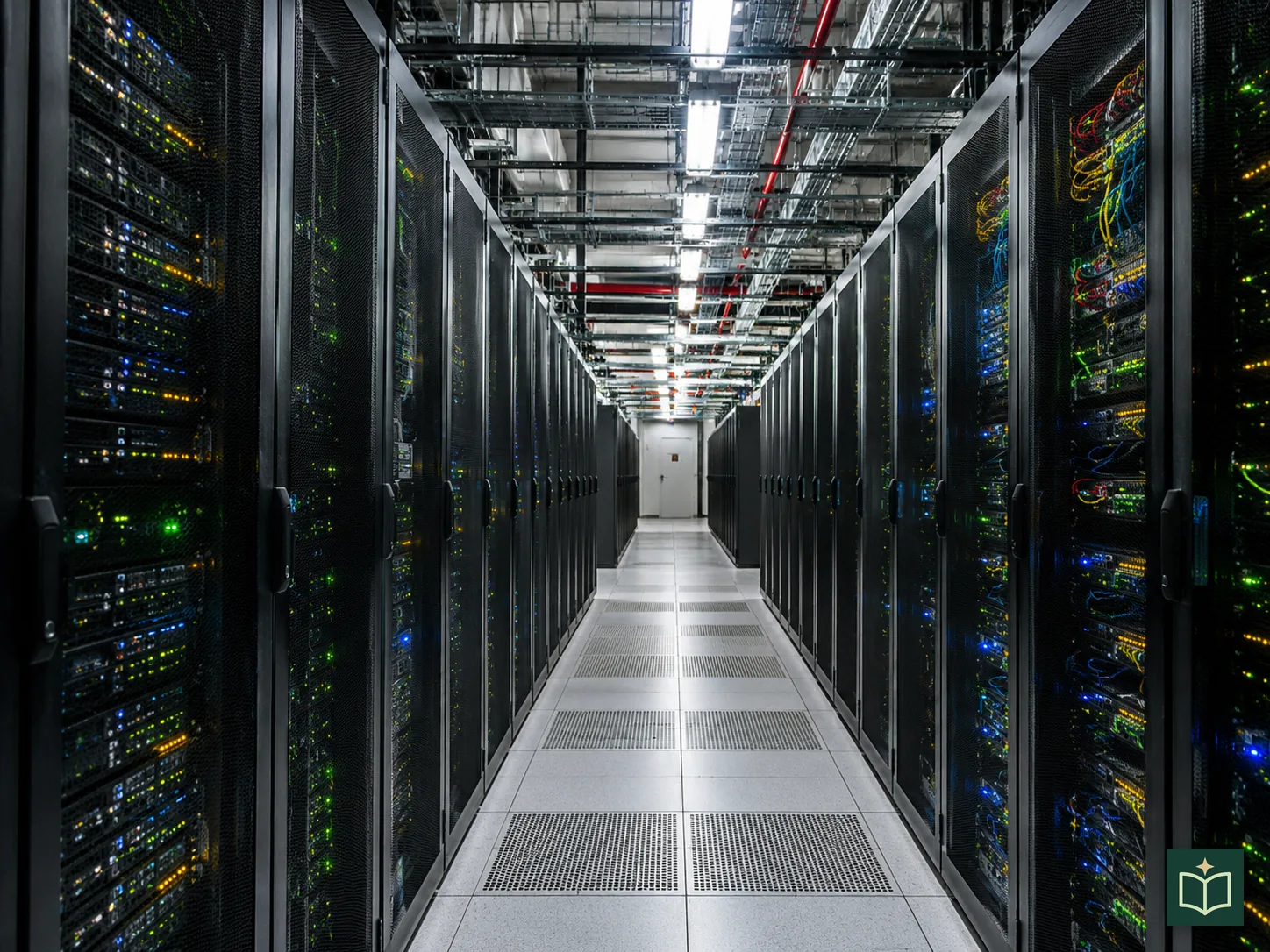
A large data centre can contain tens of thousands of servers in rows of racks. Uninterruptible power supplies and generators protect against outages, and fibre connections link it to the internet. Cooling is a major engineering challenge: servers turn almost all their electricity into heat, removed by air handling, chilled water or, increasingly, liquid cooling.
Many locations, one service
Providers spread data centres across regions and ‘availability zones’ so that if one site fails, services continue elsewhere. Data can be stored close to users for speed and to meet local laws on where data must be kept. The UAE and Saudi Arabia have attracted multiple new cloud regions in recent years.
The energy question
The International Energy Agency estimated that data centres used around 1.5% of global electricity in 2024, with demand projected to grow quickly as AI workloads expand. Operators are investing in efficiency, renewable power contracts and new cooling methods. Local grid capacity and water use for cooling are becoming key factors in where data centres are built.
Sources & further reading
Figures are rounded and widely published; check the linked organisations for the latest editions. These organisations do not endorse this website.