Generations of mobile
Each mobile generation brought a step change: 2G digital calls and texts, 3G mobile internet, 4G fast mobile broadband for video and apps. 5G, standardised by the industry body 3GPP and rolled out commercially from 2019, aims to handle far more devices, higher speeds and new uses such as connected factories.
Low, mid and high bands
5G uses a range of frequencies. Low bands travel far and penetrate buildings but carry less data. Mid-band, around 3.5 GHz in many countries, offers a balance and carries much 5G traffic. Millimetre-wave bands above 24 GHz can deliver very high speeds but over short distances and are easily blocked, so they suit stadiums and dense city spots.
Smarter antennas
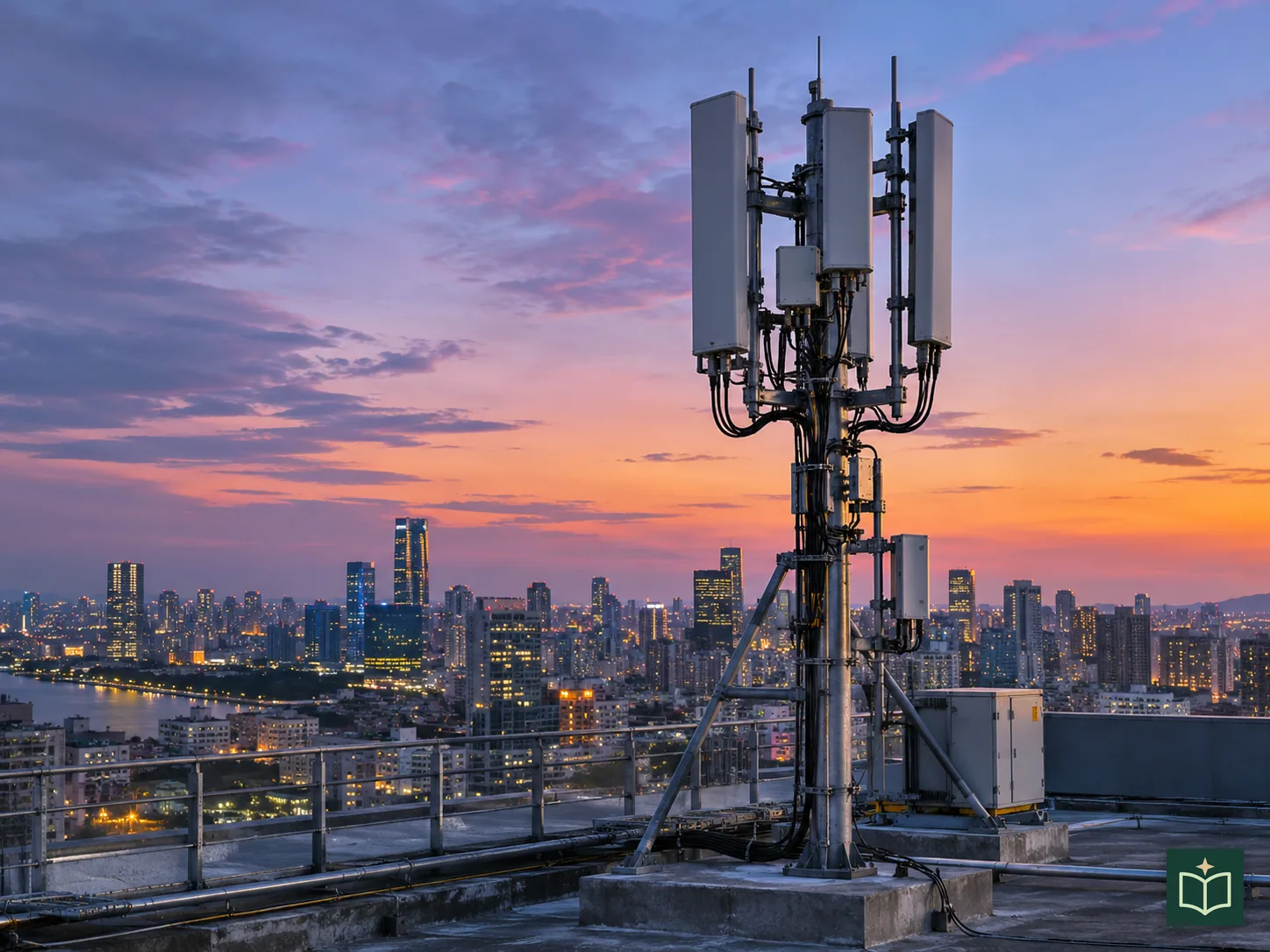
Massive MIMO antennas contain many small elements that can shape and steer beams towards individual users, rather than broadcasting in all directions. This improves signal quality and lets a mast serve more people at once. Network slicing lets operators run separate virtual networks with different performance for different customers.
What it changes
For most people, 5G means faster downloads and better performance in crowded places. For industry, it supports private networks in ports, factories and mines, where machines need reliable wireless links. The UAE was among the early countries to launch 5G widely. Health agencies, including the WHO, have found no established health effects from exposure within international guideline limits.
Sources & further reading
Figures are rounded and widely published; check the linked organisations for the latest editions. These organisations do not endorse this website.