Many ways to print
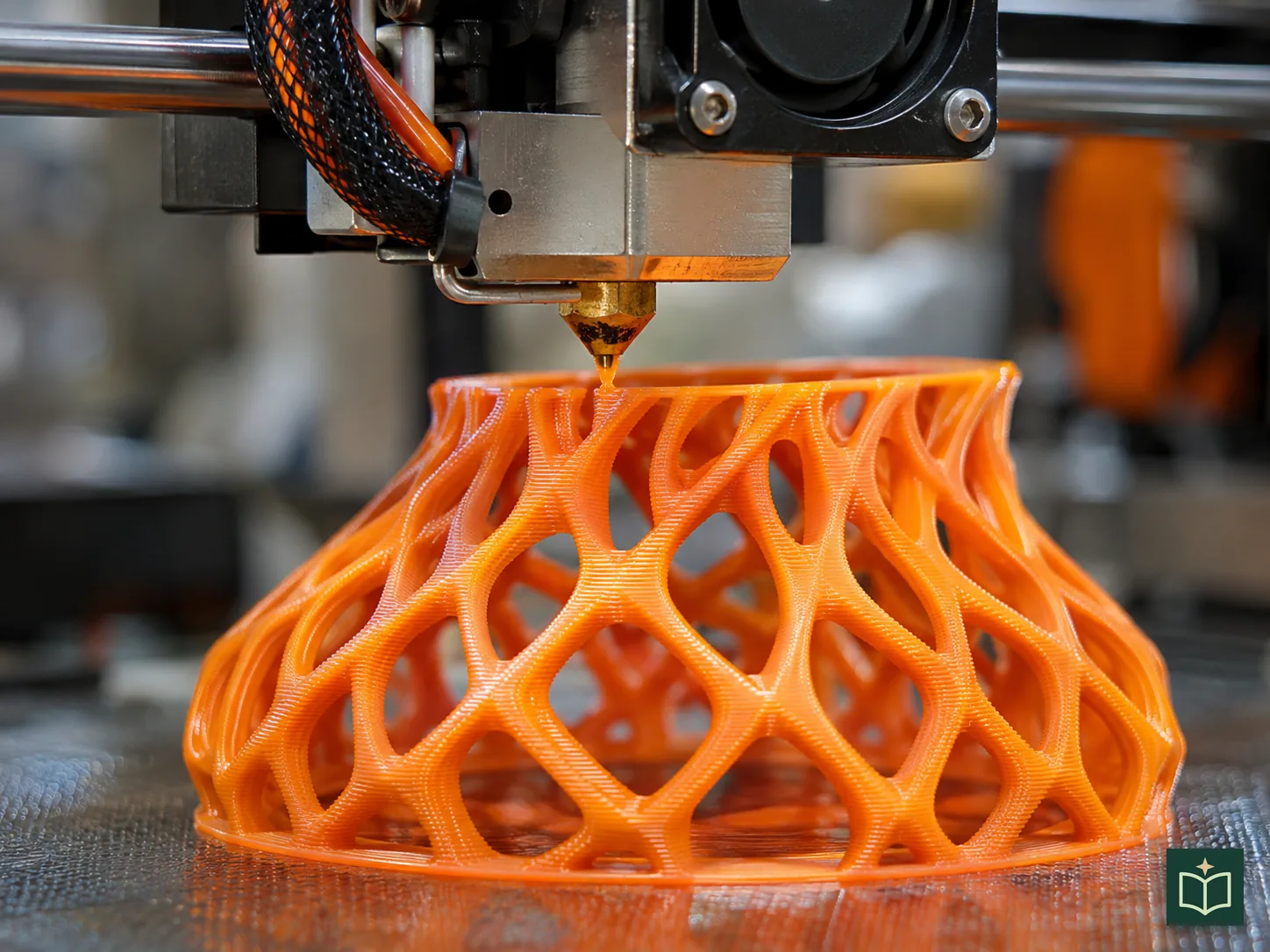
Fused deposition modelling, common on desktop printers, melts plastic filament and lays it down through a moving nozzle. Stereolithography uses light to harden liquid resin with fine detail. Powder-bed fusion uses lasers or electron beams to fuse metal or plastic powders. Chuck Hull patented stereolithography in the 1980s, launching the industry.
Shapes machining cannot make
Because parts are built up rather than carved, printers can create internal channels, lattices and organic shapes. Aerospace companies print fuel nozzles that combine many parts into one, saving weight. Dentists and hospitals print custom aligners, implants and surgical guides matched to individual patients.
Trade-offs
Printing is often slower and more expensive per part than moulding when making thousands of identical items. Parts may need finishing and can be weaker in some directions because of their layers. Material choice is growing, but not every alloy or plastic prints well. The technology complements, rather than replaces, traditional manufacturing.
From prototypes to buildings
Many companies first used 3D printing for rapid prototypes. Today it is used for end-use parts, spare parts on demand and tooling. Construction printers extrude concrete to build walls; Dubai has opened 3D-printed buildings and set targets to use the technology more widely in construction.
Sources & further reading
Figures are rounded and widely published; check the linked organisations for the latest editions. These organisations do not endorse this website.