The problem with size
Bigger AI models generally perform better, but in a traditional dense model, every parameter is used to process every token. Doubling the model's size roughly doubles the computing cost for each word it reads or writes. This makes very large models expensive to train and to run for millions of users. Researchers wanted a way to increase a model's knowledge without increasing the work for every token by the same amount.
Experts and a router
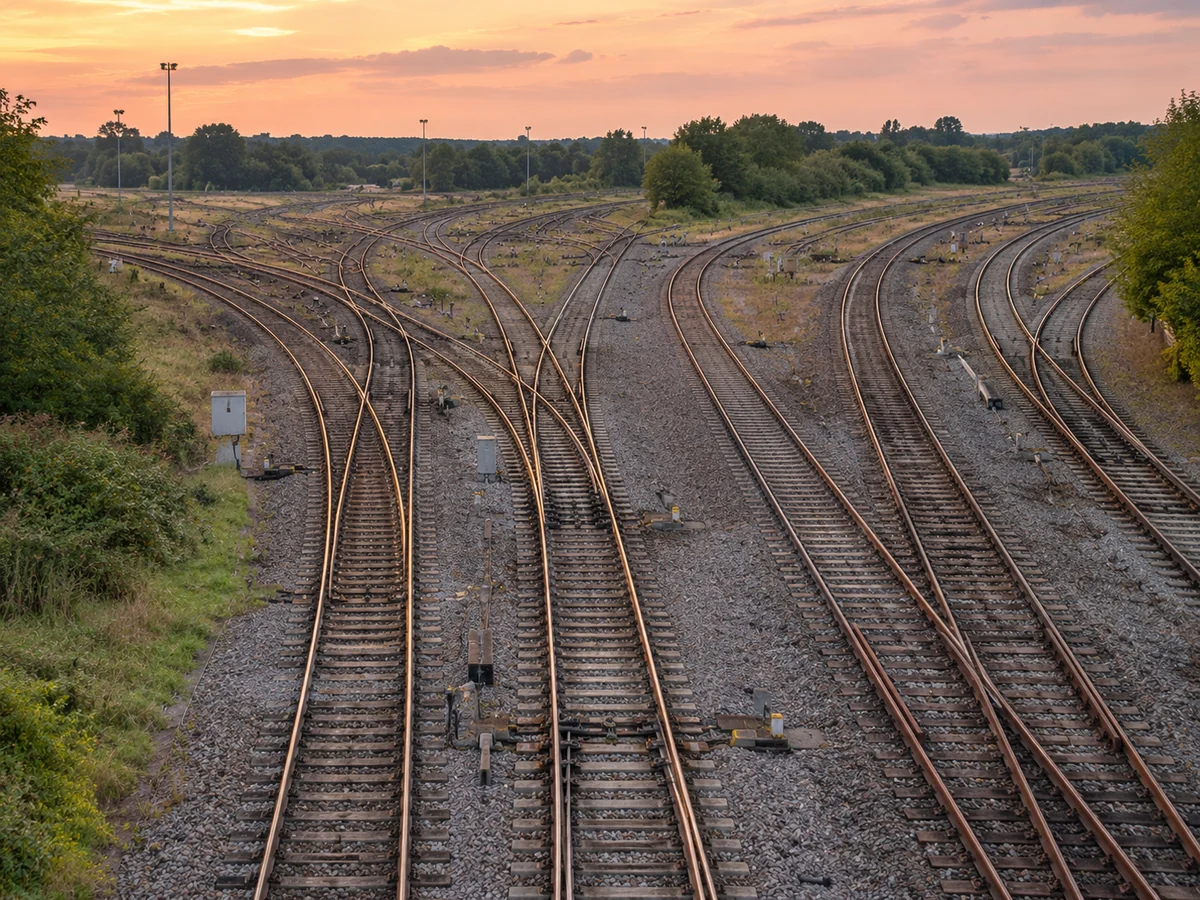
A mixture-of-experts model replaces some layers of a neural network with many smaller sub-networks, called experts. A small network called a router, or gate, examines each token and decides which experts should handle it, typically selecting just one, two or a handful out of dozens or hundreds. Only the selected experts do work for that token, while the others remain idle, saving computation.
An old idea
The idea dates back to a 1991 paper by Robert Jacobs, Michael Jordan, Steven Nowlan and Geoffrey Hinton, titled Adaptive Mixtures of Local Experts. In 2017, researchers at Google, including Noam Shazeer, showed that sparsely gated mixtures of experts could build very large language models efficiently. Google's Switch Transformer in 2021 scaled the idea further, and reports suggest some leading commercial models also use the approach.
Mixtral
In December 2023, the French company Mistral AI released Mixtral 8x7B, an open-weight mixture-of-experts model. Each of its layers has eight experts, and the router selects two for each token. The model has about 47 billion parameters in total but uses only about 13 billion for each token, giving the speed of a smaller model with performance that matched or beat much larger dense models on many tests at the time.
DeepSeek
The Chinese company DeepSeek made mixture of experts central to its efficient models. DeepSeek-V3, released in December 2024, has 671 billion parameters in total, but only about 37 billion are activated for each token. It uses many small experts plus shared experts that are always active. This design helped DeepSeek train a highly capable model at a reported computing cost far below many competitors, surprising the industry.
What experts learn
Despite the name, experts do not usually specialise in neat human categories, such as one expert for maths and another for history. Research has found that experts often specialise in more subtle patterns, such as particular types of words, syntax or formats. The router learns during training which experts to choose, and developers must ensure work is spread evenly, so that some experts are not overloaded while others are rarely used.
The trade-offs
Mixture-of-experts models are cheaper to run per token, but all the experts must still be stored in memory, so they need a lot of memory and often many chips to hold the full model. Training can be less stable, and the router must be carefully designed. Communication between chips holding different experts can slow things down. Engineers have developed many techniques to address these challenges.
Why it caught on
As AI companies serve hundreds of millions of users, the cost of running models, called inference, has become a major expense, alongside the energy used. Mixture of experts helps reduce these costs while allowing models to store more knowledge. Many leading open-weight models released in 2024 and 2025, including from DeepSeek, Alibaba's Qwen, Meta's Llama 4 and others, used mixture-of-experts designs.
Energy and access
By using less computation for each token, mixture-of-experts models can reduce the energy needed to generate answers, though overall energy use depends on how widely models are used. Efficient open models also make it possible for smaller companies, universities and countries to run powerful AI without the vast budgets of the largest technology companies, contributing to wider access to advanced AI around the world.
Why it matters
Mixture of experts is one of the key techniques that has made modern AI more efficient, allowing models to grow larger and smarter without a matching increase in costs. It helps explain how companies such as DeepSeek and Mistral built competitive models with fewer resources, and why AI keeps getting cheaper to use. It is a reminder that clever design matters as much as raw computing power.
Sources & further reading
- arXiv · Mixtral of Experts (Mistral AI, 2024) ↗
- arXiv · DeepSeek-V3 Technical Report (2024) ↗
- arXiv · Outrageously Large Neural Networks: The Sparsely-Gated Mixture-of-Experts Layer (Shazeer et al., 2017) ↗
A simplified explanation of a technical concept. Photograph: original AI-generated illustration (Adobe Firefly). Reference organisations do not endorse this website.