What sailors look for
A harbour is a stretch of water where ships can shelter, anchor and load. A natural harbour provides that without major engineering. Several qualities matter. Shelter comes first: headlands, islands or a narrow entrance must block ocean swell and storm waves. Depth comes next, enough to let ships float at low tide close to shore. The seabed should give anchors good grip, ideally mud or clay. A narrow mouth is easy to defend and calm inside, but wide enough to navigate. Finally, there must be space on land for quays and a town, and routes inland. Few places offer all of these, which is why great harbours became great cities.
Drowned valleys: Sydney
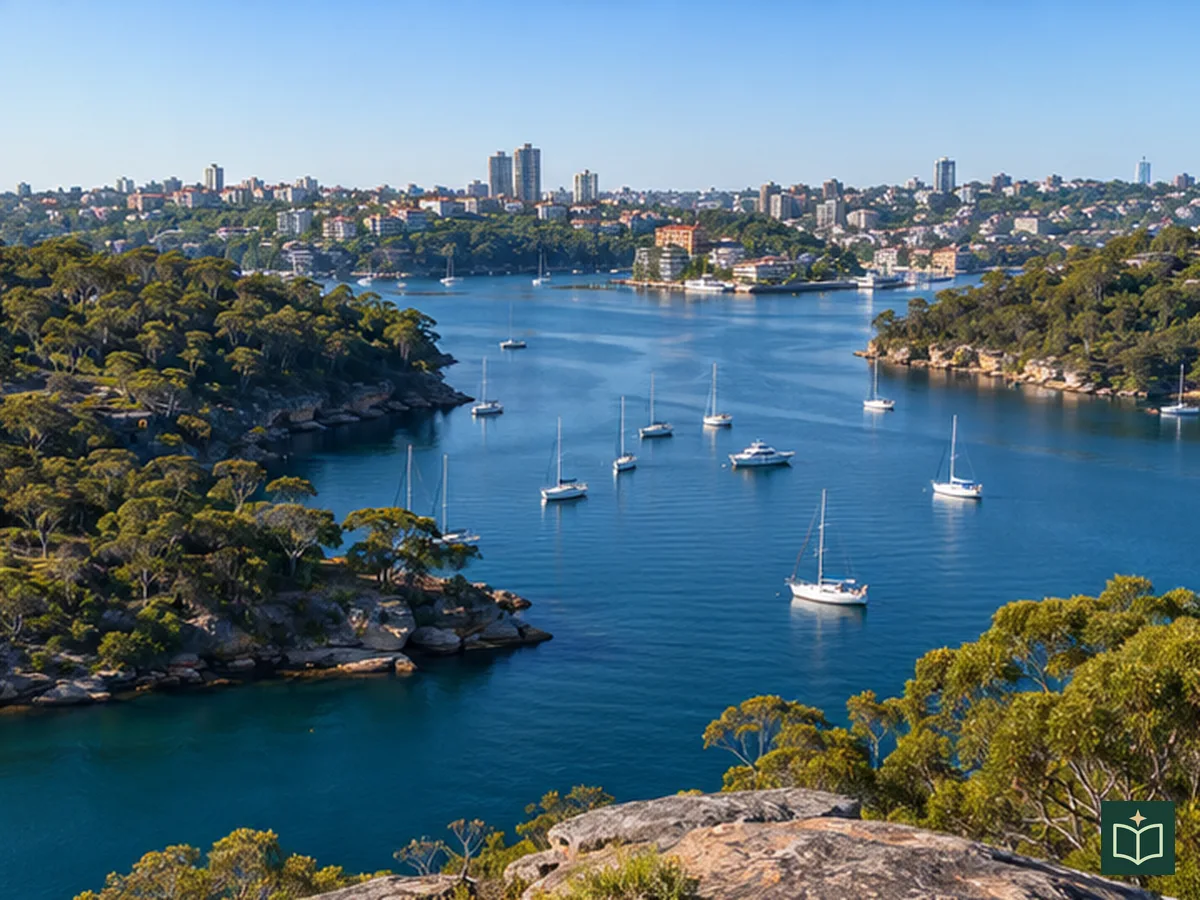
Many of the finest harbours are drowned river valleys, called rias, flooded as sea levels rose after the last ice age. Sydney Harbour, or Port Jackson, is the classic example. A branching river valley cut into sandstone was submerged, creating a long, deep, winding inlet with dozens of sheltered bays, entered between two high headlands. Ships can pass from the open Pacific into calm water within minutes. Other harbours have similar origins, including Halifax in Canada and Rio de Janeiro's Guanabara Bay, while fjords, deep glacial valleys flooded by the sea, provide deep sheltered water across Norway and elsewhere, though often with little flat land for towns.
Islands as breakwaters: Hong Kong
Hong Kong's Victoria Harbour owes its quality to islands. Hong Kong Island lies just off the Kowloon peninsula, and the strait between them forms a deep, sheltered channel protected from typhoon swell on most sides. When British traders arrived in the 1840s, they valued it as one of the best deep-water anchorages on the south China coast. Singapore's harbour is similarly protected by nearby islands. Geography alone does not create a great port, however. Hong Kong and Singapore thrived because they also sat on major shipping lanes and had trading hinterlands, the region behind a port that supplies its cargo and buys its imports.
The Gulf's shallow problem
The southern Gulf coast offers few natural harbours. The sea is shallow, the coast low and sandy, and longshore drift builds bars across inlets. Traditional ports used tidal creeks, khors, where dhows could shelter. Dubai Creek was one of the best, but by the 1950s silt and a sandbar at its mouth made it hard for larger boats to enter. In 1959 Dubai's ruler, Sheikh Rashid, borrowed money to dredge the creek and stabilise its entrance, a decision that helped Dubai grow as a trading hub. Port Rashid followed in 1972, built on the coast with breakwaters, yet demand quickly outgrew it.
Digging a harbour: Jebel Ali
Jebel Ali, opened in 1979 about 35 kilometres south-west of Dubai's old centre, took the opposite approach to natural harbours. Rather than finding deep water, engineers excavated a harbour into the coast and dredged long approach channels, creating a deep basin protected by breakwaters. It is often described as the largest man-made harbour in the world, and it grew into one of the busiest container ports. A free zone was built alongside it, adding the hinterland that a port needs. Elsewhere in the Gulf, Khalifa Port in Abu Dhabi and Hamad Port in Qatar used similar methods, turning shallow coasts into deep-water terminals.
Natural advantage, engineered future
Modern ships have changed what a good harbour means. The largest container ships need about 16 metres of water or more, deeper than many historic harbours, so ports everywhere now dredge channels and build offshore terminals. Old harbours squeezed by cities, from London to Sydney, moved their cargo operations to new sites with space and depth. Natural harbours still give advantages: lower dredging costs, calm water and room for navies and leisure craft. But engineering can now outweigh geography where money and trade routes justify it. The Gulf's experience shows both sides: shallow seas were a barrier, but a central location on world routes made overcoming them worthwhile.
Sources & further reading
Figures are rounded and widely published; check the linked organisations for the latest editions. These organisations do not endorse this website.