A tall, dark column
The ocean averages about 3,700 metres deep, and most of that depth is dark. Oceanographers divide the open ocean into zones based on depth, light and the life found there. The names come from Greek: epipelagic for the sunlit surface, then mesopelagic, bathypelagic, abyssopelagic and, in the deepest trenches, hadalpelagic. More vivid labels are the sunlight, twilight, midnight, abyssal and hadal zones. The boundaries are approximate, since conditions shift with latitude and water clarity. In the shallow Gulf, which is mostly less than 100 metres deep, the entire water column lies within the sunlit zone, while the nearby Gulf of Oman plunges to more than 3,000 metres.
The sunlit zone: 0 to 200 metres
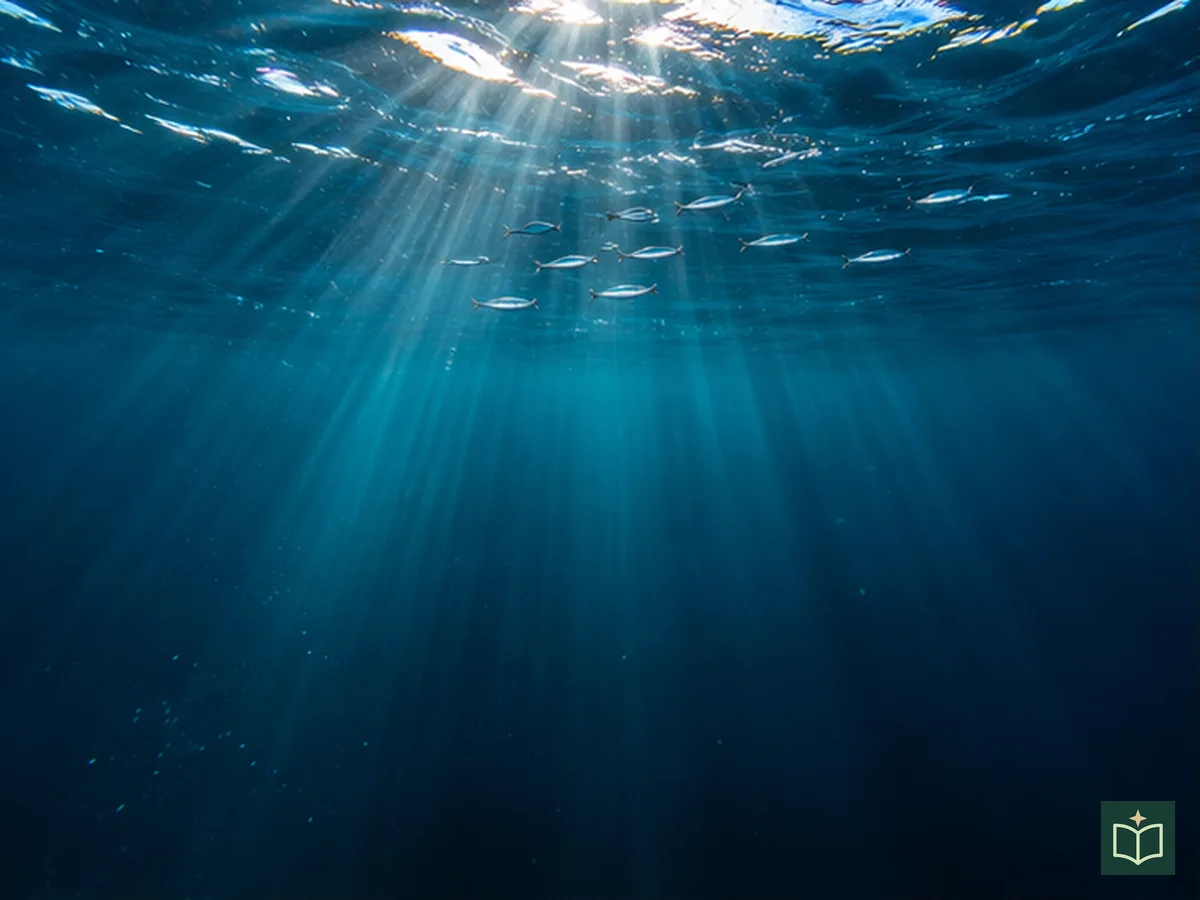
Nearly all photosynthesis in the sea happens in this top layer, where enough sunlight penetrates for phytoplankton to grow. Those microscopic algae form the base of most ocean food webs and produce a large share of the oxygen in Earth's atmosphere. The sunlit zone holds familiar life: coral reefs, kelp, tuna, dolphins and sea turtles. Water here is warmed by the sun and mixed by waves and wind. Below it lies the thermocline, a layer where temperature drops quickly with depth. Red light is absorbed within the first few metres, which is why underwater scenes look blue, and by 200 metres little useful light remains.
Twilight and midnight
From about 200 to 1,000 metres lies the twilight zone, where faint blue light lingers but cannot support photosynthesis. Many animals here have large eyes, silvery sides or glowing undersides to hide their silhouettes. Each night, vast numbers of small fish, shrimp and plankton swim up to feed in the surface layer and return at dawn, a daily movement often described as the largest migration on Earth. Below about 1,000 metres begins the midnight zone, permanently dark apart from bioluminescence, light made by living things. Temperatures settle at a few degrees above freezing. Animals such as anglerfish lure prey with glowing appendages, and food arrives mainly as sinking debris, called marine snow.
The abyss and the trenches
Between about 4,000 and 6,000 metres stretch the abyssal plains, the vast flat floors of the ocean basins that cover much of the planet. Below 6,000 metres lie the hadal zones, found almost only in deep trenches. The deepest point, the Challenger Deep in the Mariana Trench, is about 10,900 metres down. Pressure rises by roughly one atmosphere for every ten metres of water. At 4,000 metres that means about 400 atmospheres plus the one at the surface; at the Challenger Deep, more than 1,000. Life persists even there, including amphipods and sea cucumbers, adapted with flexible bodies and special molecules that protect their proteins.
Common misconceptions
It is easy to assume the deep sea is empty. In fact, it is the largest living space on Earth by volume, and new species are found on almost every deep expedition. Another myth is that deep-sea animals are giants; most are small, because food is scarce, though some, such as giant squid, grow large. Many people also think hydrothermal vents are typical of the deep sea. They are rare oases, where chemical energy rather than sunlight feeds communities of tubeworms and bacteria. Finally, the zones are not walls. Animals, heat and nutrients move between them, and whales dive from the surface into the midnight zone to hunt.
Why the layers matter
The layers matter far beyond the ocean. Sinking marine snow and migrating animals carry carbon from the surface to the depths, where it can stay for centuries, helping regulate climate. Deep, cold water stores heat and carbon dioxide absorbed from the atmosphere. Fisheries increasingly target species from the twilight zone, and companies have explored mining the deep sea floor, raising questions about ecosystems scientists barely understand. Much of the deep ocean remains unexplored and less precisely mapped than the surface of Mars. Each step down the water column changes the rules of life, and studying those zones helps explain how the whole planet works.
Sources & further reading
Figures are rounded and widely published; check the linked organisations for the latest editions. These organisations do not endorse this website.