Short numbers, long history
The idea of a single, easy number for emergencies began in London in 1937, when 999 was introduced after a fatal fire exposed delays in reaching the fire brigade through switchboards. The United States adopted 911 from 1968, and the European Union established 112 as a common number across member states. Many countries use one number for all services; others separate them. In the UAE, 999 reaches the police, 998 the ambulance service and 997 civil defence. Numbers are kept short so they can be remembered in panic, and in many countries they work from mobile phones even without credit, roaming on whichever network is available.
Routing and priority
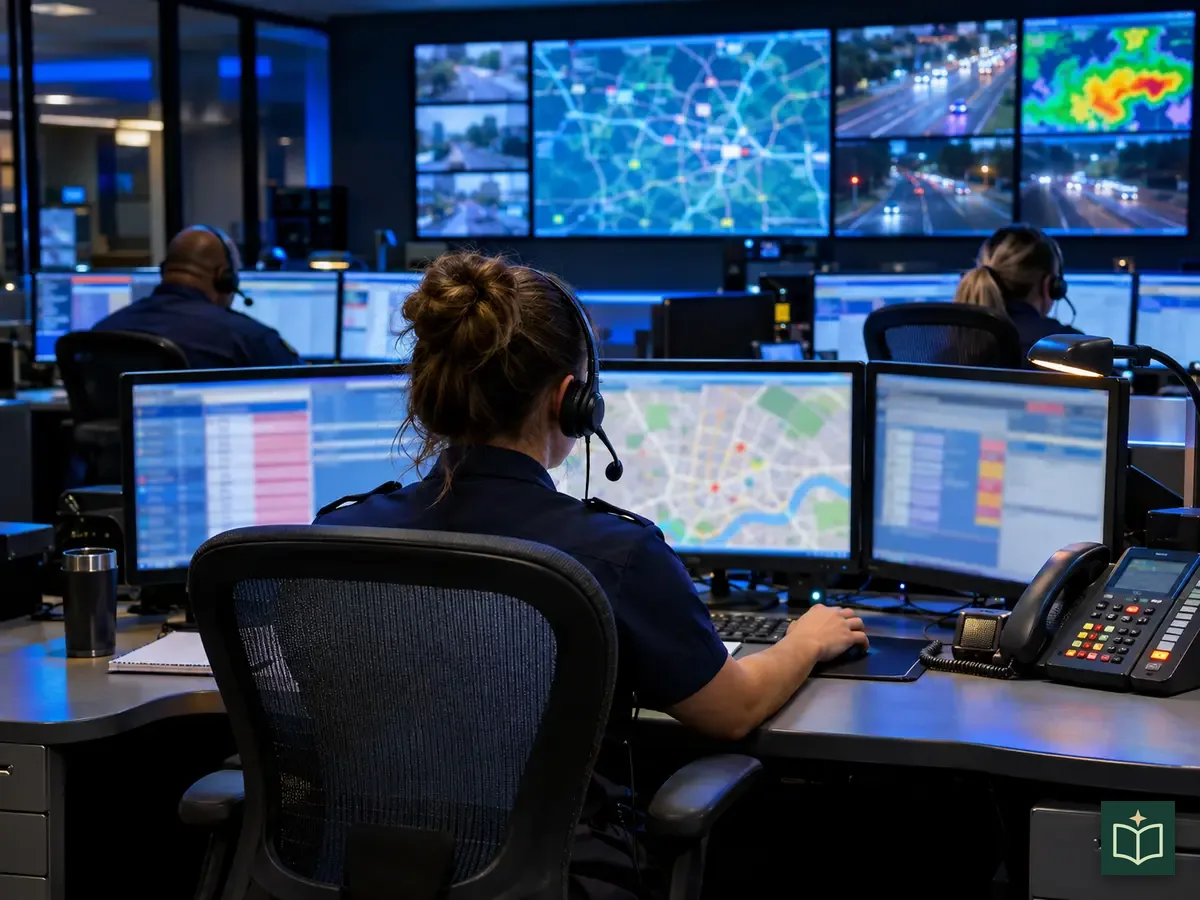
When you dial an emergency number, the telephone network recognises it and gives the call priority, so it can connect even when the network is busy. Mobile phones will use any available network if their own has no coverage. The call is routed to a public safety answering point, a control room responsible for your area, determined by the cell or exchange handling the call. A call taker answers and typically asks which service you need and where you are. In some countries the first operator transfers the call to the relevant service; in others, a single integrated centre handles police, fire and ambulance together, sharing information on screen.
Finding the caller
Location is the most critical piece of information. For landlines, the address linked to the line appears automatically. For mobiles, networks can provide the location of the serving cell, which may cover a large area. A technology called Advanced Mobile Location, developed in the United Kingdom in 2014 and now used in many countries, makes smartphones send a precise satellite and Wi-Fi location to the control room automatically when an emergency call is made. Call takers still confirm the location verbally, asking for landmarks, building numbers or digital address codes, because a pin on a map cannot say which floor or flat someone is on.
Questions that save time
Callers sometimes feel frustrated by the questions they are asked, but in most cases help is already being arranged while the conversation continues. Ambulance services use structured protocols that ask set questions about breathing, consciousness and bleeding, allowing the system to assign a priority level. A suspected cardiac arrest triggers the fastest response, while a minor injury may receive a slower response or advice. Dispatchers can also give instructions over the phone, such as how to perform chest compressions, control bleeding or keep someone safe until help arrives. Staying on the line, answering calmly and following instructions are the most useful things a caller can do.
Dispatch and coordination
Once a priority is set, a dispatcher assigns the nearest suitable unit, using vehicle tracking to see where ambulances, fire engines and police cars are. Large incidents may need several services and specialist teams working together, coordinated from the control room. Hospitals may receive advance notice so that teams are ready on arrival. Behind the scenes, control rooms monitor demand and move resources around a city to keep response times low. Abuse of emergency numbers, such as hoax calls or non-urgent enquiries, ties up lines and staff, which is why many countries provide separate non-emergency numbers and penalise deliberate misuse of emergency lines.
What to watch
Emergency systems are upgrading to handle text messages, video and data, as older systems were designed for voice calls only. Next-generation networks will allow callers to send photographs or live video, and some places already accept text messages from people who cannot speak safely or who have hearing or speech impairments. Cars in many regions automatically call emergency services after a serious crash, sending their position. Smartwatches can detect falls. These advances bring new challenges, from false alarms to data protection. The fundamentals, however, do not change: know your local emergency numbers, give a clear location and stay on the line.
Sources & further reading
Figures are rounded and widely published; check the linked organisations for the latest editions. These organisations do not endorse this website.