The passport becomes a computer
Look closely at the cover of most modern passports and you will see a small symbol of a rectangle with a circle inside. It means the passport contains a contactless chip and antenna, usually embedded in the cover or data page. The chip stores the same information printed on the data page, such as name, nationality, date of birth and passport number, plus a digital facial photograph and, in some countries, fingerprints. Standards set by the International Civil Aviation Organization, in a document known as Doc 9303, ensure that a passport issued by one country can be read by machines anywhere. More than 140 countries now issue such electronic passports.
Unlocking the chip
The chip cannot be read by simply waving a device near it. Under a scheme called Basic Access Control, or its stronger successor, the reader must first optically scan the machine-readable zone, the two lines of characters at the bottom of the data page. Information from those lines, including the passport number, date of birth and expiry date, is used to derive a key that unlocks communication with the chip and encrypts the data exchanged. This is designed to prevent someone from secretly reading a passport inside a bag. Fingerprints, where stored, are protected by an additional mechanism that only authorised border systems can unlock.
Proving it is genuine
The real security of an e-passport lies in digital signatures. When a passport is issued, the country’s authority signs the chip’s data using a private cryptographic key. Border systems hold the matching public certificates for issuing countries, often obtained through ICAO’s Public Key Directory. When a gate reads the chip, it checks that the signature is valid, proving the data was written by a genuine authority and has not been altered. Some chips also prove they are original, not copies, by responding to a cryptographic challenge. A forger might print a convincing page, but producing a chip with a valid signature is far harder.
The smart gate
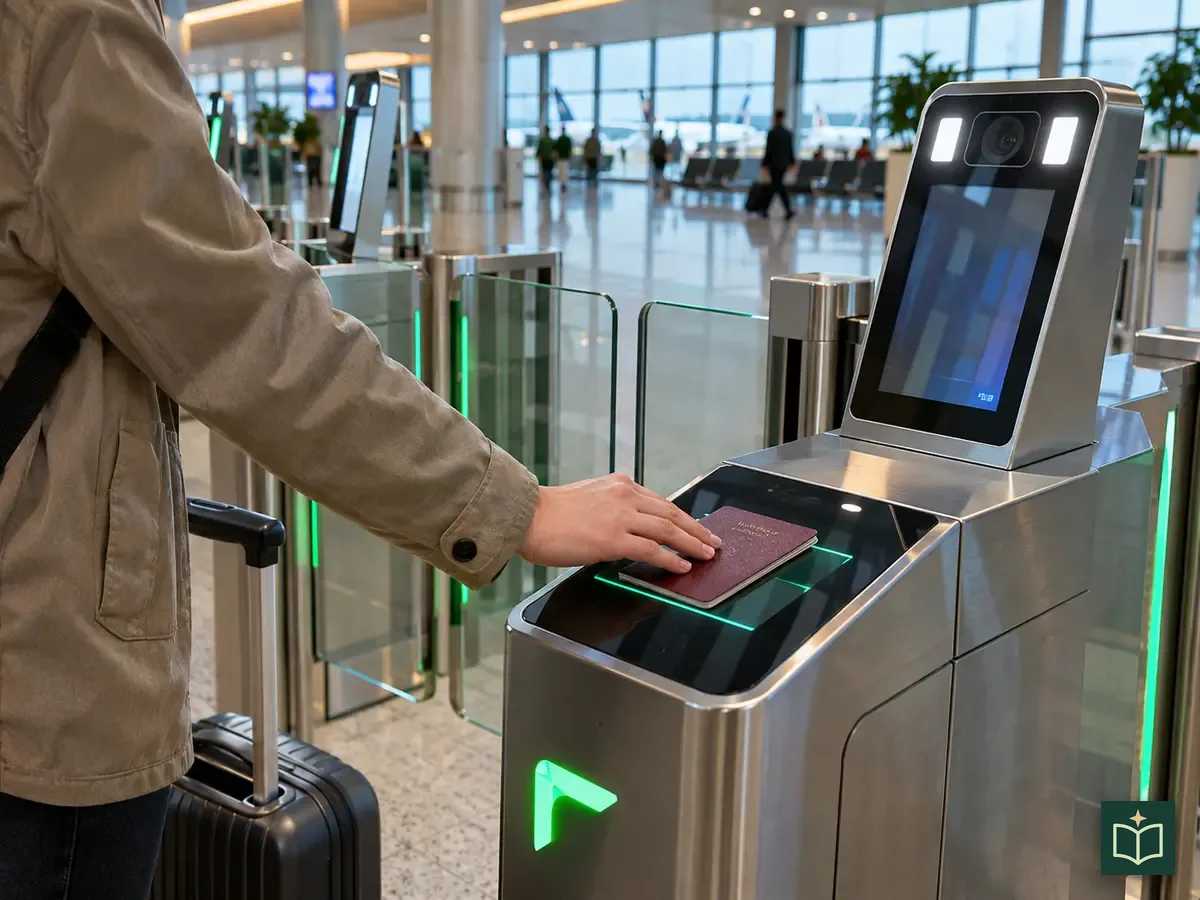
Automated border gates combine these checks with face recognition. The traveller places the passport on a reader, which scans the page, unlocks and verifies the chip, and then checks the data against watch lists and visa or residence records. A camera captures the traveller’s face and compares it with the chip photograph using biometric matching software. If everything agrees, the gate opens, often in well under a minute. Airports in the UAE were early adopters of smart gates, and some now use face recognition alone for enrolled residents and citizens. If anything fails to match, the traveller is directed to an officer, who makes the final decision.
Misconceptions and limits
A passport chip does not contain a tracking device, and its short reading range, a few centimetres, makes covert scanning impractical. Nor does a damaged chip usually make a passport invalid, although it may prevent use of smart gates and some visa-free programmes may require a functioning e-passport. Face matching is generally accurate in controlled conditions, but lighting, ageing, glasses and changes in appearance can cause failures, which is why human officers remain involved. Privacy campaigners raise questions about how biometric data is stored and shared, and different countries apply different rules. Travellers can usually choose to use a staffed desk instead of a gate.
What comes next
The next step is the digital travel credential, a secure digital version of the passport stored on a phone, which ICAO has been standardising. Travellers would share their verified data with a border authority and airline before departure, and then pass through checkpoints using face recognition alone, without presenting a physical document. Several airports and airlines are testing such seamless journeys. Physical passports will remain necessary for years, as a backup and because not every country will adopt the technology at the same pace. The underlying principle, however, is set: identity at the border increasingly rests on cryptography and biometrics rather than stamps and printed paper.
Sources & further reading
Figures are rounded and widely published; check the linked organisations for the latest editions. These organisations do not endorse this website.