Why blood is special
Despite decades of research, there is still no practical artificial substitute for human blood. Hospitals need it for surgery, trauma, childbirth complications, cancer treatment and conditions such as thalassaemia, which is relatively common in the Gulf and requires regular transfusions. All of it must come from volunteer donors. The World Health Organization encourages countries to rely on voluntary, unpaid donation, which it considers the safest source. A national blood service, or hospital blood banks working together, must collect enough of each blood group, test it, process it and deliver it to where it is needed, without either running out or letting units expire.
From vein to components
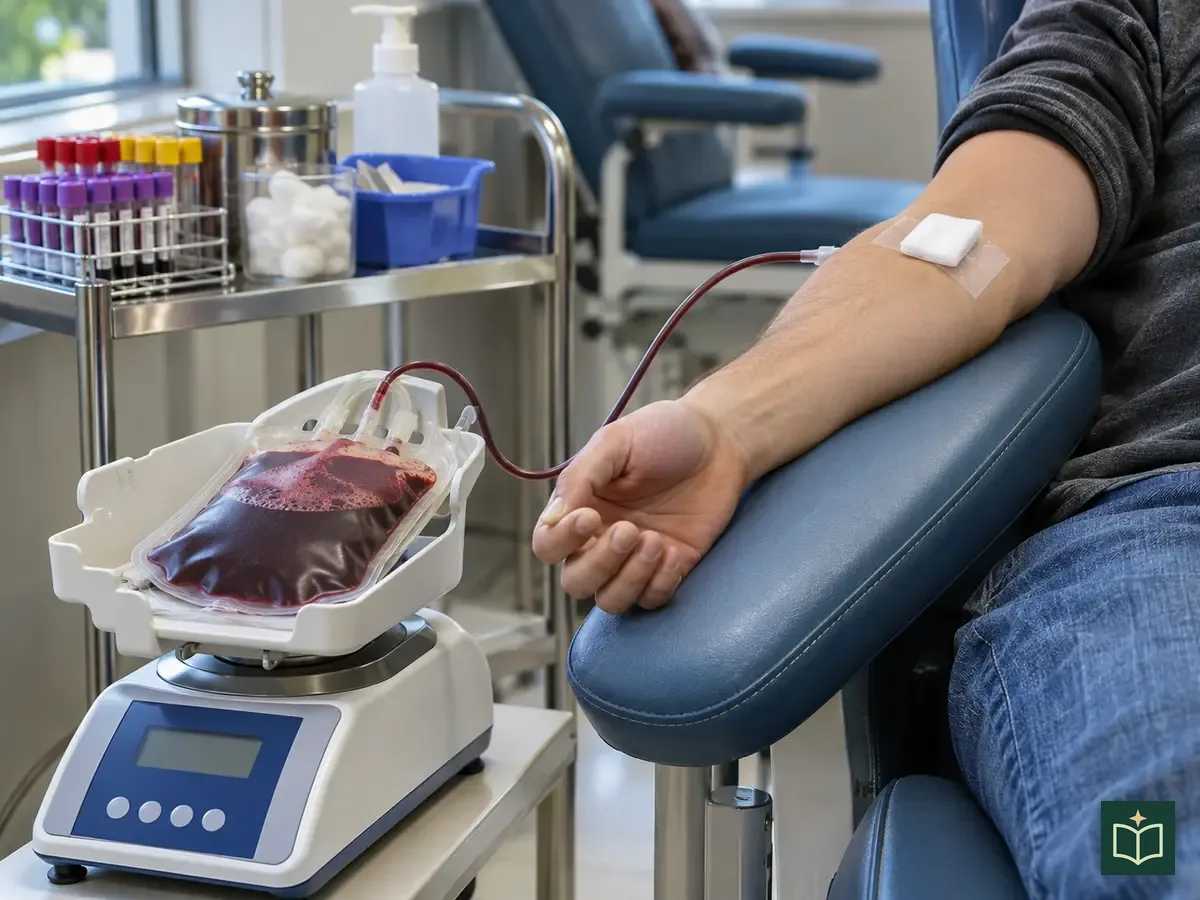
A typical whole blood donation is about 450 millilitres. Samples are tested for blood group and for infections such as HIV, hepatitis B and C, and syphilis, with additional tests in some regions. The donation is then spun in a centrifuge, which separates it by density into red cells, plasma and a layer containing platelets. Each component goes to a different type of patient. Red cells help people with severe bleeding or anaemia, plasma provides clotting factors and can be processed into medicines, and platelets help patients with low counts, such as those receiving chemotherapy. One donation can therefore help more than one person.
Different shelf lives
The components are stored very differently. Red cells are kept refrigerated and typically last up to about 42 days. Plasma is frozen and can be stored for a year or more. Platelets are the most demanding: they must be kept at room temperature and gently agitated, and usually last only five to seven days. These short lives mean that blood services cannot simply stockpile ahead of a crisis. They need a steady flow of donors every week. Donors can also give specific components through a process called apheresis, in which a machine collects platelets or plasma and returns the remaining blood to the donor.
Matching blood groups
Blood must be matched carefully, because the immune system attacks red cells with unfamiliar markers. The two most important systems are ABO and Rhesus. Group O negative red cells can be given to most patients in an emergency when there is no time to test, which is why they are often called the universal donor type and are always in demand. For plasma, the logic is reversed, and group AB plasma is the universal type. Before a routine transfusion, laboratories cross-match the patient’s blood with the donor unit to check compatibility. Rare blood types require special donor registers, sometimes coordinated internationally, because finding a match can be difficult.
A UAE perspective
In the UAE, blood donation centres operated by health authorities in Dubai, Abu Dhabi and other emirates collect donations and run campaigns, often at workplaces, universities and malls. Demand can rise during holidays and summer, when many regular donors travel. Eligibility rules cover age, weight, health, recent travel and medications, and differ slightly between countries. People should check current requirements with their local blood service before donating. This article offers general information only; anyone with medical questions about donation or transfusion should seek advice from a qualified professional. World Blood Donor Day, held each year on 14 June, highlights the importance of regular voluntary donors worldwide.
What to watch
Blood services are using data to predict demand by blood group and hospital, reducing waste. Pathogen reduction technologies can treat platelets and plasma to inactivate many viruses and bacteria, adding a layer of safety. Researchers are developing ways to extend platelet storage and to grow red blood cells from stem cells in laboratories, with early clinical trials under way, though large-scale production remains distant. Plasma-derived medicines, such as immunoglobulins, are in high global demand, and countries are debating how to secure supplies. For the foreseeable future, however, the system will continue to depend on ordinary people giving their time and blood.
Sources & further reading
Figures are rounded and widely published; check the linked organisations for the latest editions. These organisations do not endorse this website.