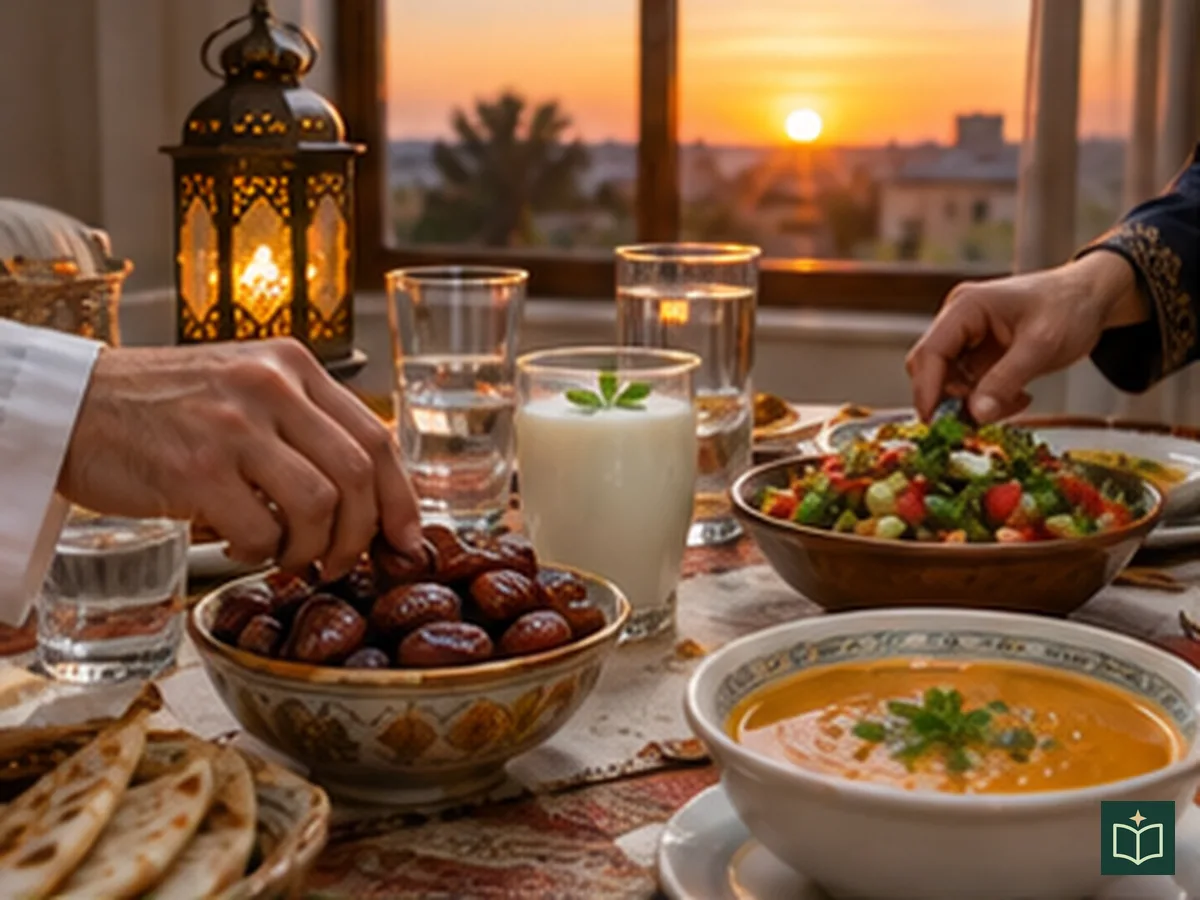
A body built for gaps
Humans evolved to cope with irregular meals, and the body is well equipped to bridge many hours without food. During Ramadan, Muslims abstain from food and drink from dawn until sunset. In the UAE that means roughly 12 to 13 hours in midwinter and about 15 in midsummer, depending on when the month falls. Over that period the body does not simply run down. Instead, hormones shift its fuel supply in an orderly sequence: from the last meal, to sugar stored in the liver, to fat. This explainer describes that sequence in general terms. People with diabetes or other medical conditions, and those who are pregnant, should ask a doctor about fasting safely.
The first hours: running on the meal
After suhoor, the pre-dawn meal, digestion keeps nutrients flowing into the bloodstream for several hours. Rising blood sugar prompts the pancreas to release insulin, the hormone that tells cells to take up glucose and tells the liver and muscles to store any surplus as glycogen, a compact chain of glucose units. Surplus energy is also stored as fat. Meals rich in fibre, protein and slowly digested starches, such as oats, whole grains, beans or eggs, release their energy more gradually than sweets and white bread, which is why they tend to keep people fuller for longer. A sugary meal produces a sharper rise and fall in blood glucose, and hunger often returns sooner.
Mid-morning: the liver takes over
Typically four to six hours after eating, the meal has largely been absorbed. Insulin levels fall and a second pancreatic hormone, glucagon, rises. Glucagon signals the liver to break down its glycogen and release glucose into the blood. This matters because the brain relies heavily on glucose, using roughly 120 grams a day. An adult liver stores about 100 grams of glycogen. Muscles hold several times more, but they keep it for their own use and cannot release it into the bloodstream. The liver also starts building new glucose from other materials, such as glycerol from fat and some amino acids, a process called gluconeogenesis that becomes more important as the hours pass.
Afternoon: fat becomes the main fuel
As the day goes on, the balance shifts further. Low insulin allows fat cells to release fatty acids, which muscles, the heart and many other tissues burn readily in place of glucose. This spares the remaining sugar for the brain and red blood cells, which depend on it most. After many hours without food, the liver also begins turning some fatty acids into ketones, small molecules the brain can use as an alternative fuel. In a dawn-to-sunset fast, ketone levels typically rise only modestly, far below those reached after several days without food. By iftar, the meal that breaks the fast at sunset, the body is drawing a large share of its energy from fat.
Water is the harder part
For most healthy people, food is not the main challenge of a daytime fast; water is. The body keeps losing fluid through breath, sweat and urine, and the kidneys respond by concentrating urine to conserve water. In the Gulf, where Ramadan fell during hot summers in recent years, sweating adds substantially to losses for anyone working outdoors. Mild dehydration can cause headaches, tiredness and poorer concentration in the afternoon. Drinking water steadily between iftar and suhoor, rather than all at once, eating water-rich foods such as fruit, vegetables and laban, and limiting very salty dishes all help. Missing the usual morning coffee is another common cause of an early-fast headache.
Sleep and the daily rhythm
Ramadan also reshapes the daily timetable. Late iftar gatherings, night prayers and a pre-dawn suhoor can shorten and split sleep, and studies of fasting people often find that reduced sleep, rather than fasting itself, explains much of the daytime fatigue. Less sleep deepens the familiar afternoon dip in alertness. Many people cope by protecting a core block of night-time sleep and adding a short nap. When the month ends, the body readily returns to its usual pattern. The fuel switch behind fasting is the same flexible system that operates every night while we sleep, which is why the first meal of an ordinary day is called breakfast: it breaks the overnight fast.
Sources & further reading
Figures are rounded and widely published; check the linked organisations for the latest editions. These organisations do not endorse this website.