Where magma comes from
Most of Earth’s mantle is solid rock, but it can partly melt in three main settings. At mid-ocean ridges, plates pull apart and reduced pressure lets rock melt. At subduction zones, an ocean plate sinks and releases water that lowers the melting point of the rock above. At hotspots such as Hawaii, plumes of hot mantle rise from deep within the planet.
Runny or sticky
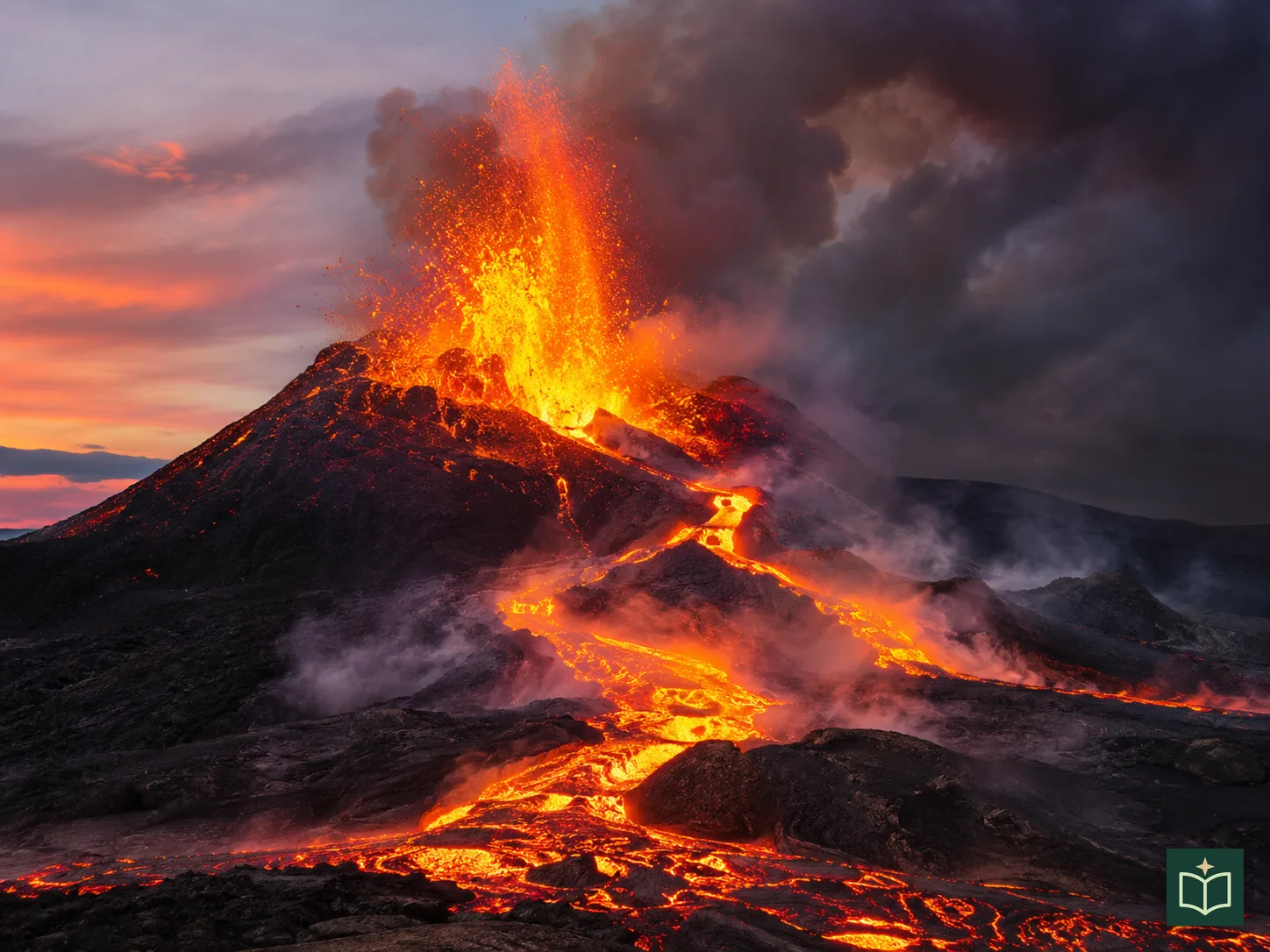
The key ingredient is silica. Basaltic magma, low in silica, is hot and runny; gases bubble out easily, producing lava fountains and long lava flows, as in Hawaii and Iceland. Andesitic and rhyolitic magmas, richer in silica, are thicker and trap gas. When pressure is suddenly released, they can erupt explosively, as at Mount St Helens in 1980.
The Ring of Fire
Around the Pacific Ocean, a chain of subduction zones hosts roughly three-quarters of the world’s active volcanoes and many of its largest earthquakes. Japan, Indonesia, the Philippines, the Andes and the Cascades all sit along this ring. The Mediterranean, East Africa and Iceland are other notable volcanic regions.
More than lava
The deadliest volcanic hazards are often not lava flows, which usually move slowly. Pyroclastic flows—fast avalanches of hot gas and rock—can travel at well over 100 kilometres per hour. Volcanic mudflows, ash falls that collapse roofs and disrupt aviation, and gases can all affect people far from the crater. Large eruptions can even cool global climate for a year or two.
Sources & further reading
Figures are rounded and widely published; check the linked organisations for the latest editions. These organisations do not endorse this website.