Rods and cones
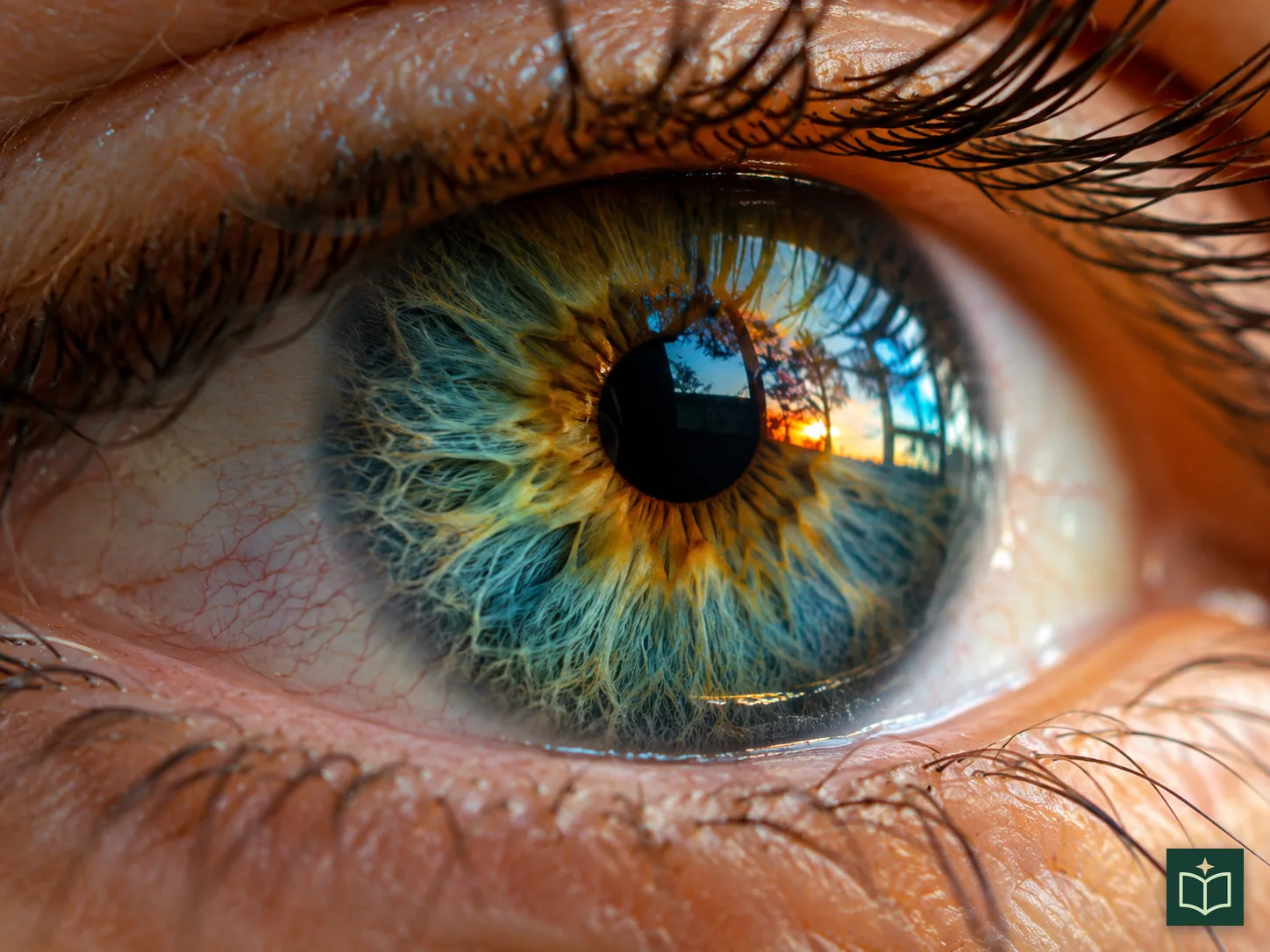
The retina contains two main kinds of light-sensitive cells. Rods, around 120 million of them, are very sensitive and handle dim light but do not distinguish colour—which is why the world looks grey on a moonlit night. Cones, about 6 million, work in brighter light and are concentrated in the fovea, the centre of sharp vision.
Three overlapping sensors
Most people have three cone types, often labelled S, M and L for short, medium and long wavelengths—roughly blue, green and red, though their sensitivities overlap widely. Any colour you see is the brain’s reading of how strongly each cone type is responding. That is why screens can show a wide range of colours using only red, green and blue pixels.
Context changes colour
The brain does not read cone signals in isolation; it adjusts for lighting and surroundings. A white shirt looks white under warm indoor light and cool daylight, even though very different light reaches your eye. This colour constancy usually helps, but it also explains optical illusions in which identical patches appear to be different colours.
When colour vision differs
In colour vision deficiency, one cone type is missing or shifted in sensitivity. The most common forms make reds and greens harder to tell apart. Because the relevant genes sit on the X chromosome, it is far more common in men—roughly 1 in 12 men of Northern European ancestry, compared with about 1 in 200 women. Many animals see differently again: birds and bees can detect ultraviolet.
Sources & further reading
Figures are rounded and widely published; check the linked organisations for the latest editions. These organisations do not endorse this website.