An idea from a dry region
The concept of virtual water was developed in the early 1990s by the British geographer John Anthony Allan, who studied water in the Middle East and North Africa. He asked why water-scarce countries in the region had not fought more over water, and concluded that they were quietly importing it in the form of food, especially grain. Producing a tonne of wheat requires roughly a thousand tonnes of water or more, so importing wheat spares the importing country from finding that water itself. Allan received the Stockholm Water Prize in 2008 for this work, which has shaped how economists and planners think about water and trade.
Water footprints
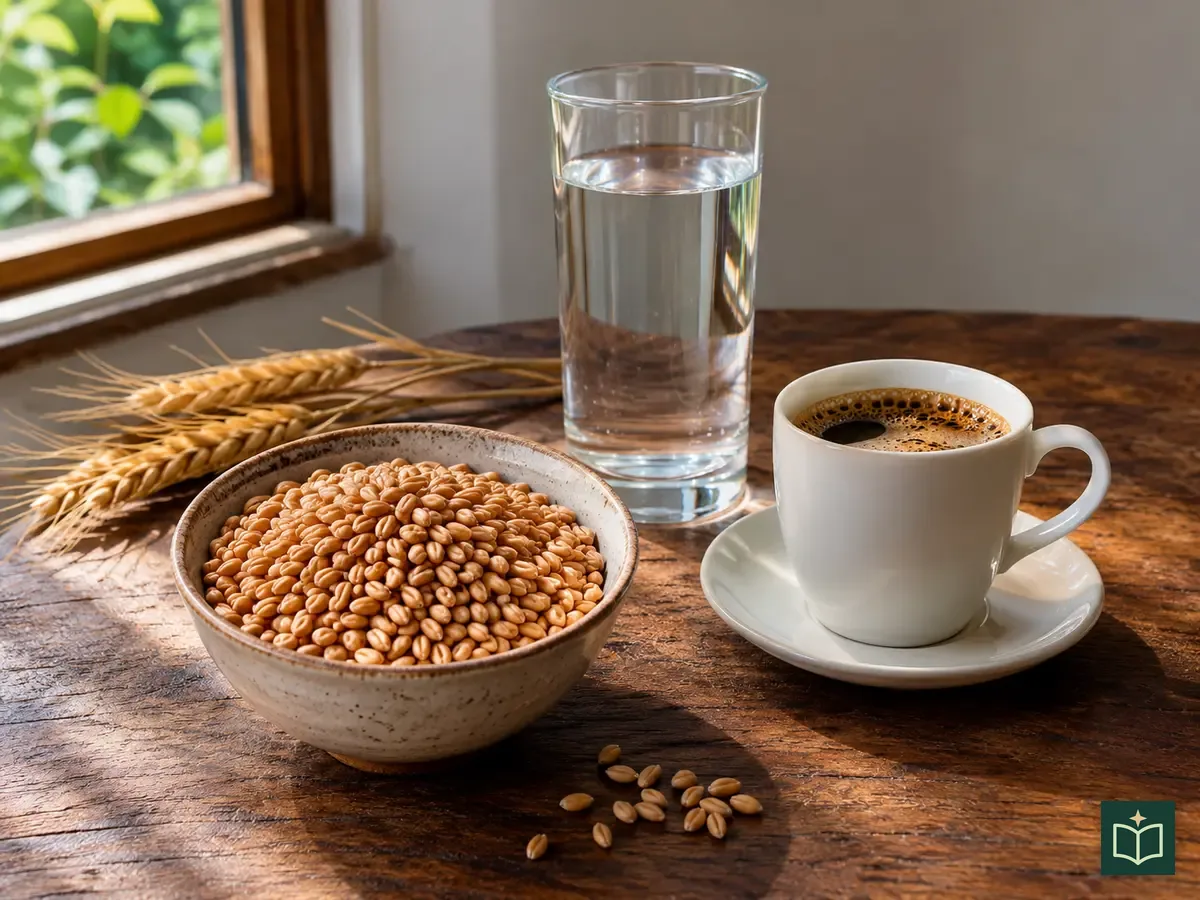
Researchers later developed the related idea of a water footprint, the total volume of fresh water used to produce a good, measured along its whole supply chain. They divide it into three colours. Green water is rainfall stored in soil and used by plants. Blue water is surface or groundwater withdrawn for irrigation or industry. Grey water is the volume needed to dilute pollutants to acceptable levels. Global average estimates suggest that a kilogram of wheat needs around 1,800 litres, a kilogram of chicken around 4,300 litres and a kilogram of beef around 15,000 litres, mostly to grow animal feed. A single cup of coffee embeds roughly 130 litres.
The Gulf’s virtual imports
Gulf countries are among the most water-scarce in the world, with little rainfall, no permanent rivers and limited renewable groundwater. They meet drinking-water needs mainly through desalination, but producing most of their food locally would require far more water than is available. Instead, they import a large share of their food, often estimated at around 80 to 90 percent across the region, including grains, meat, fruit and vegetables. In effect, the Gulf imports huge volumes of virtual water each year from farming regions in Asia, Europe, the Americas, Africa and Australia, sparing fragile aquifers. This is why food security policy and water policy are so closely linked.
Local farming choices
Virtual water helps explain shifts in Gulf agricultural policy. Saudi Arabia expanded irrigated wheat in the late twentieth century using fossil groundwater, then phased it out to protect aquifers. Abu Dhabi ended support for water-hungry fodder crops such as Rhodes grass, and farmers across the UAE have been encouraged to adopt drip irrigation, greenhouses and hydroponics. Vertical farms in Dubai and Abu Dhabi grow leafy greens using a fraction of the water of open fields, though they need substantial energy. Some Gulf investors have also bought or leased farmland abroad. Each choice reflects a balance between self-sufficiency, cost, energy use and the water locked into food.
Limits of the concept
Virtual water is a useful lens, but it has limits. A litre of rain falling on a field in a wet country is not equivalent to a litre pumped from a shrinking aquifer, so totals can mislead without context. Water use per kilogram varies greatly with climate, farming method and yields, so global averages hide large differences. Trade decisions depend on many factors beyond water, including land, labour, energy, prices and politics. Importing food also exposes countries to supply disruptions and export restrictions, as seen during global food price spikes. Analysts therefore use virtual water alongside other indicators rather than as a single rule for policy.
Why it matters
Agriculture accounts for about 70 percent of freshwater withdrawals worldwide, according to the Food and Agriculture Organization, so the water embedded in food dominates humanity’s water use. Understanding virtual water helps governments decide what to grow and what to import, helps companies assess water risks in their supply chains and helps consumers see the hidden resources in everyday products. Reducing food waste also saves water, since discarded food represents wasted irrigation and rainfall. For water-scarce regions, including the Gulf, the concept turns a question of local scarcity into one of global trade, diplomacy and resilient supply chains. Every meal, in that sense, has a hidden geography.
Sources & further reading
Figures are rounded and widely published; check the linked organisations for the latest editions. These organisations do not endorse this website.