Two kinds of coastal flood
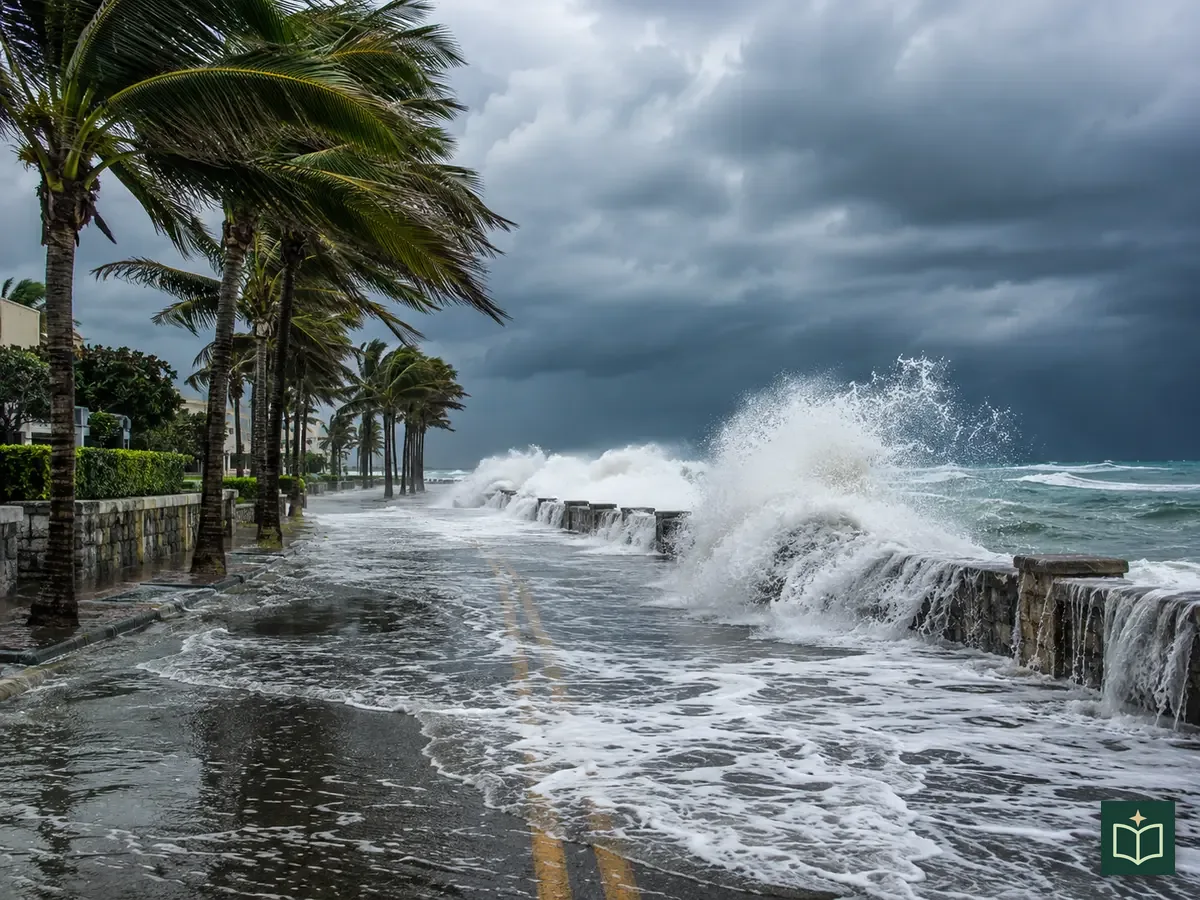
A tsunami is a series of ocean waves generated when a large volume of water is suddenly displaced. Most are caused by undersea earthquakes that lift or drop the seabed, but landslides, volcanic eruptions and, very rarely, meteorite impacts can also trigger them. A storm surge is an abnormal rise in sea level produced by a storm, usually a tropical cyclone or a powerful winter storm. Strong onshore winds pile water against the coast, and low atmospheric pressure lets the sea surface bulge upwards slightly. When a surge coincides with high tide, the combined rise, called the storm tide, can be especially destructive.
How they behave
Tsunami waves are extremely long, often hundreds of kilometres from crest to crest, and involve the entire depth of the ocean. In deep water they may be less than a metre high and pass unnoticed by ships, while moving at around 800 kilometres per hour. As they reach shallow water, they slow down and grow, sometimes surging ashore as a fast-rising flood rather than a breaking wave. Several waves may arrive over hours, and the first is not always the largest. A storm surge rises more gradually over hours as a storm approaches, accompanied by wind-driven waves on top, and recedes as the storm moves on.
Notable examples
The Indian Ocean tsunami of December 2004, triggered by a magnitude 9.1 earthquake off Sumatra, killed around 230,000 people in more than a dozen countries. The 2011 Tōhoku tsunami in Japan overtopped sea walls and caused the Fukushima nuclear accident. Among storm surges, Cyclone Bhola in 1970 and Cyclone Nargis in 2008 caused catastrophic loss of life in Bangladesh and Myanmar, while Hurricane Katrina's surge flooded New Orleans in 2005. In the Gulf region, the risk of large tsunamis is considered relatively low, though the Makran subduction zone off Iran and Pakistan has produced tsunamis, most notably in 1945, that reached Oman's coast.
Where they are similar
Both are coastal floods of sea water that can travel far inland, especially across flat, low-lying land and up rivers. Both cause damage through the force of moving water and the debris it carries, and both leave salt behind, harming farmland and freshwater supplies. Both are deadliest where warnings are weak or evacuation routes are poor. The same defences help against both, including sea walls, natural barriers such as mangroves and coastal dunes, elevated buildings and careful land-use planning. Both are monitored by tide gauges and ocean sensors, and both rely on clear public warnings and well-practised evacuation plans to save lives.
Warnings and misconceptions
Tsunami warning centres detect large earthquakes within minutes and use deep-ocean pressure sensors to confirm waves, but nearby coasts may have only minutes to act. Natural signs, such as strong shaking or the sea suddenly retreating, are warnings to move to high ground immediately. Storm surges usually give more notice, because cyclones are tracked for days, though the exact height is hard to forecast. A common misconception is that tsunamis are tidal waves. They have nothing to do with tides. Another is that a surge is just bigger waves; it is a rise in the whole sea level. Always follow official guidance from local authorities.
Why it matters
Hundreds of millions of people live in low-lying coastal areas, and both hazards threaten lives, ports, power stations and desalination plants. For storm surges, rising sea levels mean that the same storm can push water further inland than in the past, which makes surge planning increasingly important. For tsunamis, international cooperation since 2004 has created warning systems for the Indian Ocean and other basins, coordinated through UNESCO's Intergovernmental Oceanographic Commission. Understanding the difference helps people recognise the right warning signs and respond correctly: move inland or uphill at once for a tsunami, and follow evacuation orders well ahead of an approaching storm.
Sources & further reading
- NOAA · US Tsunami Warning System ↗
- NOAA · Storm surge overview ↗
- UNESCO Intergovernmental Oceanographic Commission ↗
Figures are rounded and widely published; check the linked organisations for the latest editions. These organisations do not endorse this website.