Tides through a bottleneck
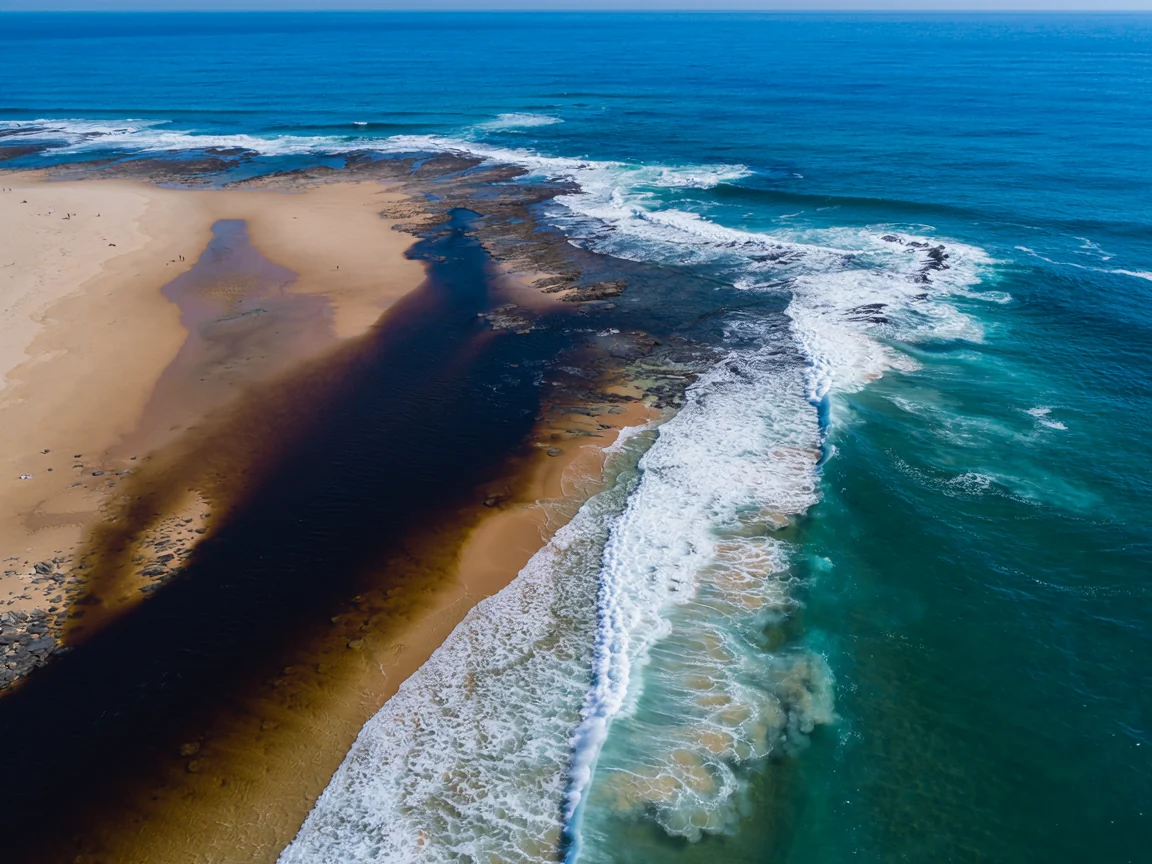
Twice a day the tide raises and lowers the sea. Where an inlet or fjord connects to the ocean through a narrow strait, the water level inside lags behind the sea outside, so an enormous volume of water rushes through to equalise it. The current can be many times faster than in open water.
Why the water spins
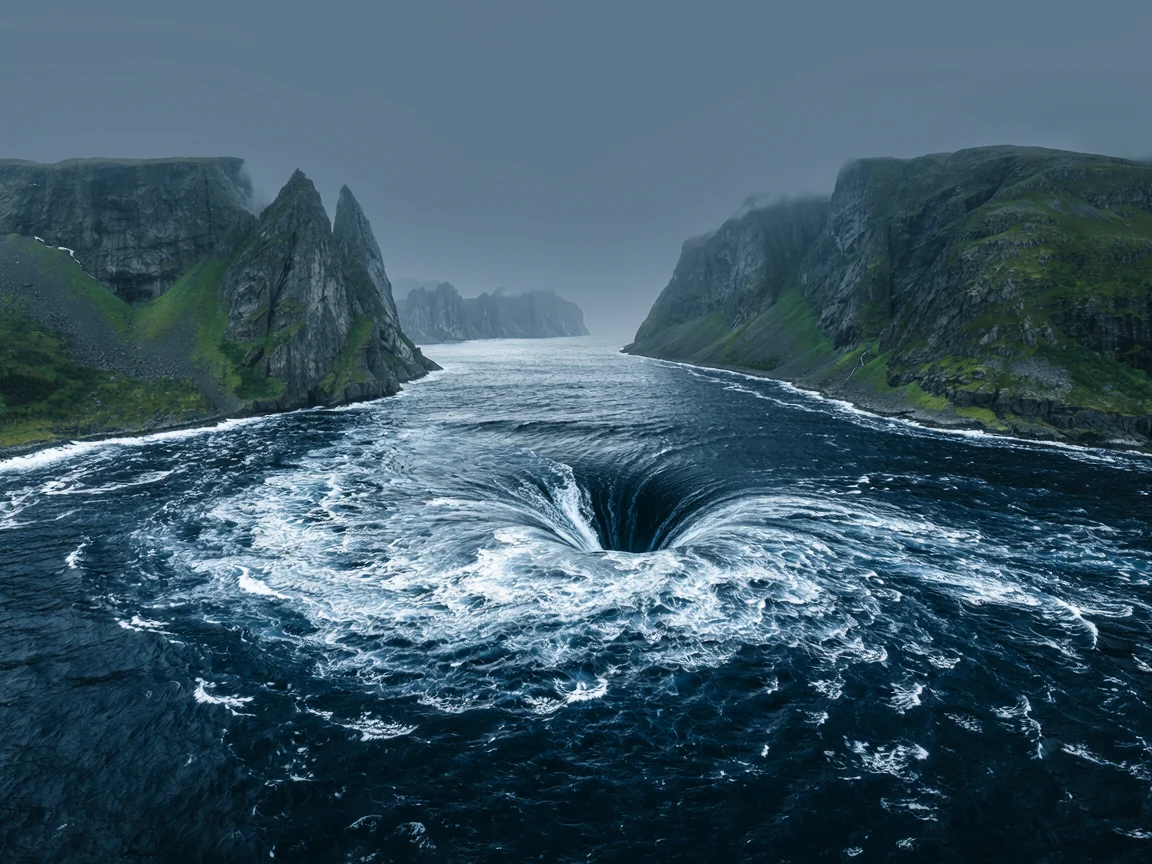
Fast-moving water flowing past slower water, rocky ledges or an uneven seabed develops shear—different speeds side by side—which sets up rotating eddies. In the most powerful straits, these eddies merge into whirlpools several metres across that form, travel and collapse within minutes.
The famous ones
Saltstraumen near Bodø in Norway has one of the strongest tidal currents in the world. Moskstraumen, off the Lofoten Islands, inspired the legend of the maelstrom. Scotland's Gulf of Corryvreckan and Japan's Naruto Strait also attract boat tours to watch the swirling water.
Myths and reality
Writers from Homer to Edgar Allan Poe imagined whirlpools swallowing ships whole. In reality, they are dangerous for small boats and swimmers but not bottomless vortexes. Because they depend on the tide, local timetables show when they will be strongest, and when the strait is calm enough to cross.
Sources & further reading
Current speeds are approximate peak values. Photograph: original AI-generated illustration (Adobe Firefly). Reference organisations do not endorse this website.