An old idea, a new purpose
Storing heat is ancient. Masonry stoves and night-storage heaters have long warmed a heavy core when fuel or electricity was available and released the warmth slowly. Thermal batteries apply the same idea at industrial scale and at much higher temperatures. Their purpose has changed. As solar and wind supply more electricity, there are hours when power is plentiful and cheap. A thermal battery soaks up that surplus, converts it to heat with simple electric heaters, and stores it in a material such as firebrick, sand, crushed rock or carbon blocks. The heat can then be delivered hours or days later, when power is scarce or when a factory needs it.
How it works
The core is a large mass of material packed inside a heavily insulated container. Electric heating elements, much like those in a toaster but far larger, raise its temperature. Bricks and carbon blocks can reach well over 1,000°C; sand systems typically run at several hundred degrees. The amount of energy stored follows simple physics: mass multiplied by the material’s heat capacity and by the temperature rise. To discharge, fans blow air through channels in the material, or pipes carry water, oil or molten salt through it, and the hot fluid is sent to wherever it is needed. Insulation determines how long the heat lasts; good designs lose only a few per cent a day.
Sand in a silo
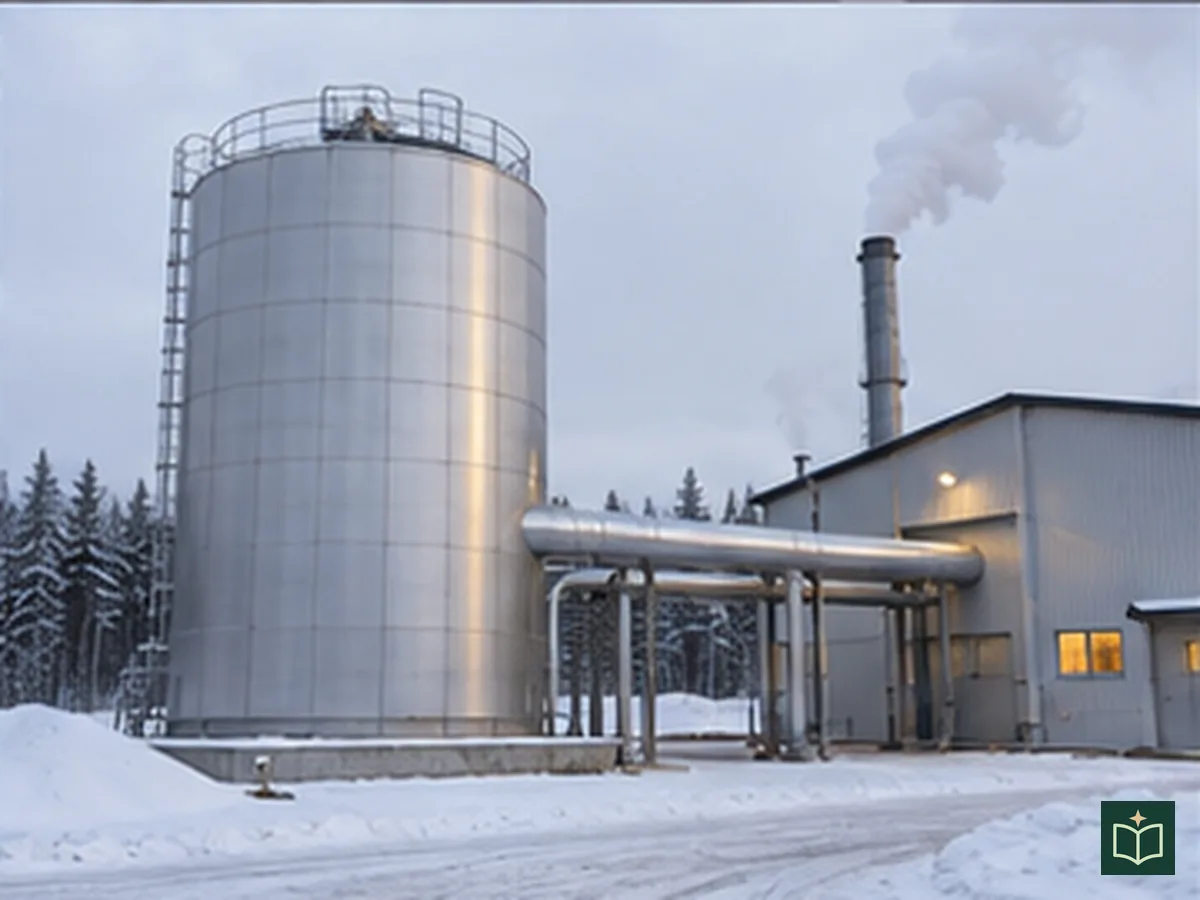
A useful example comes from Finland. In 2022, a small company called Polar Night Energy built a thermal battery in the town of Kankaanpää, using a steel silo filled with about 100 tonnes of ordinary sand heated with electricity. A simple calculation shows the scale. Sand stores roughly 0.8 kilojoules per kilogram for each degree of warming, so raising 100 tonnes by 400 degrees stores about 32,000 megajoules, close to 9 megawatt-hours. The installation was rated at about 8 megawatt-hours and supplies heat to a local district-heating network. Larger versions have followed. The appeal is that the storage medium itself costs almost nothing compared with battery cells.
The efficiency question
Turning electricity into heat is almost perfectly efficient, and good insulation keeps most of it, so a thermal battery used to supply heat can return the large majority of the energy put in. Turning heat back into electricity is a different matter. A steam or gas turbine converts only a fraction of the heat to power, often around a third and rarely much more than half in practice. A thermal battery used purely for electricity storage might therefore return well under half of the original energy, compared with roughly 85 to 90 per cent for lithium-ion batteries. Some designs improve the economics by selling both power and leftover heat, an approach similar to combined heat and power.
Where it fits best
Heat makes up roughly half of the world’s final energy use, and much of it comes from burning gas, oil or coal. Industrial processes such as food processing, paper, chemicals and textiles need steam at a few hundred degrees, which thermal batteries can supply directly. Higher-temperature designs aim at steel, glass and cement, where heat above 1,000°C is essential. In district heating, as in Finland, stored heat warms homes. Molten-salt storage is already used at concentrated solar power plants, including Dubai’s, to generate electricity after sunset. In sunny regions like the Gulf, cheap midday solar could in principle charge thermal batteries that supply industrial heat around the clock.
Limits and what to watch
Thermal batteries are only as useful as the cheap electricity that charges them, so they depend on grids with large, regular renewable surpluses or on dedicated solar or wind plants. They take up space, and the hottest designs need materials and heaters that last through thousands of cycles. Standards, insurance and long-term performance data are still developing for newer designs. Many industrial customers also prefer proven boilers until the economics are clear. The key signals are whether early industrial installations deliver reliable heat over years, how costs fall with larger units, and whether energy markets reward the flexibility of absorbing surplus power at times when it would otherwise be curtailed.
Sources & further reading
Figures are rounded and widely published; check the linked organisations for the latest editions. These organisations do not endorse this website.