What standby power is
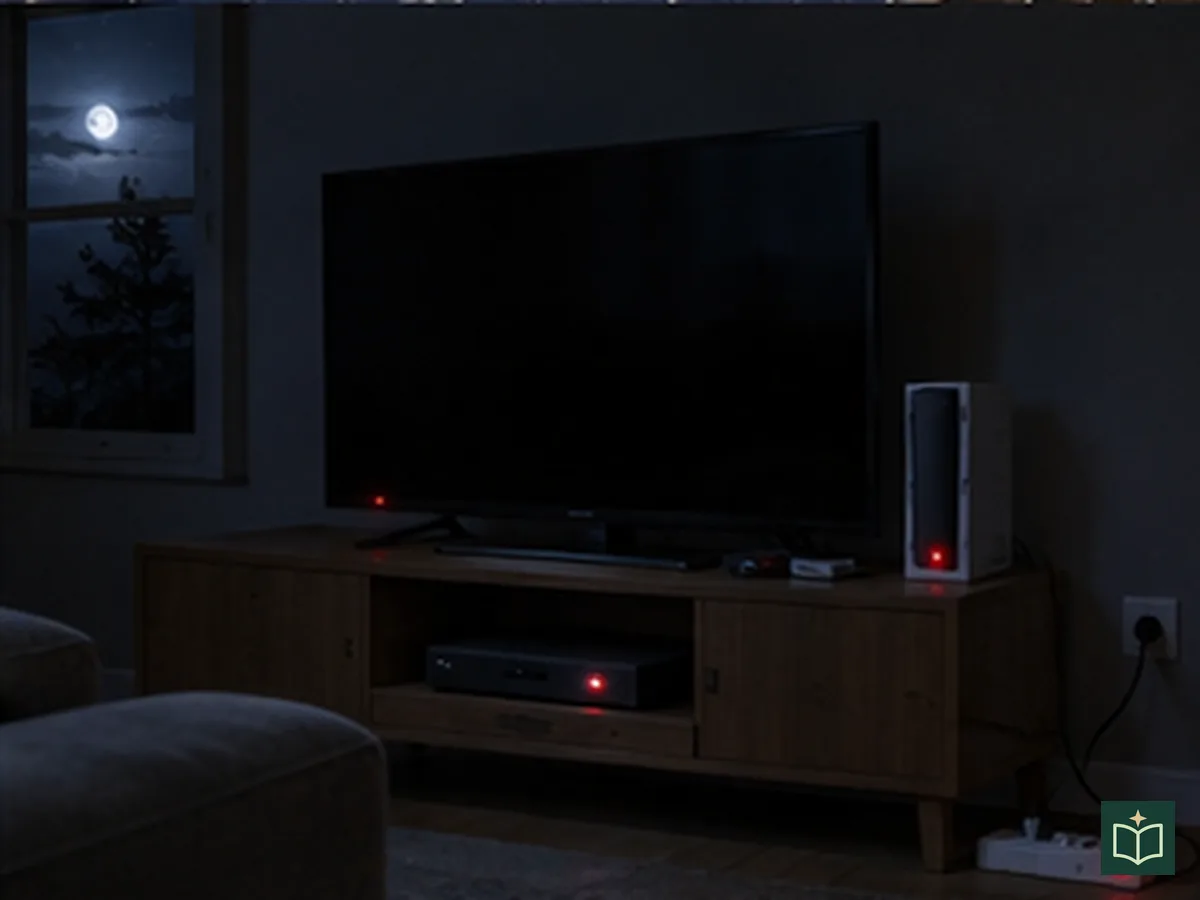
Many devices never switch fully off. A television waits for its remote, a set-top box keeps its tuner warm and checks for updates, a smart speaker listens for its wake word, and a microwave runs a clock. Each draws a small amount of power continuously, known as standby power, phantom load or vampire power. Other devices consume power simply because they are plugged in: older power adapters with heavy transformers waste energy even with nothing attached. Individually these loads are tiny, often a fraction of a watt to a few watts. The problem is time. They draw power for all 8,760 hours of the year, while the television itself may be in use for only a few.
The usual suspects
The biggest idle consumers in a typical home tend to be the ones linked to networks. Set-top boxes, satellite receivers and some older digital video recorders have historically drawn ten watts or more while ‘off’. Games consoles in quick-start or instant-on modes can draw similar amounts so they can download updates and resume quickly. Wi-Fi routers, network storage drives and smart-home hubs run continuously by design. Desktop computers left asleep, printers, audio amplifiers and coffee machines with heated displays add more. Modern phone chargers, by contrast, typically use only a fraction of a watt with nothing connected. Air-conditioning units, water heaters and pool pumps are not standby loads, but their controls also draw a trickle.
How it adds up
A simple calculation shows why standby matters. Suppose a household’s idle devices together draw 40 watts around the clock, a plausible figure for a home with several screens, boxes and networked gadgets. Over a year that is 40 watts multiplied by 8,760 hours, or about 350 kilowatt-hours. At an illustrative price of 30 fils per kilowatt-hour, that comes to roughly AED 105 a year for electricity that does nothing visible. In a mild climate, studies by the IEA and others have estimated that standby can account for somewhere around 5 to 10 per cent of household electricity. In Gulf homes, where air conditioning dominates, the share is smaller, but the kilowatt-hours are the same.
Rules that shrank it
Standby power became a policy target in the late 1990s, when the IEA proposed a ‘One-Watt Plan’ calling for standby use of no more than one watt per device. The idea spread through voluntary programmes and then regulation. The European Union’s ecodesign rules first capped standby at one or two watts and later tightened most limits to around half a watt, with separate rules for networked devices that must stay connected. Other countries, including Australia, Korea and the United States, introduced their own limits or labels. Manufacturers responded with better power supplies and smarter low-power modes, which is why a new television typically draws far less in standby than one from the early 2000s.
Measuring your own
The most reliable way to find standby loads is to measure them. Plug-in power meters, sold cheaply, sit between the socket and the appliance and display its draw in watts. Measure each device in use, in standby and switched off at its own button. A smart plug with energy monitoring does the same job and logs the results. A rougher method is to read the electricity meter late at night, when most appliances are idle, and switch devices off one by one to watch the reading change. Remember that refrigerators and freezers cycle on and off, so a single reading is not their average. Some smart meters and utility apps also show a home’s overnight baseline.
Cutting it sensibly
The easiest gains come from devices that are rarely used but always plugged in: a spare television, an old games console, a printer, or chargers left in sockets. Switched power strips let a whole entertainment corner be turned off at once, and timer plugs can switch off routers or boxes overnight where that does not cause problems. Many devices have settings to disable instant-on or quick-start modes. When replacing equipment, check the standby figure in the specifications. Some devices should stay on: refrigerators, security systems, medical equipment and boxes that need overnight updates. The aim is not to unplug everything, but to remove the waste that buys no convenience at all.
Sources & further reading
Figures are rounded and widely published; check the linked organisations for the latest editions. These organisations do not endorse this website.