Powered by the Sun
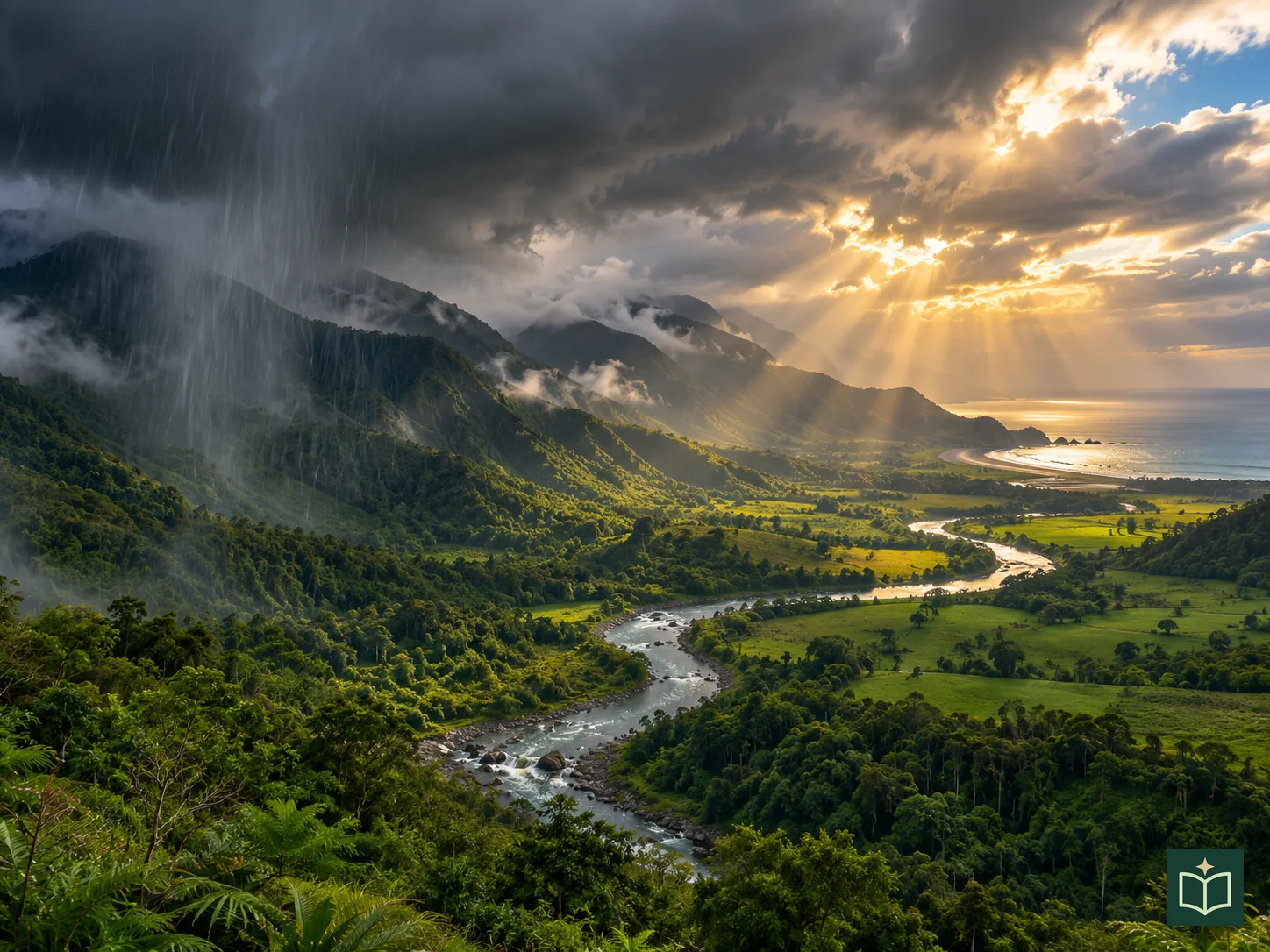
Most evaporation happens over the oceans, which cover about 71% of Earth’s surface. Sunlight supplies the energy that frees water molecules into the air as vapour. Plants add more through transpiration, releasing water through pores in their leaves. Over land, evaporation and transpiration together are often called evapotranspiration, and they move vast amounts of water skyward every day.
How clouds form
As moist air rises, it expands and cools. Cooler air can hold less vapour, so water condenses onto microscopic particles such as dust, sea salt or smoke, forming cloud droplets. When droplets or ice crystals grow heavy enough, they fall as rain, snow or hail. Winds can carry this moisture thousands of kilometres before it comes down.
Where water waits
Water can stay in some parts of the cycle for very different lengths of time. A molecule might spend about nine days in the atmosphere, but hundreds or thousands of years in deep groundwater or an ice sheet. Only about 2.5% of Earth’s water is fresh, and most of that is frozen or underground, which is why accessible fresh water is so precious.
A cycle under pressure
A warmer atmosphere can hold more water vapour, about 7% more for each degree Celsius of warming. That tends to intensify both heavy downpours and drying in some regions. Human choices matter too: pumping groundwater faster than it is replenished, paving land that once absorbed rain, and diverting rivers all reshape the local water cycle.
Sources & further reading
Figures are rounded and widely published; check the linked organisations for the latest editions. These organisations do not endorse this website.