From Richter to moment magnitude
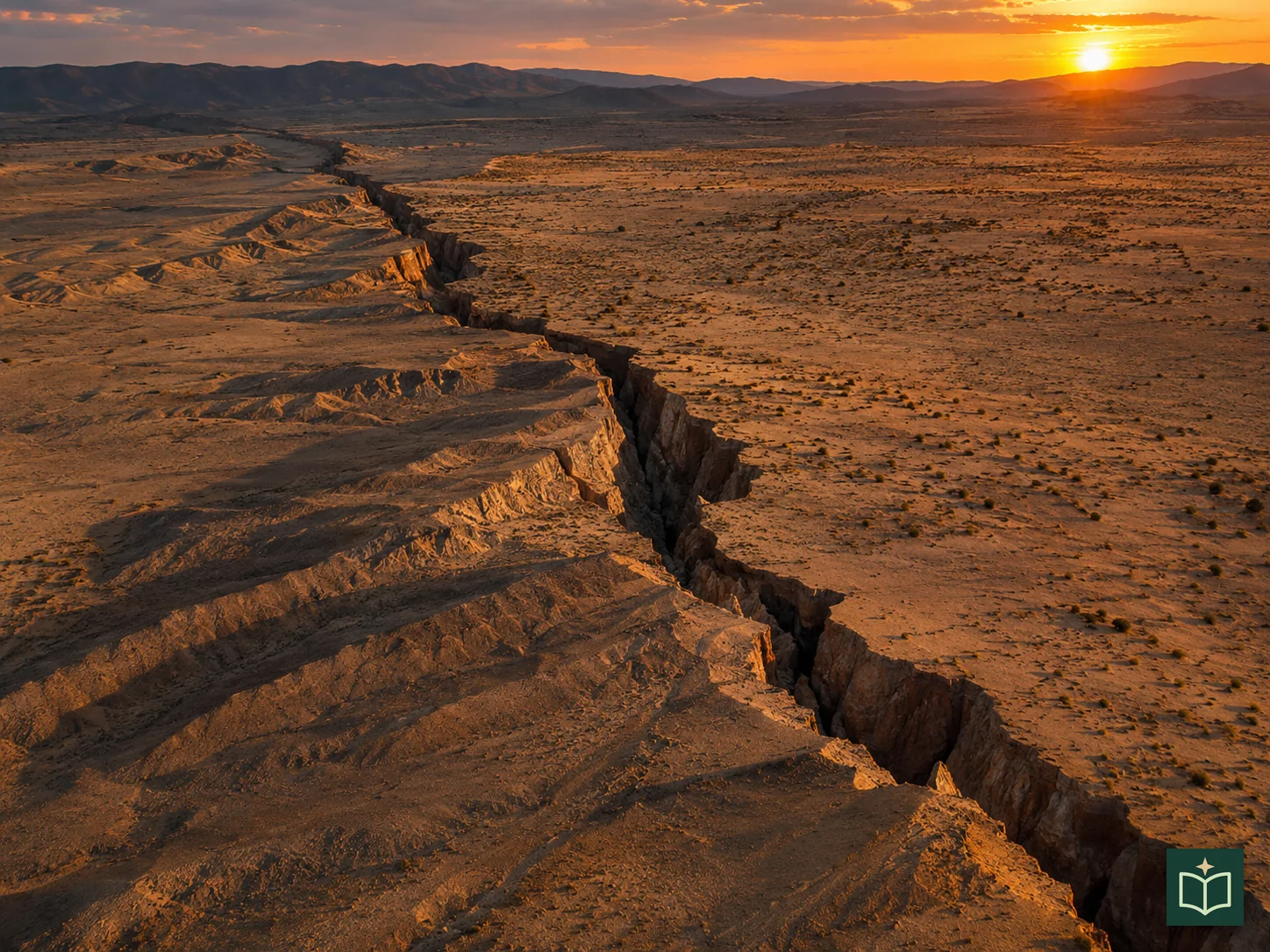
Charles Richter introduced a magnitude scale in 1935 for earthquakes in southern California. It worked well locally but became unreliable for very large quakes. Seismologists now mainly use the moment magnitude scale, based on the area of fault that slipped, how far it moved and the rigidity of the rock. News reports still often say Richter, but the number is usually moment magnitude.
Why the numbers deceive
The scale is logarithmic. Each increase of one unit corresponds to about ten times larger ground motion on a seismogram and about 32 times more energy released. So a magnitude 7 releases roughly 1,000 times the energy of a magnitude 5. The largest earthquake recorded, the 1960 Chile earthquake, measured about magnitude 9.5.
Magnitude is not damage
Magnitude describes the earthquake itself; intensity describes the shaking at a particular place. Intensity scales, such as the Modified Mercalli scale, depend on distance from the source, depth, local soils and building quality. A moderate shallow earthquake under a city with weak buildings can cause more harm than a stronger one deep beneath an empty region.
Waves that arrive in order
An earthquake sends out different seismic waves. Faster primary waves arrive first, followed by slower secondary waves and then surface waves, which often cause the strongest shaking. Early-warning systems use the head start of the first waves to send alerts seconds before stronger shaking arrives—enough time to stop trains or take cover.
Sources & further reading
- USGS · Earthquake magnitude, energy release and shaking intensity ↗
- British Geological Survey · Earthquakes ↗
Figures are rounded and widely published; check the linked organisations for the latest editions. These organisations do not endorse this website.