A precisely fixed number
The speed of light in a vacuum is exactly 299,792,458 metres per second. It is exact because, since 1983, the metre itself has been defined using the speed of light. Light slows down when it passes through materials such as water or glass, which is why it bends—refracts—when crossing from one into another.
Measuring distance in time
Astronomers use light-travel time as a ruler. Moonlight takes about 1.3 seconds to reach Earth, and sunlight about 8 minutes and 20 seconds. A light-year, about 9.46 trillion kilometres, is a distance, not a time. Proxima Centauri, the nearest star beyond the Sun, is about 4.2 light-years away.
A time machine for astronomers
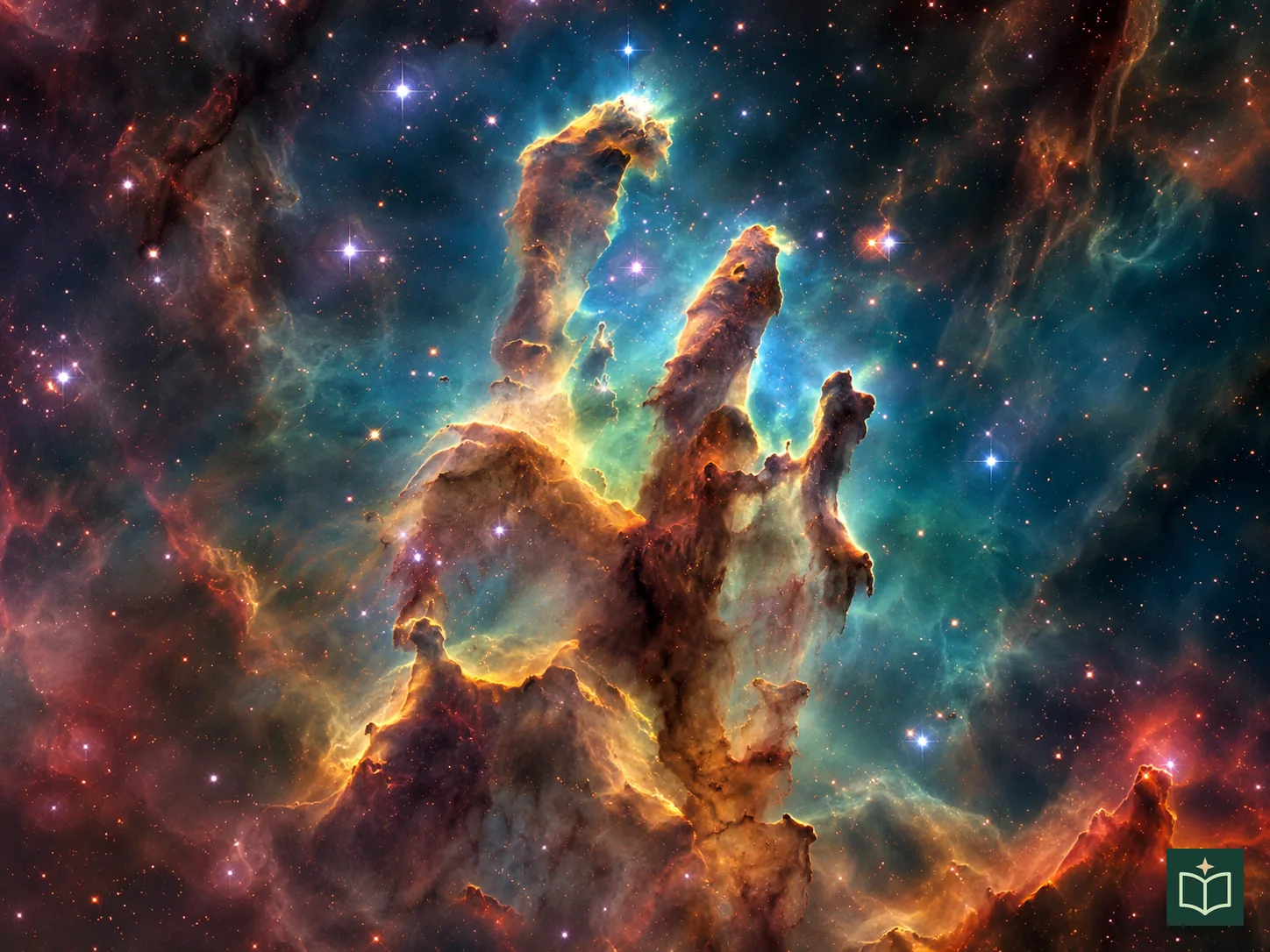
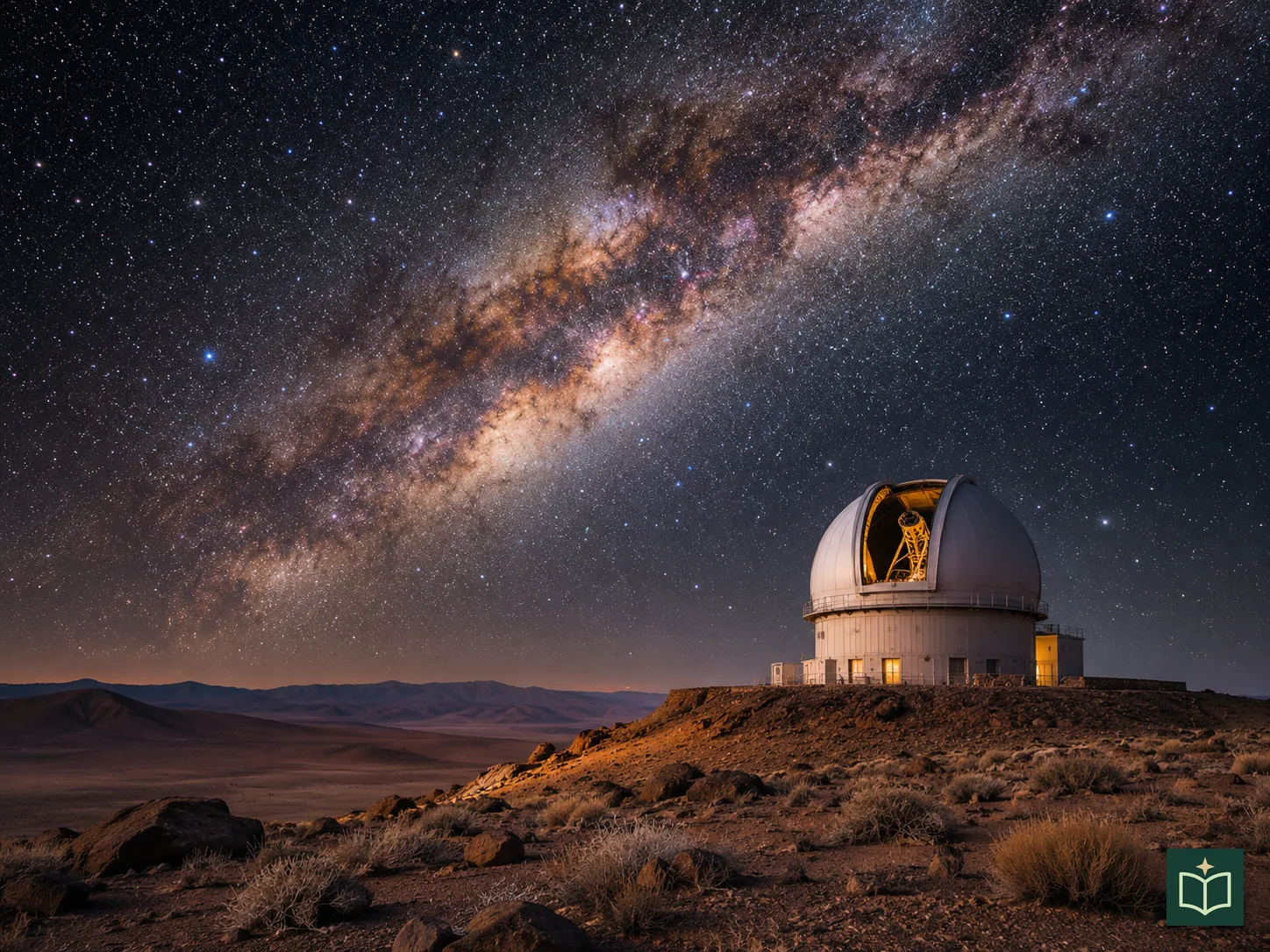
Because light takes time to travel, telescopes see the past. The Andromeda Galaxy appears as it was about 2.5 million years ago. The most distant galaxies observed by the James Webb Space Telescope are seen as they were within a few hundred million years of the Big Bang. Looking farther is literally looking back in time.
Why it matters on Earth
The finite speed of light is not just a curiosity. Signals to spacecraft near Mars take several minutes to arrive each way, so rovers must act with some autonomy. Data in fibre-optic cables travels at roughly two-thirds the speed of light in a vacuum, which matters for internet latency. GPS satellites depend on precise timing of radio signals moving at light speed.
Sources & further reading
Figures are rounded and widely published; check the linked organisations for the latest editions. These organisations do not endorse this website.