Scale and duration
Between the early sixteenth century and the 1860s, European and American traders forcibly transported around 12.5 million Africans across the Atlantic, according to estimates from the Trans-Atlantic Slave Trade Database, a major research project based on records of tens of thousands of voyages. About 10.7 million survived the crossing to be sold in the Americas. The trade peaked in the eighteenth century. Portuguese and Brazilian ships carried the largest share, followed by British, Spanish, French, Dutch and North American traders. Brazil received the largest number of enslaved Africans of any destination, followed by the Caribbean colonies, while a smaller share went to North America.
How the trade worked
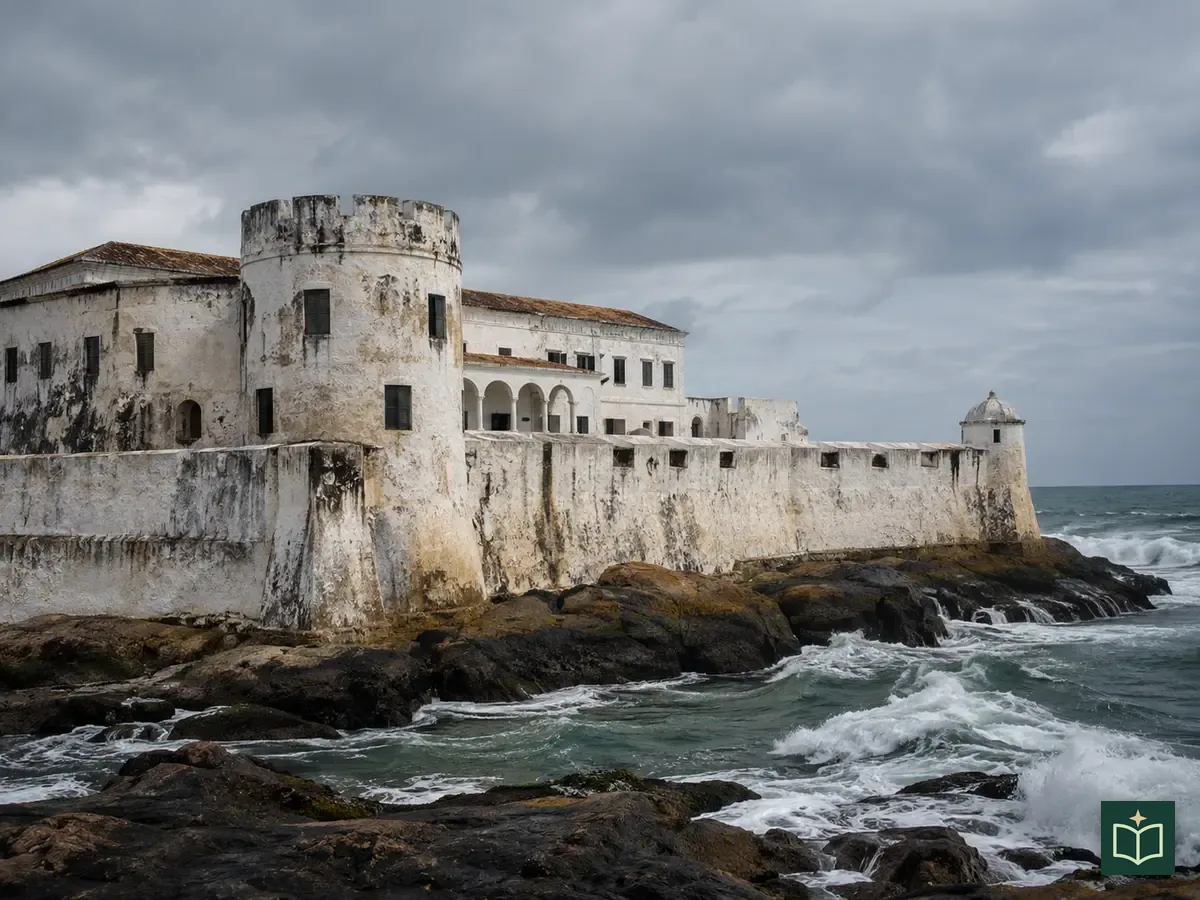
The trade is often described as a triangle. Ships left European ports carrying manufactured goods, textiles, metal goods and firearms, which were exchanged on the West and West-Central African coast for captives. Most captives were taken through warfare, raids, kidnapping or judicial processes, and were sold by African intermediaries to European traders operating from coastal forts and trading posts. The ships then crossed the Atlantic in the Middle Passage. In the Americas, captives were sold, and ships returned with sugar, tobacco, cotton, coffee and other products of slave labour. In reality, many routes were more complex, including direct trade between Brazil and Africa.
The Middle Passage
The Atlantic crossing could last from several weeks to several months. Captives were chained below deck in crowded, poorly ventilated holds, with inadequate food and water. Disease, especially dysentery and smallpox, spread quickly, and violence was used to prevent resistance. Records suggest that roughly one in seven or eight of those embarked died during the voyage, with far higher losses on some ships. Many more died during capture, the march to the coast and confinement before departure, and in the period after arrival. Despite these conditions, captives resisted, through revolts on board, refusal to eat and acts of solidarity, and preserved cultures under extreme pressure.
Plantations and profits
Most enslaved Africans were forced to work on plantations, particularly sugar plantations in Brazil and the Caribbean, where conditions were brutal and death rates very high. Others worked in mines, cities, households and later on cotton plantations in the United States. The products of their labour, sugar, tobacco, cotton and coffee, became mass consumer goods in Europe. Profits from the trade and plantation economies flowed to merchants, shipowners, bankers, insurers and manufacturers. Historians continue to debate exactly how much slavery contributed to Europe’s economic growth and industrialisation, but its role in shaping Atlantic commerce and wealth is widely recognised. The wealth was built on coerced labour.
Resistance and abolition
Enslaved people resisted throughout, through uprisings, escape and the creation of free communities in remote areas. The Haitian Revolution, beginning in 1791, created the first state founded by formerly enslaved people. Abolitionist movements, including formerly enslaved writers such as Olaudah Equiano, campaigned in Europe and the Americas. Britain abolished its slave trade in 1807 and the United States banned the importation of enslaved people in 1808, though illegal trading continued for decades. Slavery itself was abolished in British colonies from 1834, in the United States in 1865 after the Civil War, and in Brazil, the last country in the Americas to do so, in 1888.
Remembering and its legacy
The transatlantic slave trade shaped the populations, cultures and economies of the Americas, Africa and Europe. African music, religion, food and languages profoundly influenced societies across the Americas. In Africa, the trade contributed to depopulation, violence and political instability in many regions. Its legacies include racism and inequalities that persist today. The United Nations marks 25 March each year as the International Day of Remembrance of the Victims of Slavery and the Transatlantic Slave Trade. UNESCO’s Routes of Enslaved Peoples project supports research and memorial sites. Understanding this history in its full scale is essential to understanding the modern Atlantic world.
Sources & further reading
Figures are rounded and widely published; check the linked organisations for the latest editions. These organisations do not endorse this website.