A semi-enclosed sea
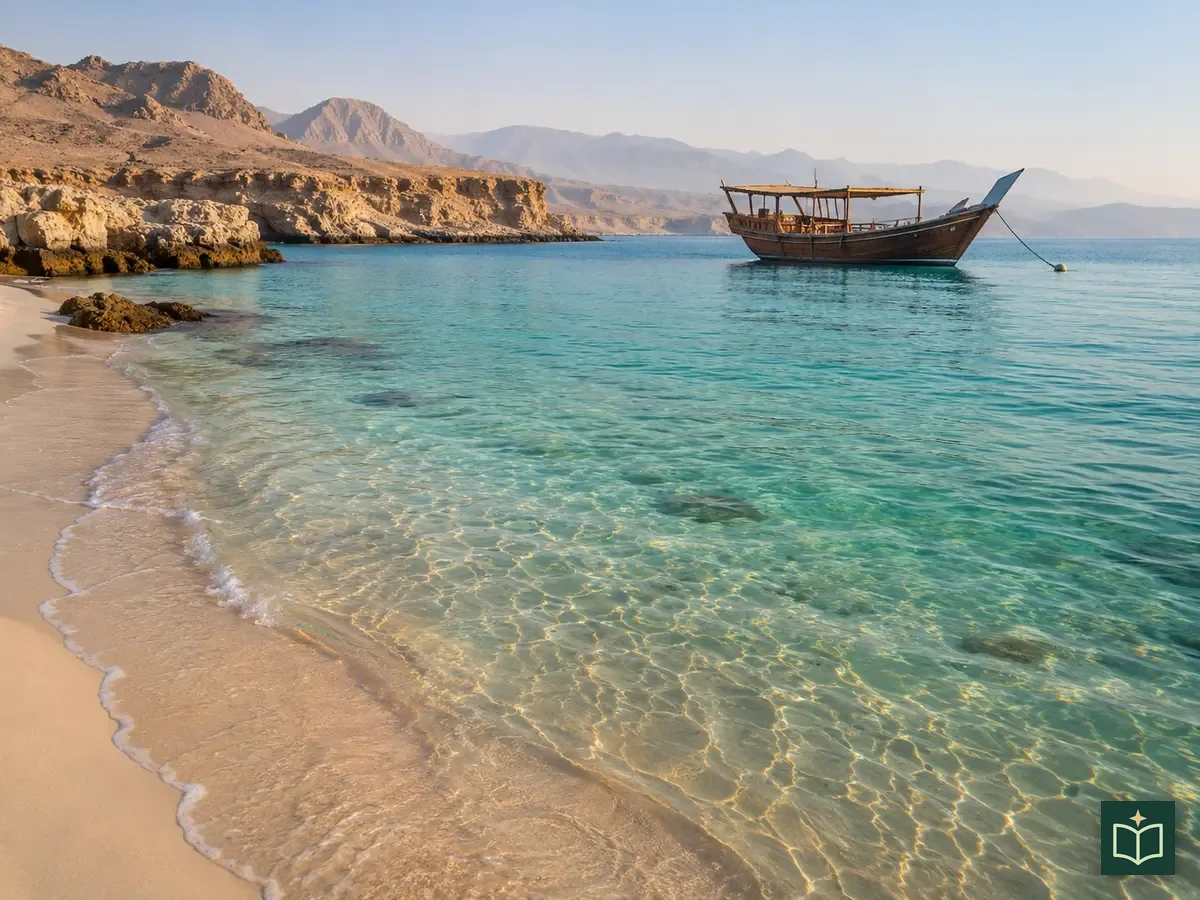
The body of water between the Arabian Peninsula and Iran, known as the Arabian Gulf across the Arab world and as the Persian Gulf in many other contexts, is a semi-enclosed arm of the Indian Ocean. It stretches roughly 990 kilometres from the Shatt al-Arab to its narrow entrance and covers around 250,000 square kilometres. Its average depth is only about 35 metres, roughly the height of a ten-storey building. Eight countries border it. The northern and eastern shores are generally steeper, while the southern coast, including the UAE and Qatar, slopes very gently into the sea, with wide shallow banks and lagoons.
Once a river valley
During the last ice age, roughly 20,000 years ago, global sea level was around 120 metres lower than today. Most of the Gulf basin was then dry land, crossed by a river formed by the ancestors of the Tigris, Euphrates and Karun, which flowed towards the Gulf of Oman. As ice sheets melted, the sea advanced up the basin, reaching close to its present shoreline by around 6,000 to 8,000 years ago, with some stages slightly higher than today. Some archaeologists suggest the now-submerged basin was home to early human communities, though evidence is difficult to recover from beneath the sea.
Saltier than the ocean
The open ocean has a salinity of about 35 parts per thousand. Much of the Gulf exceeds 40, and shallow lagoons along its southern coast can be far saltier. The reason is a water budget dominated by evaporation. Summer heat and dry winds evaporate large volumes of water, rainfall is scarce, and the main river input, from the Shatt al-Arab, enters at the northern end. To balance the loss, less salty Indian Ocean water flows in at the surface, while dense, salty Gulf water flows out along the bottom. Estimates suggest the basin takes a few years to renew its water completely.
Life at the limits
Gulf waters are also among the warmest of any sea, with summer surface temperatures in shallow areas exceeding 33°C, while winters can be surprisingly cool. Corals in the southern Gulf survive conditions that would kill most corals elsewhere, which makes them important to scientists studying how reefs might cope with warming. Seagrass beds support one of the world’s largest populations of dugongs, found around the UAE, Qatar and Bahrain. The Gulf also hosts green and hawksbill turtles, whale sharks and valuable fisheries. Yet its marine life operates close to physiological limits, and marine heatwaves have caused repeated coral bleaching in recent decades.
Pressures on a busy sea
The Gulf is one of the most intensively used seas in the world. It hosts major oil and gas production, busy shipping lanes, expanding cities and many of the world’s largest desalination plants. Desalination returns concentrated brine, often warmer than the sea, while coastal construction and dredging alter habitats and sediment movement. Because water exchanges slowly, pollutants and heat can linger. Regional cooperation on marine protection dates back to the Kuwait Regional Convention of 1978, which established the Regional Organization for the Protection of the Marine Environment. National agencies now monitor water quality, protect key habitats and regulate fishing. Long-term monitoring data are essential for spotting gradual change.
Why it matters
For the countries around it, the Gulf provides food, drinking water through desalination, trade routes, energy and a long cultural history of pearling and seafaring. Its shallowness and salinity make it a natural experiment in how marine ecosystems respond to extreme conditions, offering lessons for other seas as the oceans warm. Scientists watch for changes in temperature, oxygen and salinity, which can affect fisheries and coral health. The name of the sea is a sensitive matter between neighbouring states, and international organisations follow different conventions. Whatever it is called, it remains one of the defining geographic features of the region.
Sources & further reading
- Britannica · Persian Gulf ↗
- Regional Organization for the Protection of the Marine Environment (ROPME) ↗
Figures are rounded and widely published; check the linked organisations for the latest editions. These organisations do not endorse this website.