Rivers that are usually absent
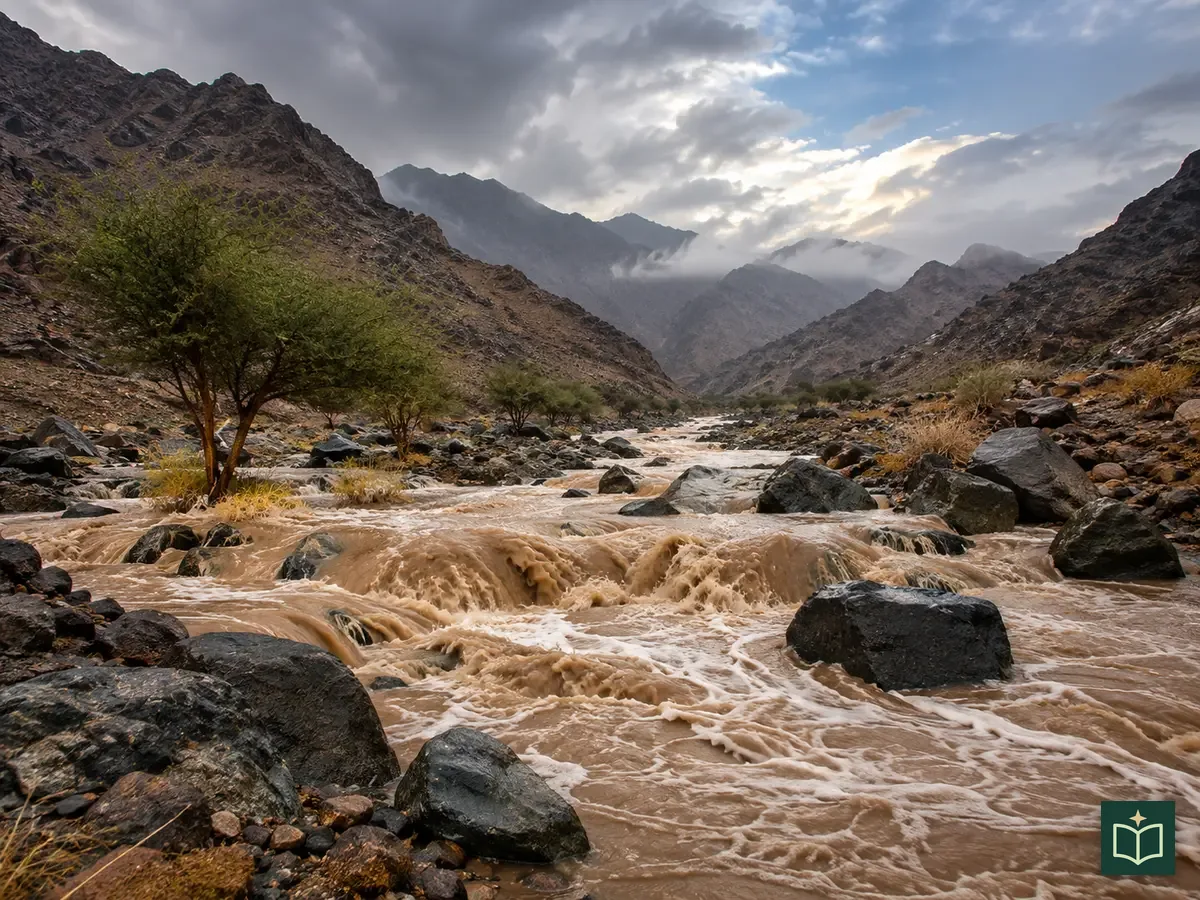
A wadi is a valley or stream bed in a dry region that carries water only occasionally. The word is Arabic and is used across the Middle East and North Africa; similar features are called arroyos or washes in the Americas. Wadis are carved over long periods by intermittent floods, and their beds are often lined with gravel, boulders and scattered acacia trees whose roots reach deep groundwater. In the UAE and Oman, wadis such as Wadi Shawka, Wadi Bih and Wadi Bani Khalid cut through the Hajar Mountains, and some hold pools fed by springs or groundwater for much of the year.
Why floods arrive so fast
In wetter climates, soil and vegetation absorb much of the rain and release it slowly. In deserts, there is little vegetation, soils are thin or crusted, and bare rock sheds water almost instantly. When a thunderstorm releases heavy rain over mountains, runoff collects within minutes in steep, narrow channels. The water picks up sand, gravel and debris, increasing its force. A flood wave can travel many kilometres downstream, arriving where the sky is clear and no rain has fallen, which is one reason flash floods catch people by surprise. Within hours the flow may subside, leaving mud and rearranged boulders behind.
The power of moving water
Moving water is far more dangerous than its depth suggests. According to the US National Weather Service, around 15 centimetres of fast-moving water can knock an adult off their feet, and about 30 centimetres can float many cars. Vehicles are especially risky because people underestimate depth and current, and roads that dip through wadi beds can flood suddenly. Authorities across the Gulf repeatedly advise drivers and hikers not to enter flowing wadis, to check weather warnings before heading into the mountains and to move to higher ground if water begins to rise. Many rescues involve people who tried to cross a flooded road.
Storms in the Gulf
Rain in the UAE is infrequent but can be intense. Winter weather systems and summer thunderstorms over the Hajar Mountains both produce floods, while tropical cyclones from the Arabian Sea occasionally bring extreme rainfall to Oman. In April 2024, the UAE recorded its heaviest rainfall since national records began in 1949, flooding roads, homes and parts of the transport network. The event showed that cities, where concrete and asphalt prevent water from soaking in, can experience flash flooding much like natural wadis. Meteorologists and planners have since paid closer attention to drainage capacity and storm preparedness across Gulf cities. Rare events, it showed, still need routine preparation.
Floods that refill aquifers
Flash floods are not only a hazard. In arid regions they are also a main source of groundwater recharge, as water soaks into the gravel and sand of wadi beds while it flows. Hydrologists call these transmission losses. To capture more of this water, the UAE and Oman have built many recharge and flood-control dams across wadis, holding floodwater long enough for it to seep underground and replenish aquifers used by farms and towns. These dams also help protect downstream settlements. Traditional aflaj systems and wadi-side farms historically depended on the same occasional floods to sustain oasis agriculture. A destructive flood can therefore also be a valuable water delivery.
Planning for rare events
Because floods in deserts are rare, they can fade from public memory, and development sometimes extends into wadi channels or low-lying areas. Planners now map flood paths, size culverts and drainage networks for heavier storms, and use weather radar and satellite data to issue earlier warnings. Climate research suggests that in many dry regions the most intense downpours may become heavier even where average rainfall changes little, because warmer air can hold more moisture. For residents, the practical lessons are simple: respect road closures, avoid driving through flowing water and treat a dry wadi as a channel that may fill again.
Sources & further reading
Figures are rounded and widely published; check the linked organisations for the latest editions. These organisations do not endorse this website.