The northern wind
Shamal means north in Arabic, and the name describes a north-westerly wind that blows across Iraq, Kuwait and eastern Saudi Arabia and down the length of the Gulf towards Qatar, the UAE and Oman. It has two main forms. The summer shamal, strongest in June and July, can blow almost continuously for weeks, about forty days according to tradition. Winter shamals are shorter, lasting one to several days, and typically follow weather systems moving in from the Mediterranean, bringing cooler air, rough seas and sometimes blowing dust. Sailors, fishermen and pearl divers historically planned their seasons around these winds. Their timing still shapes life on the water today.
What drives it
The summer shamal is part of a large-scale pressure pattern. During summer, intense heating creates a broad area of low pressure over Iran, Pakistan and the Arabian Peninsula, linked to the South Asian monsoon. Higher pressure lies to the north-west, over the eastern Mediterranean and Anatolia. Air flows from high to low pressure, and the Zagros Mountains of Iran on one side and the Arabian plateau on the other help channel that flow along the Gulf’s north-west to south-east axis. Winds are often strongest during the day, when heating mixes faster-moving air down from above, and frequently ease at night.
A dusty passenger
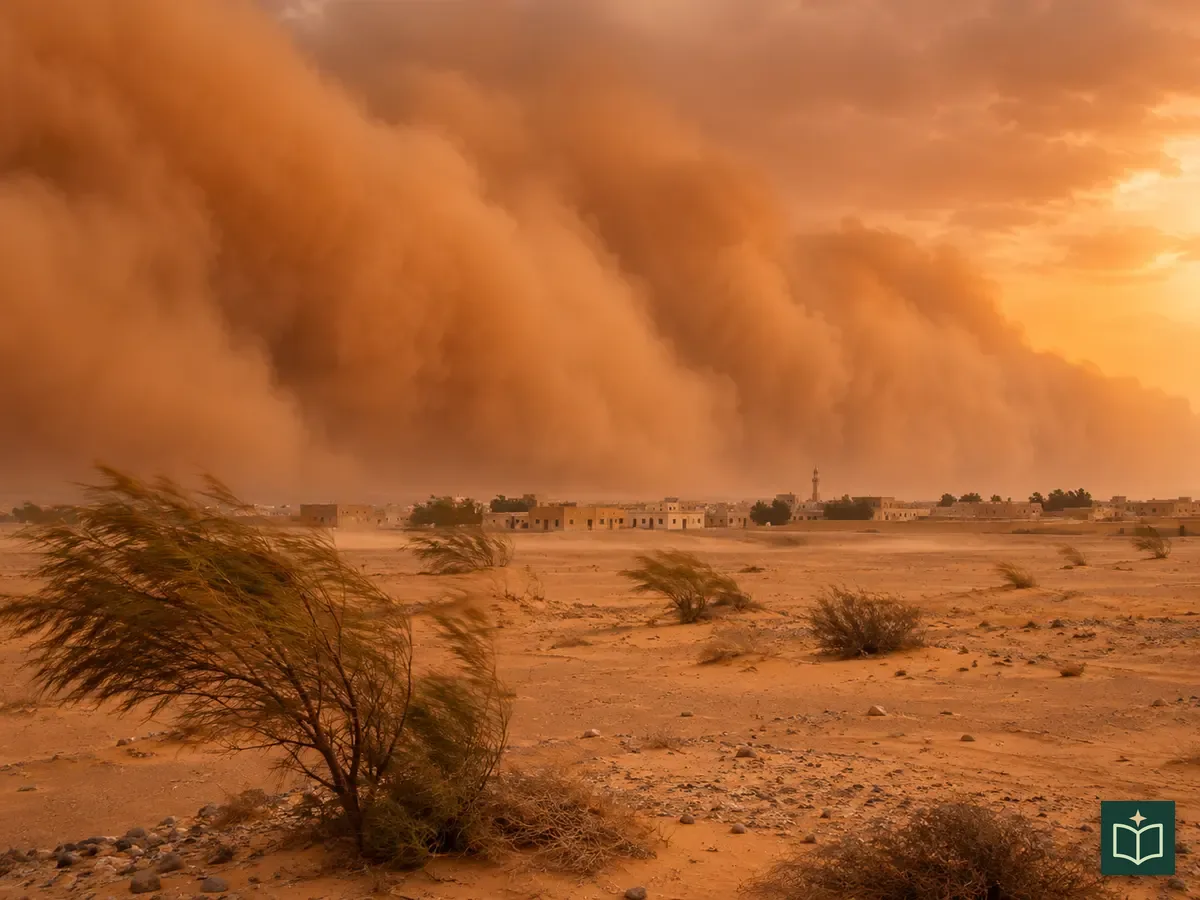
Strong winds pick up fine soil wherever the ground is dry, bare and loose. Major sources of Gulf dust include the plains of the Tigris and Euphrates in Iraq and Syria, dried marshes and lake beds, and the deserts of Saudi Arabia and Kuwait. Once airborne, the finest particles can stay aloft for days and travel hundreds or thousands of kilometres. Satellite images regularly show plumes stretching down the Gulf and over the Arabian Sea. Not all dust storms here are shamals: haboobs, walls of dust pushed ahead of thunderstorm outflows, are more local and can arrive with little warning.
Effects on daily life
Dust storms reduce visibility, disrupting flights, ports and roads, and leave a film on buildings, cars and solar panels. Solar operators in the Gulf clean their panels frequently because dust can noticeably cut output. Strong shamal winds raise rough seas that pause fishing and offshore work. For health, the main concern is fine particulate matter, especially particles small enough to reach deep into the lungs. Health authorities generally advise people with asthma or heart and lung conditions to limit time outdoors during dust events, and national weather centres issue warnings. Anyone with symptoms should seek advice from a healthcare professional.
Dust in the climate system
Globally, mineral dust plays a larger role than many people realise. The Sahara is by far the largest source on Earth, and NASA satellite studies have tracked Saharan dust crossing the Atlantic and delivering nutrients such as phosphorus that help fertilise the Amazon. Dust settling into the Arabian Sea and Red Sea supplies iron and other nutrients to plankton. In the atmosphere, dust scatters and absorbs sunlight, affecting temperatures, and particles can help clouds form. Climate scientists need to represent dust accurately in their models because it can influence rainfall patterns, including over the Indian monsoon region. Dust, in other words, is part of the climate system rather than simply a nuisance.
Changes on the ground
The frequency of dust storms varies from year to year with rainfall, winds and land conditions. Research links some increases in Middle Eastern dust in the early twenty-first century to drought, the drying of wetlands and declining river flows in Mesopotamia, alongside changes in land use. Regional and international efforts, including work coordinated by the World Meteorological Organization and other United Nations bodies, promote early warning systems, vegetation restoration and better land management to reduce dust at its source. For Gulf residents, shamal forecasts and air-quality alerts are now a routine part of planning outdoor activity in the windy months.
Sources & further reading
Figures are rounded and widely published; check the linked organisations for the latest editions. These organisations do not endorse this website.