Where Ghana was
The Ghana Empire lay in the Sahel, the belt of dry grassland along the southern edge of the Sahara, in what is now south-eastern Mauritania and western Mali. Its people, the Soninke, called their state Wagadu. 'Ghana' was originally a title of the king, which Arab writers used for the country as a whole. Its origins are uncertain; some historians place them as early as the fourth or fifth century AD, and it was certainly powerful by the eighth century, when it first appears in Arabic sources. Its centre was roughly 800 kilometres north-west of the modern state that now carries the name.
Gold meets salt
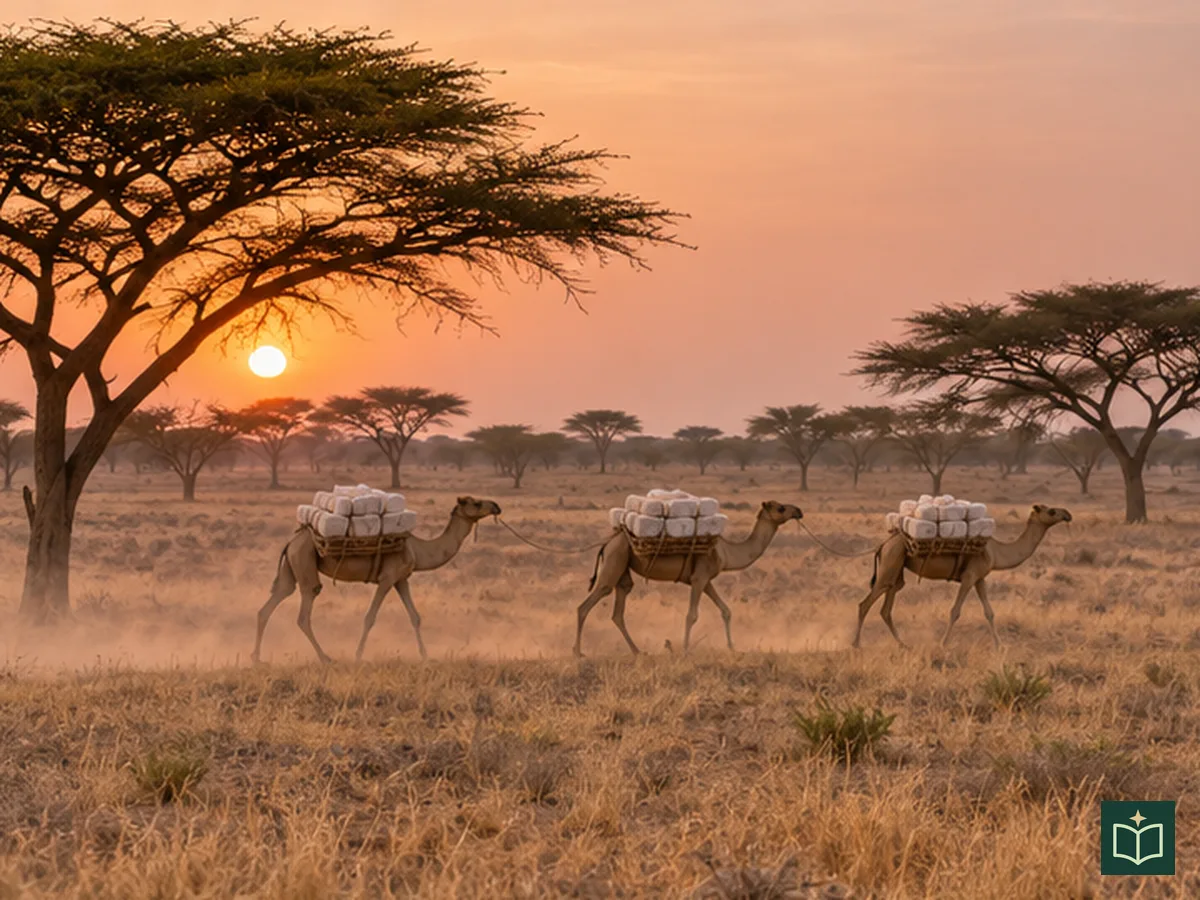
Ghana's prosperity rested on a simple exchange. To the south, near the headwaters of the Senegal and Niger rivers, lay the goldfields of Bambuk and later Bure. To the north, deep in the Sahara, lay deposits of rock salt. Salt was scarce and vital in the savannah, where people and livestock lost it through sweat, and it was needed to preserve food. Gold was in demand across North Africa and the Mediterranean world, where it was minted into coins. After the camel became common in the Sahara, caravans led by Berber merchants linked these two worlds, and Ghana sat across their routes.
How the king grew rich
Al-Bakri, writing in Córdoba in 1068, recorded what merchants told him about Ghana. The king, he said, charged a duty of one gold dinar on every donkey-load of salt entering the country and two dinars on every load leaving it, and also taxed copper and other goods. All gold nuggets found in the country were reserved for the king, while the people kept the gold dust; this was said to stop the metal becoming too plentiful and losing its value. The king could reportedly put a large army into the field, and his court displayed gold-trimmed shields, swords and even dogs wearing gold collars.
A city of two towns
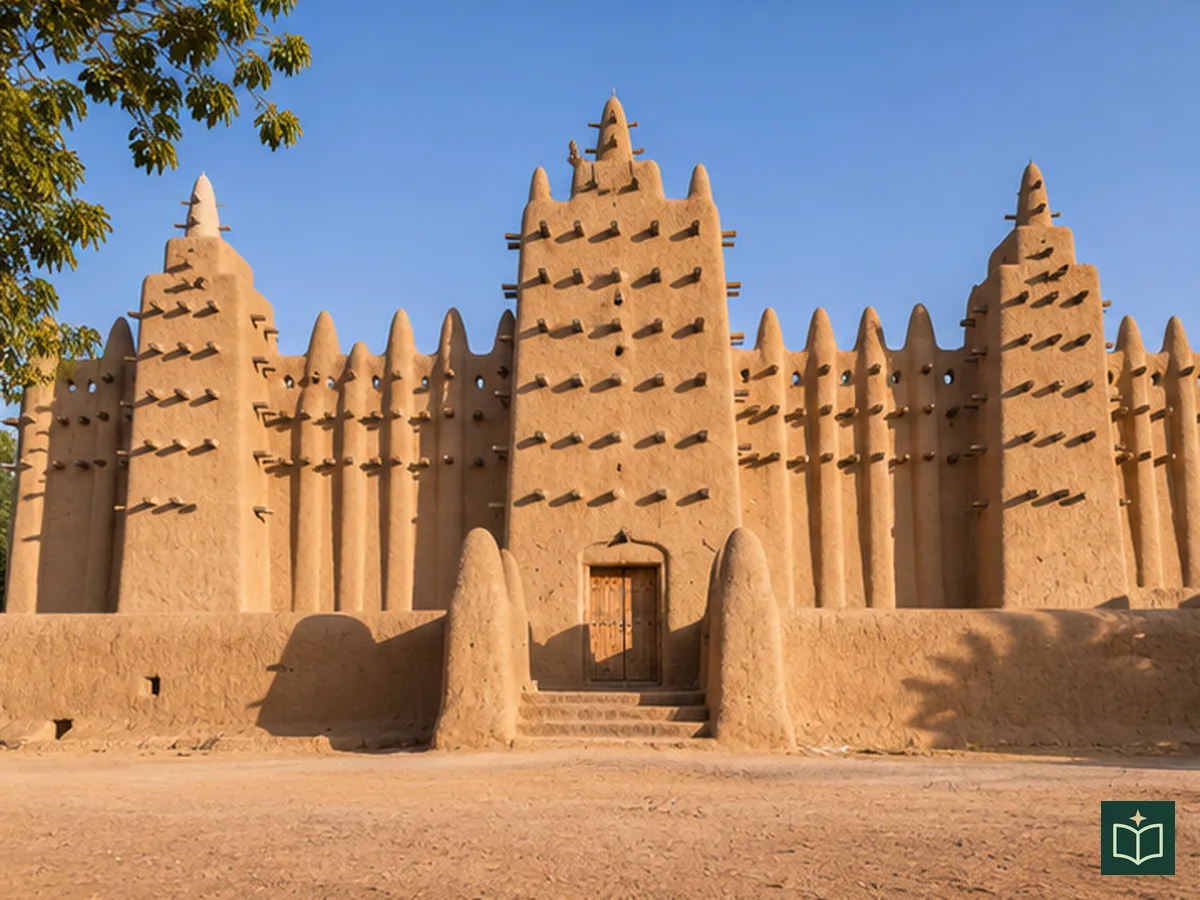
Al-Bakri described the capital as two towns several kilometres apart. One was home to Muslim merchants and scholars, with a dozen mosques. The other held the king's palace and domed buildings, and sacred groves where local religious rites were kept and royal tombs lay. The king followed traditional beliefs but employed literate Muslims as officials and interpreters. Archaeologists believe the merchants' town was probably at Koumbi Saleh in southern Mauritania, where excavations have found stone houses, a large mosque and cemeteries. The arrangement shows a state that welcomed foreign traders and their faith while keeping its own royal traditions at its core.
Decline and successors
Ghana weakened in the eleventh and twelfth centuries. Older histories said the Almoravids, a Berber Muslim movement from the western Sahara, conquered the capital in 1076. Many historians now doubt a sudden conquest and see a slower decline, caused by pressure from the Almoravids, competition from rival trading towns, the opening of new goldfields further south and east, and perhaps drier conditions that strained farming and herding. By the early thirteenth century the region came under the Sosso kingdom and then the rising empire of Mali, which inherited Ghana's role in the gold trade and expanded it on an even larger scale.
Why modern Ghana took the name
In 1957 the British colony of the Gold Coast became the first sub-Saharan African colony to gain independence. Its leader, Kwame Nkrumah, chose the name Ghana to link the new nation with a celebrated African empire, at a time when colonial accounts often ignored Africa's own history. Some traditions held that the ancestors of peoples on the Gold Coast had migrated from the old empire, but this connection is not established. The choice was above all a statement of pride and continuity, much as Mali later took its name from another great Sahelian empire. The old Ghana, meanwhile, survives mainly in Arabic texts, oral tradition and excavated ruins.
Sources & further reading
Figures are rounded and widely published; check the linked organisations for the latest editions. These organisations do not endorse this website.