A town in the inland delta
Djenné stands on a seasonal island in the inland delta of the Niger River in central Mali, where the Bani and Niger floodplains spread across the land each year. From around the thirteenth century it became a major market town, linking the gold, kola and grain of the south with the trans-Saharan routes to Timbuktu and beyond. It was also a centre of Islamic learning. Its houses, like its mosque, are built of earth, and the old town was listed by UNESCO as a World Heritage Site in 1988. Its earliest settlement, at nearby Djenné-Djeno, dates back more than two thousand years.
Three mosques on one site
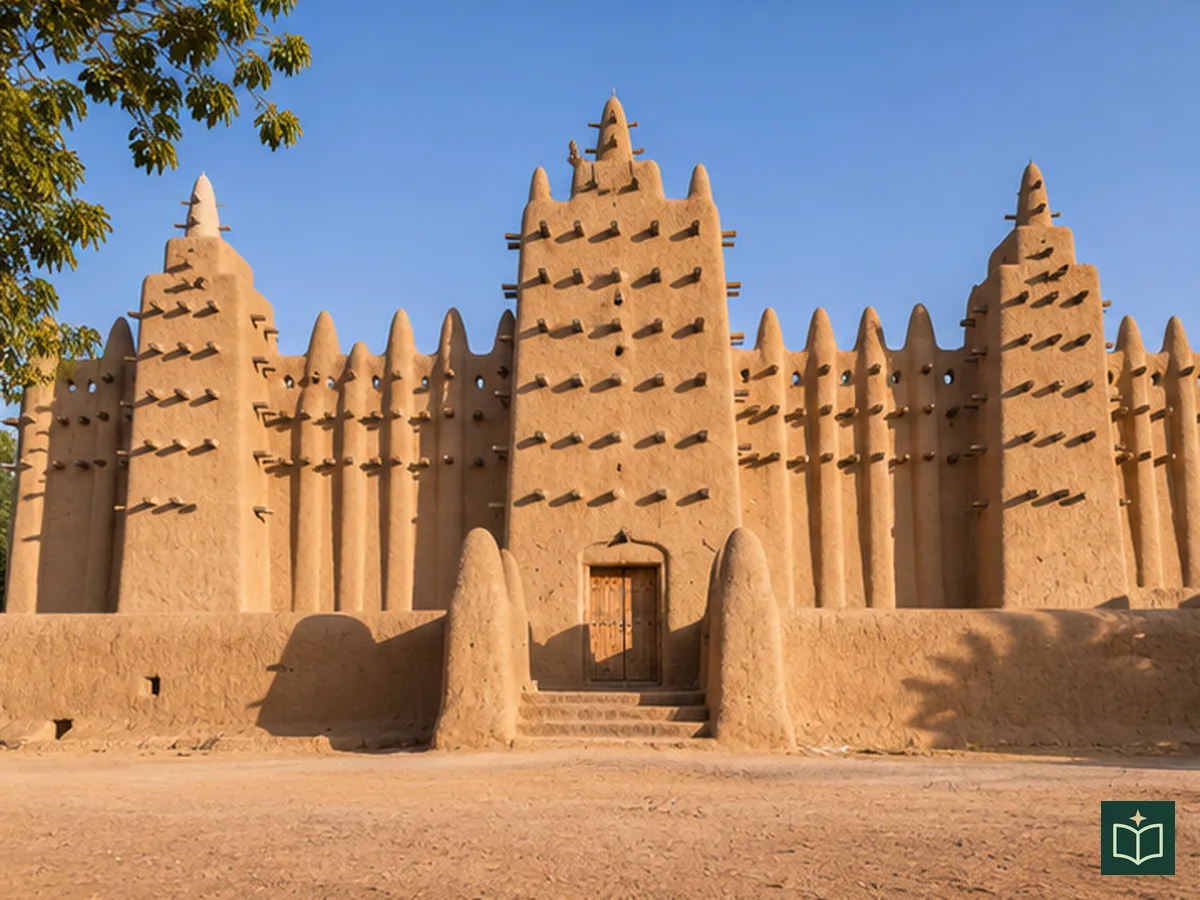
Tradition says that Djenné's first great mosque was built in the thirteenth century, when a ruler converted to Islam and turned his palace into a place of prayer. That building lasted for centuries. In the 1830s the reformer Seku Amadu, who ruled the region and considered it too lavish, let it fall into ruin and built a plainer mosque nearby. The present mosque was raised on the original site in 1907, under the direction of the master mason Ismaila Traoré and the town's guild of builders, during the French colonial period. It largely follows the traditional regional style rather than a European design.
How it is built
The mosque stands on a raised platform about three metres high, which protects it from the floods that surround the town in the rainy season. Its walls are made of sun-dried mud bricks, known locally as ferey, bonded with mud mortar and covered in plaster of earth mixed with water and plant material. The walls are thick at the base and taper as they rise, which helps carry the weight. Bundles of palm-wood sticks, called toron, project from the walls in rows. They are decorative, but also serve as permanent scaffolding for the plasterers and help the walls cope with changes in temperature and humidity.
Why earth works here
Mud brick is well suited to the climate of the Sahel. Thick earth walls absorb heat during the day and release it slowly at night, keeping the interior cooler than the air outside in the hottest months. The material is local, cheap and endlessly reusable: damaged bricks can be broken down, soaked and remade. The weakness is water. Heavy rains wash plaster from the surface and, if left unrepaired, will eventually erode the bricks themselves. Earth buildings therefore need regular care. In Djenné that care is built into the town's social life, and the skills are passed down within families of masons.
The festival of plastering
Each year, before the rains arrive, the people of Djenné gather for the Crépissage, the replastering of the Great Mosque. In the days before, mud is mixed in pits and left to ferment with water and rice husks or other plant material, which makes it smoother and more durable. On the day, young men climb the walls using the toron and ladders, spreading the plaster by hand, while others carry baskets of mud up from below. Women and girls fetch water from the river. Masons supervise the work, which is done in a single, energetic day, with teams from different quarters of the town competing to finish first.
Pressures on a living monument
The Great Mosque is often described as the largest mud-brick building in the world, and its image appears on Mali's coat of arms. Keeping it standing involves balancing authenticity with change. Some residents have wanted more modern building materials in their homes, and attempts to install modern features in the mosque have caused disputes. Insecurity in central Mali since the 2010s has reduced tourism and income, and in 2016 UNESCO placed the Old Towns of Djenné on its list of World Heritage in Danger. The mosque remains a working place of worship, and its annual renewal shows how heritage can depend on a community's continuing labour.
Sources & further reading
Figures are rounded and widely published; check the linked organisations for the latest editions. These organisations do not endorse this website.